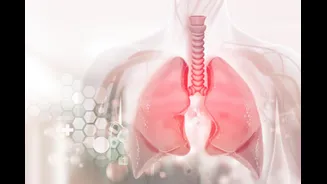








Most of us keep track of our age, weight, or blood pressure without much thought. But the health of our lungs, organs that work nonstop and often go unnoticed, rarely gets the same attention. Yet lung health quietly
determines how easily we breathe, how energetic we feel, and how well our body copes with infections and long-term illness.
A simple test claiming to estimate lung capacity has recently gone viral on social media. But can it really tell you how old your lungs are? And what does “lung age” actually mean? Is it as important to know your lung age as it is to monitor blood sugar or blood pressure?
CNN-News18 spoke to Dr Manu Madan, Senior Consultant in Respiratory and Sleep Medicine at Medanta Hospital, Noida, to understand the science behind lung age, how reliable at-home tests really are, and what they can—and cannot—reveal about lung health.
What Does Lung Age Mean?
Doctors use the term “lung age” as a simple way to explain lung function to patients. According to Dr Madan, lung age reflects how well your lungs are performing compared to the average lung function of a healthy person of a similar age.
“If your lung function is similar to that of a younger individual, your lung age will be lower,” he explains. “If it resembles that of an older person, your lung age will be higher—even if you are younger in real life.”
The concept helps translate complex test results into something easier to understand. A higher lung age does not automatically mean you have a lung disease, but it does suggest that your lungs are not functioning as optimally as they should.
Lifestyle and environmental factors play a major role here. Smoking, living in areas with high air pollution, frequent respiratory infections, or long-term exposure to chemicals and dust can all accelerate lung ageing. In urban settings, Dr Madan points out, even non-smokers may show signs of older lungs due to sustained pollution exposure.
What Is the Viral Home Test, And How Useful Is It?
The at-home test gaining attention is designed to estimate how much air a person can exhale in one breath. It offers a very basic measure of lung capacity and airflow by calculating how much air displaces water when blown into an inverted bottle.
Dr Madan says such tests can give a rough overview of breathing capacity and may help people notice significant changes over time. However, he cautions that these tests should only be viewed as screening tools.
“They cannot replace medical evaluation, imaging, or comprehensive pulmonary function tests,” he says. “At best, they serve as a reminder to seek medical advice when something feels off.”
The number generated by the test is usually measured in litres and varies widely depending on body size, fitness levels, and effort. What matters more than the exact figure is whether the result seems unexpectedly low for someone who otherwise considers themselves healthy and active.
What The Test Results Tell You
Doctors stress that one of the biggest mistakes people make is treating at-home test results as a diagnosis. A slightly abnormal reading can cause unnecessary panic, while a “normal” result may offer false reassurance.
“Lung health is influenced by effort, technique, temporary illness, and even recent environmental exposure,” Dr Madan explains. “No one should judge themselves as healthy or unhealthy based on a single unverified result.”
Importantly, these DIY tests cannot detect subtle airway inflammation, early lung damage, problems with oxygen exchange, or structural lung disease. They also cannot distinguish between different causes of impaired lung function, such as asthma, infections, or chronic lung conditions.
In short, the test may raise questions, but it cannot answer them on its own.
How Doctors Actually Measure Lung Age
In clinical settings, doctors rely on a test called spirometry to assess lung function and calculate lung age more accurately. During spirometry, patients breathe forcefully into a machine that measures both the volume of air exhaled and the speed at which it leaves the lungs.
These results are then compared with standard reference values based on age, height, sex, and ethnicity. This allows doctors to identify airflow limitations that may not yet be obvious in everyday life.
Spirometry is widely used to diagnose and monitor conditions such as asthma and chronic obstructive pulmonary disease (COPD), and remains the gold standard for evaluating lung health.
Why Lung Age Matters
Lung function typically peaks in early adulthood and gradually declines with age. However, this decline can happen much faster under certain conditions. Smoking is a major contributor, but it is far from the only one. Prolonged exposure to polluted air, indoor smoke from cooking fuels, untreated allergies or asthma, and repeated infections can all speed up lung ageing.
Dr Madan notes that younger patients with reduced lung function are being seen more frequently, particularly in high-pollution environments—often without obvious early warning signs.
Can Lung Ageing Be Slowed?
While some lung damage may be irreversible, doctors say lung ageing can often be slowed—and in some cases, lung function can even improve.
Quitting smoking, reducing exposure to pollutants, staying physically active, and treating allergies or asthma early can make a significant difference. Regular exercise strengthens respiratory muscles and improves breathing efficiency, while timely medical treatment prevents further damage.
Vaccinations against respiratory illnesses also help reduce infections that may cause long-term harm, especially in vulnerable groups.
An at-home test becomes more meaningful when symptoms are present. Dr Madan says persistent breathlessness, especially during routine activities, should never be ignored.
A chronic cough, wheezing, or a feeling of chest tightness that does not improve may signal an underlying lung problem, even if basic tests appear normal.
“Early diagnosis and treatment can delay disease progression and protect lung function in the long term,” he says.