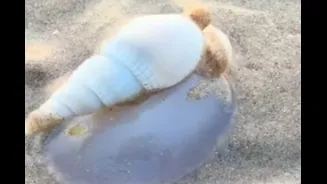







Numerous sea snails washed ashore along Odisha’s Puri coastline that created a rare and stunning sight that left visitors amazed. Large stretches of the beach were covered with moving shells that drew
tourists and locals to witness the unusual marine phenomenon.
According to a report in Ommcom News, the occurrence was from Niladri Beach and Blue Flag Beach with the highest concentration seen between Lighthouse Beach and the Baliharachandi mouth.
Cone Snails Cover Puri Beaches In Odisha
Renowned sand artist Sudarsan Pattnaik shared visuals of the cone snails scattered across Blue Flag Beach. The shells, seen dotting the shoreline, created a striking polka-dot pattern against the sand.
In the caption he wrote, “Incredible nature. This morning at Blue Flag Beach, Puri.”
The report citing marine experts believe the large-scale movement may be linked to seasonal changes and calm sea conditions. Environmental observers explained that during early winter, when the sea remains stable with low turbulence and mild currents, marine organisms from deeper waters sometimes drift toward shallow coastal areas.
“When the sea remains stable and non-turbulent, such drifting of organisms can occur naturally,” a marine researcher said as quoted by the outlet.
What Are Cone Snails And Why Are They Dangerous?
While the sight appeared magical, cone snails are not harmless creatures. They belong to the Conidae family and are predatory marine snails known for their conical shells and powerful venom. Around 800 to 1,000 species are found mainly in tropical and subtropical waters across the world.
Despite their slow movement, cone snails are skilled hunters. They use a sharp, harpoon-like tooth to inject venom into their prey. This venom contains hundreds of toxins that attack nerves and muscles. Some species follow a “hook-and-line” method to catch prey, while others, like the Conus geographus, can release chemicals into the water to stun fish before swallowing them.
Cone snails are grouped based on their diet: some feed on marine worms, others hunt mollusks, and a few prey on small fish. The fish-eating species are considered the most dangerous to humans.
A sting from certain species, including the Geography Cone and the Conus textile, can be life-threatening. Symptoms may include severe pain, numbness, muscle paralysis and even breathing difficulties. There is currently no specific antivenom and treatment mainly focuses on supportive medical care.