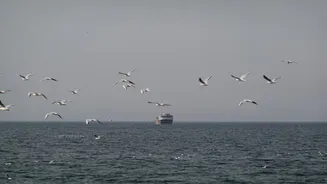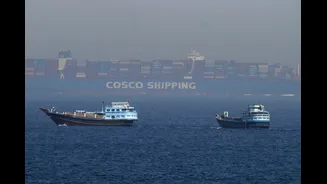






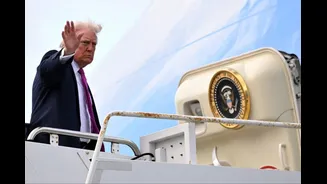
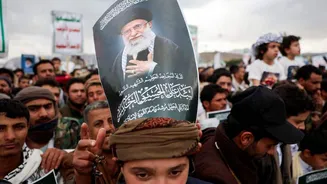
In a change in its strategy, the United Arab Emirates (UAE) has reportedly signalled its readiness to join a military effort to forcibly reopen the Strait of Hormuz. This development follows a month-long
Iranian blockade of the vital waterway and a surge in direct missile and drone attacks on Emirati territory. What does it mean for the US-Israel-Iran war? News18 explains.
What will happen if UAE joins the war?
If the UAE joins the military operations, it will be the first Persian Gulf nation to become an active combatant in the current conflict between the US, Israel, and Iran.
Emirati diplomats are actively lobbying for a United Nations Security Council resolution to authorize the use of force to secure freedom of navigation in the strait, according to the Wall Street Journal and other reports.
Why China Is Playing Peacemaker In Iran War Started By US President Trump: 3 Reasons Explained
The UAE is urging military powers in Europe and Asia to form a “Hormuz Security Force” to clear mines, escort commercial tankers, and defend against further Iranian strikes.
Reports indicate the UAE has suggested that the US shouldoccupy strategic islands in the waterway, including Abu Musa, which is currently held by Iran but claimed by the UAE.
Why has the UAE changed its stance?
The closure of the strait, which carries roughly 20% of global oil and gas supply, has crippled the UAE’s energy exports, tourism, and property markets.
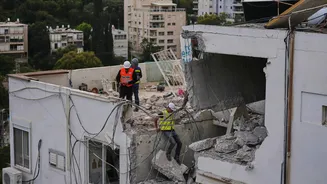
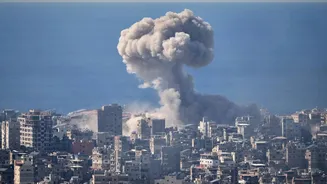
Since the war began on February 28, the UAE has faced more than 2,500 missile and drone attacks—more than any other regional country, including Israel.
Long an “oasis of peace,” the UAE now views the Iranian regime as an existential threat that is willing to damage the global economy, the WSJ reported.
What are the available military assets?
The UAE offers critical infrastructure and hardware for a potential US-led operation:
Strategic Bases: The deep-water port at Jebel Ali Port and nearby military bases serve as ideal staging grounds.
Air Power: A small but highly capable fleet of U.S.-supplied F-16 fighter jets.
Surveillance and Munitions: Extensive use of surveillance drones and a stockpile of short-range missiles that could bolster allied supplies.
While the UAE is pushingfor action, the political path remains complex, as any UN resolution faces potential vetoes from Russia and China.
What is the stance of other Gulf nations?
As of April 1, Bahrain is the only other Gulf allyto publicly and formally align with the UAE’s push for a military-led reopening of the Strait of Hormuz. Other Gulf nations, while privately supportive of weakening Iran, have adopted more cautious or purely defensive public stances.
Bahrain: Has taken the lead diplomatically by circulating a United Nations Security Council draft resolution that authorizes the use of “all necessary means” — international code for military force—to protect commercial shipping in the strait. Bahrain also joined 19 other nations in a joint statement declaring readiness to act to secure the waterway.
Saudi Arabia: Riyadh has shifted from initial neutrality to becoming a “functional active enabler” by granting the US militaryaccess to King Fahd Air Base for strikes against Iran. While Saudi officials have threatened to enter the war if Iranian aggression continues, they have stopped short of committing their own warships to an offensive “Hormuz Security Force”.
Kuwait and Qatar: Both nations have reportedly expressed private support for a military operation to ensure “significant changes” in Iranian behaviourbut have maintained public focus on de-escalation and humanitarian concerns. Qatar specifically has warned that the blockade “will bring down economies of the world” if not resolved through collective action.
Oman: Traditionally a mediator, Oman has focused its efforts on securing safe passage through diplomatic channels while remaining on high military alert due to its proximity to the blocked waterway.
KEY FAQs
Has UAE officially joined the war?
No, so far it has signaled willingness, not full entry.
Why is Hormuz so important?
It’s the world’s key oil chokepoint—blocking it affects global fuel supply.
Could this become a bigger war?
Yes, if more countries join, it risks becoming a regional or even global escalation.