



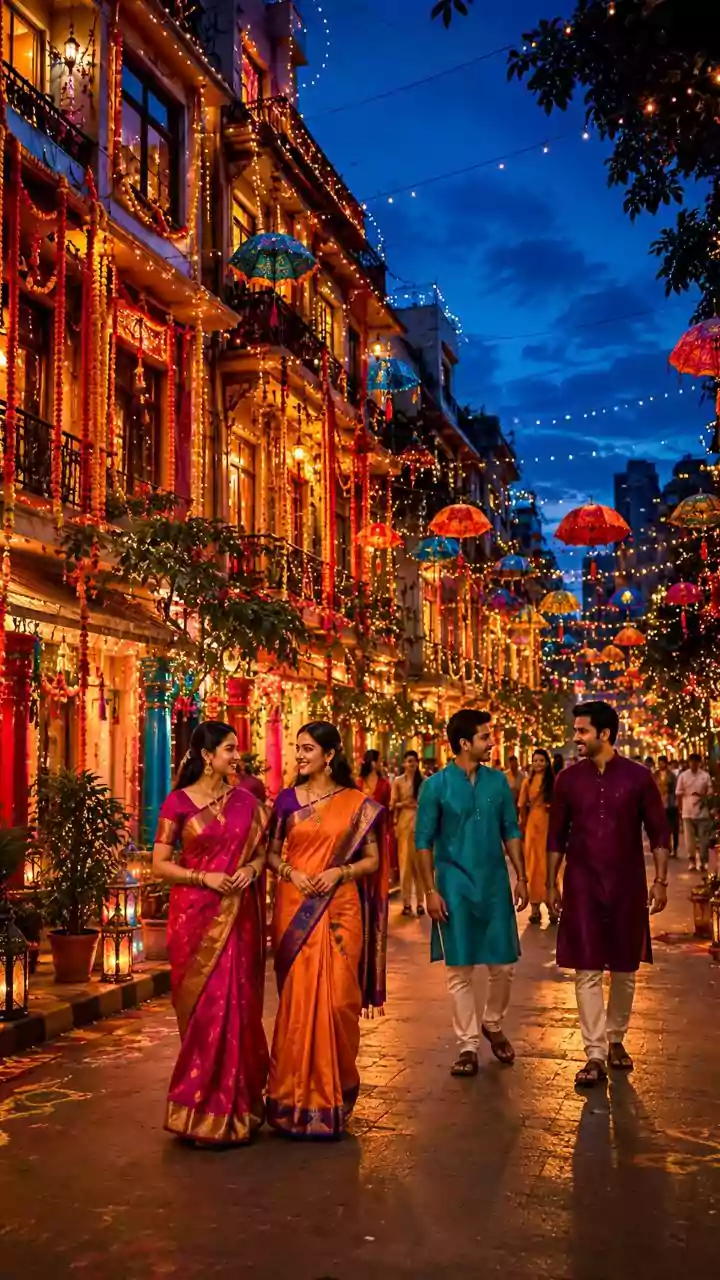


There are few places in India where the story of Diwali feels as closely tied to the land and its history as it does in Ayodhya. Here, the festival is not just about decorating homes or lighting lamps.
It also includes a retelling of an ancient story, one that draws its meaning from the return of Lord Ram, Sita and Lakshman to Ayodhya after 14 years of exile.
According to the Ramayana, the people of Ayodhya welcomed Ram home by lighting rows of lamps. The tradition of celebrating his return is closely associated with the origins of Diwali, and the city brings that story to life every year through Deepotsav. This year, the celebrations carry added significance as Ayodhya prepares for the 10th edition of its state-organised Deepotsav. The festivities are scheduled from November 5 to 8, 2026, with the main lamp-lighting event planned for November 7 and Diwali falling on November 8. Preparations announced by the authorities include thousands of volunteers, a large-scale Sarayu Aarti, drone displays and cultural programmes. The city is expected to welcome devotees and visitors keen to witness the celebrations.
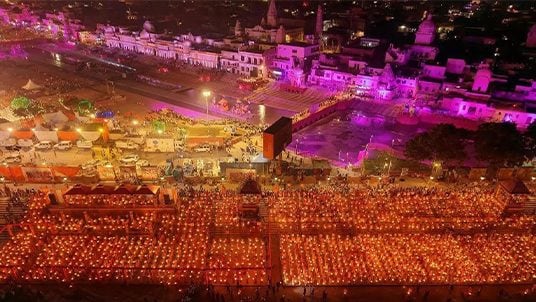
Deepotsav: When Ayodhya Becomes A City Of Lights
The heart of Deepotsav celebrations is Ram Ki Paidi, a series of steps and ghats along the Sarayu River. As evening approaches, rows of earthen lamps illuminate the riverfront. The evening’s rituals are accompanied by cultural performances and, depending on the final programme, large-scale light and drone displays. The event has also become known for its record-setting lamp-lighting efforts.
Ram Janmabhoomi Temple: The Spiritual Centre Of The City
A visit to Ayodhya is incomplete without the Ram Janmabhoomi Temple, one of the city’s most significant pilgrimage sites. The temple became a major focus of national attention following the consecration of Ram Lalla in January 2024. Dedicated to Lord Ram, the temple draws devotees throughout the year, with the festive season bringing an added sense of occasion. During Diwali, the wider city takes on a celebratory atmosphere, and the temple becomes an important stop for visitors seeking to connect their trip with the story at the heart of the festival.
Hanuman Garhi: A Temple With A View
Set on an elevated site in the heart of Ayodhya, Hanuman Garhi is among the city’s best-known temples. Dedicated to Lord Hanuman, it is associated with the belief that the deity watches over and protects Ayodhya. Reaching the shrine involves climbing a flight of steps, but the visit offers more than a temple stop. The complex is an important part of the city’s religious life, and devotees often visit it alongside the Ram Janmabhoomi Temple. During Diwali, the temple is particularly popular with pilgrims seeking blessings. If you plan to visit during Deepotsav, allow extra time for queues and crowds.
Kanak Bhavan
For a more intimate glimpse into Ayodhya’s religious traditions, make time for Kanak Bhavan. The temple is dedicated to Ram and Sita and is associated with the story of Kaikeyi gifting a golden palace to Sita after her marriage to Ram. Its decorated interiors and devotional atmosphere make it a rewarding stop for visitors interested in the city’s Ramayana connections. It also offers a different pace from the crowds expected around the main temple and riverfront.
Dashrath Mahal
Located in the old city, Dashrath Mahal is traditionally associated with King Dashrath, Ram’s father, and the royal household in which Ram grew up. The site houses shrines dedicated to Ram, Sita and Lakshman, and its colourful façade and devotional atmosphere make it a familiar stop on local pilgrimage circuits.
Gulab Bari
Gulab Bari, a historic garden and mausoleum in Faizabad, is associated with Nawab Shuja-ud-Daula, the third Nawab of Awadh. The complex combines Mughal-influenced architectural features with gardens and a quieter atmosphere. It offers a contrast to the religious landmarks that dominate most Ayodhya itineraries, while providing a glimpse into the region’s later history.
How To Reach Ayodhya
By air: Maharishi Valmiki International Airport, Ayodhya Dham, serves the city. Flight schedules and direct connections vary, so check availability from your departure city before booking. Chaudhary Charan Singh International Airport in Lucknow is an alternative, followed by a road journey of roughly 125–150 km, depending on the route and destination within Ayodhya.
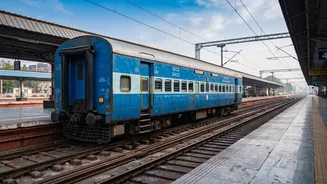
By train: Ayodhya Dham Junction and Ayodhya Cantt connect the city with several destinations across Uttar Pradesh and other parts of India.
By road: Ayodhya is connected by road to Lucknow, Varanasi, Prayagraj and Gorakhpur. Buses, taxis and private vehicles are options, but travel times can increase significantly during Deepotsav.