
The United States is entering a new phase of restriction-heavy immigration controls, with the Trump administration dramatically expanding the travel-ban framework introduced earlier this year. The updated
order, which takes effect on 1 January 2026, now applies to 39 countries through a combination of full and partial entry suspensions. It builds on the restrictions introduced in June this year, but the scale and rationale of the system have grown substantially, reflecting both security-driven and administrative concerns.
The administration’s rationale goes well beyond counterterrorism concerns, which dominated the earlier iteration of the policy. Instead, it presents a broader matrix of risks: deeply unreliable civil documentation systems, weak identity verification, refusal to share passport exemplars or law-enforcement data, widespread corruption, high visa-overstay rates in key categories such as B-1/B-2 tourist visas and F, M and J student or exchange visas, refusal to repatriate removable nationals, and the vulnerabilities created by Citizenship-by-Investment (CBI) schemes. Each, it argues, undermines the United States’ ability to determine whether a foreign national poses a national security or public safety threat.
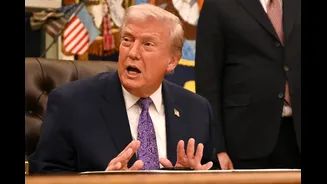
Trump, in a proclamation on Tuesday, said the United States “must exercise extreme vigilance” and cannot admit travellers from countries that “continue to exhibit woeful inadequacies in screening, vetting, and provision of information.” Without reliable identity records, criminal histories or functioning information-sharing systems, he said, US authorities cannot adequately assess risk.
What Has The Trump Administration Announced?
The expanded restrictions build directly on the June 2025 order, which revived the travel-ban framework from Trump’s first term. That order had already placed full suspensions on 12 high-risk countries and partial restrictions on seven others. The administration has now chosen to continue those rules while adding several more layers.
The administration will continue full suspensions of nationals from Afghanistan, Burma, Chad, Republic of the Congo, Equatorial Guinea, Eritrea, Haiti, Iran, Libya, Somalia, Sudan and Yemen. Partial restrictions remain in place for Burundi, Cuba, Togo and Venezuela.
But the major shift is the addition of several new countries under full entry bans: Burkina Faso, Mali, Niger, South Sudan and Syria. According to the administration, these countries face either persistent terrorist activity, active conflict, limited government control or inadequate capacity to issue secure civil documents.
Individuals travelling on documents issued or endorsed by the Palestinian Authority have also been placed under full entry bans, with the administration citing weakened administrative control in the West Bank and Gaza.
Two countries previously under partial restriction — Laos and Sierra Leone — have been moved into the full-ban category. The administration says both have persistently high visa-overstay rates and inadequate identity-management systems.
In addition, partial restrictions have been added for 15 more countries: Angola, Antigua and Barbuda, Benin, Cote d’Ivoire, Dominica, Gabon, The Gambia, Malawi, Mauritania, Nigeria, Senegal, Tanzania, Tonga, Zambia and Zimbabwe. The restrictions affect immigrant visas and several non-immigrant categories, including B-1/B-2 visitor visas and student or exchange visas.
Nigeria appears on the partial list due to the presence of Boko Haram and ISIS affiliates, which the administration says complicates background verification. Mauritania is included because the government lacks a meaningful presence in parts of the country, making identity checks difficult. Several others, including The Gambia, Sierra Leone, Laos and South Sudan, are cited for historically refusing to repatriate nationals after US removal orders.
The only country to see an easing of rules is Turkmenistan. While immigrant visas remain suspended, the administration has lifted restrictions on its non-immigrant visas, citing “significant progress” in information sharing and identity management.
Why Has Trump Expanded The Travel Ban?
The administration’s central argument is that it cannot rely on the documentation, vetting or information-sharing capabilities of the listed countries.
Trump, in the proclamation, said several countries have “non-existent birth-registration systems,” while others still issue documents that are “handwritten and stamped on regular paper,” making them easy to falsify. He said corruption in certain places allows individuals to purchase identity papers, birth certificates or marriage documents, undermining even basic biographical checks.
Security conditions also form a major part of the administration’s reasoning. Burkina Faso, Mali and Niger are cited for widespread terrorist activity. South Sudan and parts of Syria are said to lack sufficient central control. Such environments, the administration argues, make it difficult for home governments to maintain or share reliable criminal or identity data.
Another major factor is visa overstays. The Department of Homeland Security’s Entry/Exit Overstay Report shows that several listed countries — including Sierra Leone, The Gambia, Malawi and Laos — have overstay rates exceeding 20 to 35 per cent in categories such as B-1/B-2 tourist visas and F, M and J student or exchange visas. The administration says these patterns “demonstrate disregard for United States immigration laws” and place strain on enforcement mechanisms.
Citizenship-by-investment (CBI) programmes form yet another justification. The administration argues that individuals from restricted countries can obtain citizenship from jurisdictions with no residency requirement, acquire new passports, and apply for US visas as nationals of those countries. Trump, in the proclamation, said such programmes “pose challenges for screening and vetting” because they enable identity substitution and allow individuals to “circumvent travel restrictions.”
The administration has also curtailed exceptions for family-based immigrant visas, arguing that when civil records from certain countries are weak or forged, these categories become harder to vet. Trump said such categories have “in the past served […] as unique vectors for fraudulent, criminal, or even terrorist activity.”
As per a CNN report, Homeland Security Secretary Kristi Noem had earlier recommended expanding the list to around 30–32 countries after a review of global vetting gaps.
Which Exceptions Still Apply?
Despite the expansions, several exceptions remain. The restrictions do not apply to:
- lawful permanent residents
- foreign nationals with existing valid visas
- diplomats and certain international officials
- athletes travelling for major global sporting events
- individuals with certain US government-linked special immigrant visas
- persecuted religious and ethnic minorities from Iran
Beyond that, case-by-case waivers are available if officials determine that an individual’s entry serves US national interests. Witnesses required for criminal proceedings in the United States may also receive such exceptions.
These restrictions apply only to individuals who are outside the United States and do not currently possess valid visas.
How Does This Fit Into Trump’s Broader Approach To Immigration And Security?
The expanded restrictions reflect one of Trump’s central immigration objectives: tightening screening procedures and shifting responsibility onto foreign governments to meet US standards. The administration describes the policy as both a protective measure and a pressure tactic. By making restrictions country-specific, it says it aims to prompt governments to modernise documentation systems, share criminal and identity information, and reduce visa-overstay rates.
Under the order, these restrictions will be reviewed every 180 days. Countries that demonstrate progress could see limitations lifted, while those that do not may face continued or expanded suspensions. At the same time, the administration argues that certain risks such as terrorism, armed conflict or entrenched corruption may justify prolonged restrictions.
Trump, in the proclamation, said the United States “cannot admit travellers from countries where authorities lack sufficient information to assess the risks they pose,” and characterised the system as necessary to protect national security and uphold immigration law.
The travel-ban expansion also comes alongside a wider immigration crackdown that has accelerated in recent weeks. The latest actions were announced after a shooting in Washington, DC, in November, in which one National Guard member was killed and another critically injured. The suspect in that case, an Afghan national who previously worked with a CIA-affiliated unit, entered the US following the 2021 withdrawal from Afghanistan and was granted asylum earlier this year after undergoing vetting.
Following the incident, the administration moved to tighten almost every channel of legal and illegal entry into the country. This has included a pause on most asylum decisions, a review of cases processed during the Biden administration, and a “re-examination” of certain green-card holders to determine continued eligibility. Deportation operations have also intensified.
The crackdown also comes in the wake of a December 13 Islamic State ambush in Syria that killed two US soldiers and an American civilian interpreter.
What Happens Next?
The expanded restrictions take effect on 1 January 2026. No existing visas will be revoked, and asylum seekers or refugees already admitted are not affected. The State Department, Department of Homeland Security and Department of Justice will coordinate implementation and continue engaging listed countries on the steps needed to meet US vetting requirements.
With 39 countries now facing full or partial restrictions, the policy marks one of the most extensive immigration actions taken by the Trump administration to date.