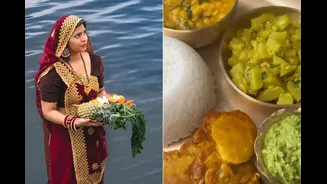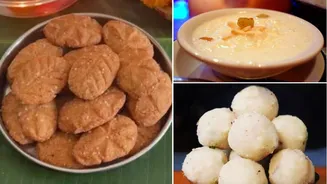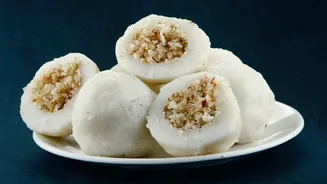




Chhath Puja 2026 Prasad: Chhath Puja is one of the most significant festivals dedicated to the worship of the Sun God and Chhathi Maiya. Celebrated with devotion, fasting and traditional rituals, the festival also
holds a special place in Indian cuisine.
Among the various offerings prepared during the occasion, Thekua is one of the most important prasad items, particularly in Bihar, Jharkhand, eastern Uttar Pradesh and parts of Nepal.
Made with whole wheat flour, jaggery and desi ghee, Thekua is a traditional deep-fried sweet known for its rich flavour, distinctive texture and long shelf life. It is prepared in many households as an offering during Chhath Puja and is also enjoyed as a festive delicacy.
Read More: Chhath Puja 2026: Why Devotees Worship The Setting And Rising Sun
As Chhath Puja 2026 approaches, those planning to prepare the traditional offering at home can follow this simple recipe. With a handful of everyday ingredients and the right frying technique, you can make crispy, golden-brown Thekua in your kitchen.
Chhath Puja 2026: Ingredients Required to Make Traditional Thekua
Thekua is prepared using simple ingredients that come together to create its characteristic sweetness and crisp texture.
Ingredients
- Whole wheat flour (atta): 2 cups. Coarse-milled flour can be used for a slightly rustic texture.
- Jaggery (gur): ¾ to 1 cup, grated or powdered, depending on your preferred sweetness.
- Desi ghee: 3 to 4 tablespoons for preparing the dough, plus extra for deep-frying.
- Fennel seeds (saunf): 1 tablespoon, lightly crushed.
- Cardamom powder (elaichi): ½ teaspoon.
- Desiccated or freshly grated dry coconut: 2 to 3 tablespoons.
- Water: ¼ to ½ cup, as required to dissolve the jaggery and bring the dough together.
Read More: Chhath Puja 2026: Date, Calendar, Shashthi Tithi, Sunrise And Sunset Timings
How to Make Thekua at Home: Traditional Step-by-Step Recipe
Follow these steps to prepare traditional Thekua with a crisp exterior and a rich jaggery flavour.
Step 1: Prepare the Jaggery Water
Take a small pan and add ¼ to ½ cup of water. Add the grated or powdered jaggery and heat the mixture over a low flame. Stir until the jaggery dissolves completely.
Avoid boiling the mixture for too long or reducing it to a thick syrup. Turn off the heat and allow the jaggery water to cool to room temperature. Strain it if necessary to remove any impurities.
Step 2: Mix the Flour and Dry Ingredients
Take a large mixing bowl and add the whole wheat flour, crushed fennel seeds, cardamom powder and grated coconut.
Pour 3 to 4 tablespoons of melted ghee into the flour mixture. Rub the ghee into the flour thoroughly using your fingertips. This process, traditionally known as moyan, helps give Thekua its crumbly and crisp texture.
The mixture should resemble coarse breadcrumbs and hold its shape when pressed between your fingers.
Read More: Chhath Puja 2026: Complete Samagri List – What Items Are Required For Worship?
Step 3: Prepare a Stiff Dough
Gradually add the cooled jaggery water to the flour mixture. Combine the ingredients gently until they come together.
Avoid adding all the liquid at once, as the quantity required may vary depending on the flour. The dough should be firm and stiff rather than soft and stretchy like regular roti dough.
Do not over-knead the mixture. A firm dough helps Thekua retain its shape and develop a crisp texture after frying.
Step 4: Shape the Thekua
Divide the prepared dough into small, lemon-sized portions and roll them into balls.
Flatten each ball gently and press it against a traditional wooden or plastic Thekua mould, also known as a sancha, to create decorative patterns.
If you do not have a mould, you can shape the portions into small round or oval discs using your hands. Make sure the pieces have a reasonably even thickness so that they cook uniformly.
Read More: Chhath Puja 2026: Who Is Chhathi Maiya? Know The Story, History And Significance
Step 5: Deep-Fry Until Golden Brown
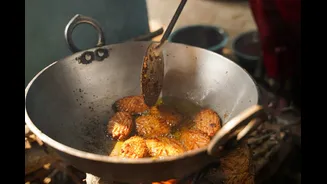
Heat desi ghee in a deep, heavy-bottomed kadai over a medium-low flame. Once the ghee is sufficiently hot, carefully slide the shaped Thekua into it.
Fry them in small batches, allowing enough space for even cooking. Keep the flame low to medium and turn the Thekua gently when the underside begins to firm up.
Continue frying until both sides turn a deep golden-brown colour and the pieces are cooked through.
Avoid frying them over a high flame, as the jaggery can cause the exterior to brown quickly while the inside remains undercooked.
Step 6: Cool and Store
Once the Thekua is evenly fried, remove the pieces using a slotted spoon and place them on absorbent paper to drain excess ghee.
Read More: Chhath Puja: Are There 4 Types? Know About Kartik, Chaiti And More
Allow them to cool completely before storing. Thekua may feel slightly soft immediately after frying but develops a firmer, crispier texture as it cools.
Transfer the cooled sweets to a clean, dry, airtight container. When prepared and stored properly, they can generally stay fresh for around 1 to 2 weeks, depending on moisture levels and storage conditions.
Tips to Make Crispy and Delicious Thekua at Home
A few simple precautions can help you achieve the traditional taste and texture of homemade Thekua.
- Use the right flour: Whole wheat flour is the traditional base. Coarse-milled atta can provide a rustic texture.
- Do not make the dough too soft: Excess moisture can affect the texture and shape of Thekua.
- Add sufficient moyan: Rubbing ghee thoroughly into the flour helps create a crisp, crumbly texture.
- Maintain the right frying temperature: Frying over low to medium heat allows the sweets to cook evenly without burning the jaggery.
- Allow them to cool completely: Store Thekua only after it has cooled to prevent moisture from accumulating inside the container.
- Use clean, dry storage: An airtight container helps preserve freshness and crispness.
Why Is Thekua Prepared During Chhath Puja?
Thekua has a special cultural and religious significance during Chhath Puja, particularly in Bihar, Jharkhand and eastern Uttar Pradesh. It is traditionally prepared in many households as an offering to the Sun God and Chhathi Maiya.
Thekua is commonly included in the prasad offered during the festival’s rituals, including the evening and morning Arghya. Its preparation is also an important part of family traditions, with several households following recipes passed down through generations.
Made with simple ingredients such as wheat flour, jaggery and ghee, this traditional sweet represents the connection between festive food, devotion and regional culinary heritage.
Preparing Thekua at home for Chhath Puja can be a way to preserve these culinary traditions while sharing a homemade festive delicacy with family and loved ones.