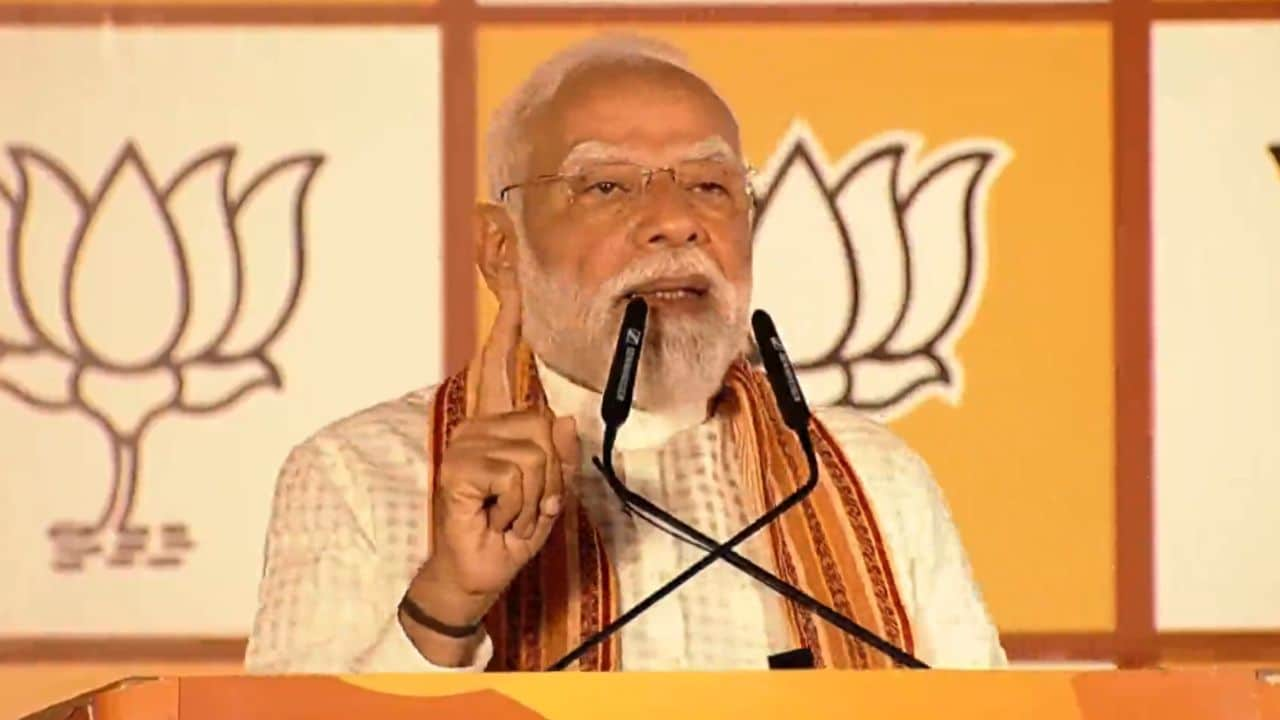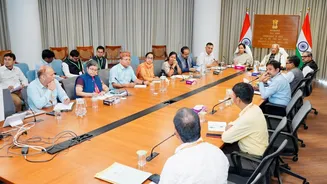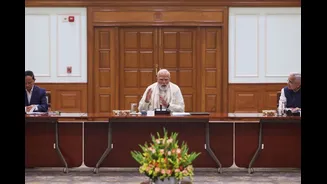




Prime Minister Narendra Modi on Saturday held a high-level meeting with members of the Prime Minister’s Economic Advisory Council (PM-EAC) to review the state of the Indian economy and explore measures
to sustain growth amid heightened global uncertainty.
During the meeting, PM Modi and the Council members discussed a range of ideas and policy options aimed at further boosting India’s economic growth at a time when economies worldwide are grappling with geopolitical tensions, trade uncertainties and uneven growth trends. Particular focus was placed on reforms to improve the ease of living for citizens and the ease of doing business for enterprises.
PM Modi met the Economic Advisory Council to review the impact of the West Asia crisis, with discussions focused on trade, inflation control, self-reliance, and protecting India’s economic growth.@payalmehta100 & @_pallavighosh with more | @AmanKayamHai_ #PMModi #Economy… pic.twitter.com/Xo4yR3XcpI
— News18 (@CNNnews18) June 6, 2026
The members of the Economic Advisory Council also presented their assessment of the impact of the ongoing West Asia conflict on India and the broader global economy. They examined potential risks to trade, fuel prices and financial markets, and discussed strategies to strengthen India’s resilience in the face of these external shocks.
The meeting comes against the backdrop of PM Modi’s recent appeals to citizens to support economic resilience by cutting dependence on imported fuel and adopting environmentally sustainable practices. Last month, the Prime Minister urged people to prioritise work from home wherever feasible, reduce fuel consumption, avoid foreign travel for a year, adopt Swadeshi products, reduce the use of cooking oil, shift to natural farming and curb gold purchases.
To address fuel price volatility and reduce the burden on the economy, PM Modi called for a change in how India moves. He appealed to citizens to lower petrol and diesel consumption by using metro services and public transport wherever available, opting for carpooling when private vehicles are necessary, preferring railway transport for the movement of goods, and increasing the use of electric vehicles as far as possible.