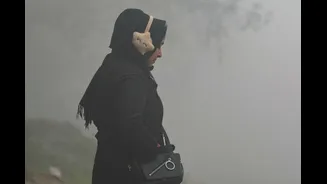









A dense layer of toxic fog engulfed large parts of the national capital on Saturday, sharply reducing visibility and worsening air quality across the city. Visuals from the ITO area showed thick haze blanketing
roads and buildings as pollution levels spiked.
According to the Central Pollution Control Board (CPCB), the Air Quality Index (AQI) in the area stood at 402, falling in the ‘Severe’ category. In response to the deteriorating air quality, authorities reimposed GRAP-III restrictions across Delhi-NCR, triggering curbs on construction activities and other pollution-generating measures.
#WATCH | Delhi | Dense layer of toxic smog engulfs the national capital. Visuals from the ITO area. CPCB claims that the AQI in the area is at ‘402’, categorised as ‘Severe’. GRAP-III restrictions reimposed in Delhi-NCR. pic.twitter.com/xmYP9O75VE
— ANI (@ANI) January 17, 2026
The overall Air Quality Index in Delhi stood at 368 at 7 am, placing it in the ‘very poor’ category. Several monitoring stations across the city recorded AQI levels well above 400, slipping into the ‘severe’ bracket.
Some of the worst-affected areas included Anand Vihar with an AQI of 442, Patparganj at 433, Chandni Chowk at 427, Nehru Nagar at 423, Vivek Vihar at 420, and Jahangirpuri at 416. Other parts of the city, such as Dwarka, ITO, Sonia Vihar, and Wazirpur, remained in the ‘very poor’ category, while the IGI Airport area recorded an AQI of 304.
The steep drop in temperatures, coupled with stagnant air, heightened discomfort for residents as the capital endured yet another severe winter spell.
Flight operations at Indira Gandhi International Airport were disrupted in the early morning as dense fog sharply reduced visibility, causing delays. Road and rail traffic also slowed across the region, with commuters struggling through near-whiteout conditions.
The India Meteorological Department has forecast dry winter weather for Delhi over the next seven days, with clear to partly cloudy skies and no rainfall expected.
Daytime temperatures are expected to range between 20 and 25 degrees Celsius, indicating a gradual warming trend after January 16, while minimum temperatures are likely to remain considerably low during the first half of the week.
Starting January 18, night temperatures are expected to gradually climb to around 8–10 degrees Celsius, providing some relief from the severe cold.