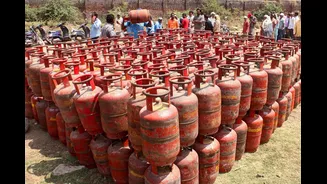

Amid the ongoing conflict in the West Asia region, the government is taking several measures to reduce LPG import dependence and enhance energy security over the medium to long term.
In a written reply
to the Lok Sabha, Minister of State for Environment Suresh Gopi said the government is prioritising the expansion of piped natural gas (PNG) and accelerating renewable energy development, including solar, wind, bioenergy, and green hydrogen.
Gopi was responding to queries raised by Rajya Sabha MP Amar Singh regarding: the impact of global supply disruptions and geopolitical tensions in West Asia on LPG imports and domestic availability; measures to manage LPG supply chains, including boosting domestic production and regulating distribution; and steps to improve supply resilience and prevent future shortages.
In the short term, to boost domestic LPG production for current usage, the Centre on March 9 issued directions to all oil refining companies, including petrochemical complexes, that the entire output of C3 and C4 hydrocarbon streams—such as propane, butane, propylene and butenes—be utilised exclusively for LPG production and supplied only to public sector oil marketing companies.
Refineries were also instructed not to divert these streams for the manufacture of petrochemical products or downstream derivatives, Gopi said.
OMCs have also been instructed to ensure that LPG produced is supplied solely to domestic consumers. As a result, domestic LPG production has risen by 40%.
While domestic supply has been prioritised, commercial LPG availability was initially affected. The government later restored supply to commercial users—first at 20%, and subsequently increased to 50%, including a 10% allocation linked to PNG expansion reforms.
This allocation has been prioritised for key sectors such as restaurants, dhabas, hotels, industrial canteens, food processing and dairy units, subsidised canteens run by state governments or local bodies, community kitchens, and 5 kg FTL cylinders for migrant labourers.
“India imports about 60% of its LPG consumption, out of which about 90% transits through the Strait of Hormuz. In view of the ongoing geopolitical developments in West Asia, the availability of imported LPG in the country has been impacted. The government has undertaken a series of proactive measures to ensure stability in LPG supplies,” Gopi said.
“These include prioritisation of domestic LPG consumption, diversification of import sources, dynamic stock management, and inter-regional allocation to address localized shortages,” the minister added.
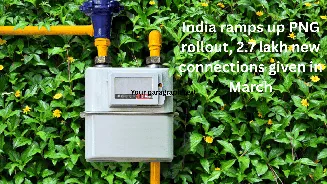
Additionally, city gas distribution (CGD) entities have been advised to prioritise PNG connections for commercial establishments such as restaurants, hotels, and canteens.
Central ministries and departments have been asked to assess PNG demand within their jurisdictions and appoint nodal officers to coordinate the process. The Petroleum and Explosives Safety Organisation (PESO) has been directed to fast-track CGD-related applications within 10 days.
“Government has requested all Central Government Ministries/Departments to carry out a comprehensive assessment of the potential demand for PNG connections in establishments under their jurisdiction, and to designate a nodal officer in each Ministry/Department to coordinate this exercise. Pursuant to the aforesaid directions, the Petroleum and Explosives Safety Organisation (PESO) has instructed all its offices to accord priority to CGD-related applications and ensure their disposal within 10 days of receipt,” Gopi said.