
India’s retail sector is entering a distinctly mature phase. After a sharp post-pandemic rebound driven by pent-up demand, the sector is now witnessing a more calibrated and quality-led recovery. Consumption
has shifted from being purely transactional to experience-oriented, with shoppers seeking destinations that blend retail, leisure, food, and community engagement. As a result, high-street formats and destination malls are being reimagined as lifestyle ecosystems rather than mere shopping hubs.
Against this backdrop, 2026 is emerging as a watershed year for retail real estate. Brands are becoming increasingly discerning, favouring hybrid formats that integrate physical stores with digital touchpoints, premium design, and flexible layouts. Location quality, footfall intelligence, and the ability to deliver immersive experiences are now central to leasing decisions, signalling a decisive shift towards more sustainable, experience-led retail growth.
A CBRE report noted that retail leasing in Delhi-NCR jumped by about 25% in 2025. Fashion and apparel brands were the major contributors, accounting for 35% of leasing activity. The remaining share was occupied by food and beverage operators and other lifestyle retailers.
Meanwhile, data from Cushman & Wakefield showed that retail leasing in Delhi-NCR stood at 1.03 million sq. ft. in Q4 2025—an increase of 100% quarter-on-quarter and 4.5 times on a year-on-year basis. Gurugram led overall retail leasing during Q4 2025 with a 63% share, followed by Delhi (22%) and Noida (15%). Malls secured 56% of the quarterly leasing volume, while main streets accounted for the remaining 44%. Of the 0.6 million sq. ft. of leasing witnessed in malls, fashion-led space take-up dominated with a 25% share, followed by department stores (22%) and the F&B segment (13%).
The data reflects how high-street retail and destination malls are increasingly defining the contours of urban consumption, each playing a distinct yet complementary role in the retail ecosystem. High streets, once viewed largely as transactional corridors, have evolved into vibrant social spines of cities, driven by strong evening and weekend footfalls, café culture, and hyper-local experiences. Brands are gravitating towards curated street identities that allow deeper neighbourhood engagement and visibility beyond conventional storefronts.
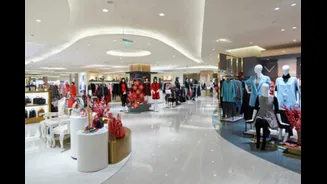
In parallel, destination malls are reinventing the ‘one-stop’ model by anchoring themselves around leisure, food and beverage, wellness, and immersive experiences. With lifestyle, home décor, fitness, and entertainment brands leading leasing activity, malls are consciously designing for longer dwell times, transforming shopping into a more holistic, experience-led outing rather than a purely transactional visit.
Arjun Gehlot, Director, Ambience Malls – Vasant Kunj & Gurugram, says, “Over the last few quarters, leasing at malls in NCR has shifted from mere square-foot accumulation to brand narratives that elevate experience. In 2026, we’re expecting demand from retailers who don’t just want presence, but relevance—curated ground-floor frontages, zones that extend into experiential F&B, and community-centric programming. Brands are asking for built-in analytics, collaborative marketing, and spaces that allow them to host events, panels, or live demos. This tells us that today’s retailer views the mall as a partner in storytelling, not just a point of sale. The future belongs to destinations that blend discovery with daily life.”
Ishaan Singh, Director, AIPL, says, “In NCR, especially along emerging corridors like the Dwarka Expressway, brands are tuned to the narrative of ‘contextual retail.’ They’re not just leasing a façade; they want to integrate with lifestyle ecosystems—co-working hubs, boutique hospitality, fitness enclaves, and curated art trails. For 2026, tenants are asking for flexible footprints, seamless omni-channel infrastructure, and plug-and-play experiential pods that can be activated across festivals and fashion weeks. Retailers want intelligent pedestrian flows, digital wayfinding support, and an ownership experience where the asset owner is a strategic growth partner.”
Moreover, as retail strategies evolve, brands entering 2026 are recalibrating their expansion lens to prioritise both precision and performance. Location and visibility remain paramount, with a strong preference for transit-linked developments, curated precincts, and mixed-use catchments that ensure consistent footfall. Increasingly, leasing decisions are being guided by data—ranging from footfall heatmaps and dwell-time analytics to conversion metrics—enabling brands to measure engagement beyond headline numbers. This shift is particularly visible across NCR, with Gurugram emerging as a high-growth retail corridor spanning Cyber City, Golf Course Road, the Dwarka Expressway, and the NH-8 belt. Here, destination malls are strengthening their role as experiential anchors, while boutique high streets continue to thrive as hyper-local, lifestyle-driven retail hubs.
Viren Mehta, Founder and Director, Elite PRO Infra, says, “We see 2026 being defined by leasing decisions grounded in strong analytics and future foresight. Brands now evaluate catchment profiles at micro levels—daytime employment density, residential inflows, and weekend leisure patterns. They’re looking for destinations that can demonstrate sustained engagement beyond price points; places where experiential amenities, curated brand mixes, and digital-physical integration matter. Leasing strategies must adapt to shorter, performance-linked tenures, modular storefronts, and collaborative marketing calendars. We believe retail’s evolution is no longer linear; it’s a spiral of connected consumer experiences that respond to social commerce, local culture, and placemaking.”
Nandini Taneja, CEO, Bhumika Enterprises, says, “NCR’s leasing momentum isn’t monolithic; it’s a composite of neighbourhood high streets, regional malls, and micro-destinations that convert footfall into loyalty. In 2026, brands are increasingly selective, evaluating precinct connectivity, experiential adjacency, and the demographic churn around a location. They want dynamic leases—shorter terms with performance incentives—along with activation support from landlords to amplify brand launches and seasonal campaigns. Among the most compelling asks are real-time footfall data and collaboration on social-first events. Retailers see NCR as a network of cultural touchpoints, and they want spaces that feel less transactional and more memorable.”
Overall, market sentiment around retail leasing remains firmly positive, supported by healthy demand, improving occupancies, and a clear shift towards quality assets. As formats continue to blur, the future points towards hybrid retail ecosystems that seamlessly integrate shopping, leisure, work, and social interaction.