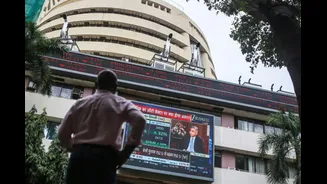







Indian equities have seen a sharp correction in 2026 so far, with rising volatility and global uncertainties eroding substantial market value and marking the steepest decline in about 15 years.
India’s
total market capitalisation (mcap) has dropped by more than $533 billion in 2026, the biggest fall since 2011, when Indian markets lost around $625 billion over the entire year.
The scale of the decline is notable. The market value erased from Indian equities this year alone exceeds the total stock market capitalisation of several countries, including Mexico, Malaysia, South Africa, Norway, Finland, Vietnam and Poland. It is also nearly twice the size of markets such as Chile, Austria, the Philippines, Qatar and Kuwait.
Currently, the combined mcap of all listed companies in India stands at about $4.77 trillion, the lowest level since April 2025, and roughly 10 per cent lower than the $5.3 trillion recorded at the start of 2026.
What is driving the market decline?
Indian equities have remained under pressure since the beginning of the year due to a combination of foreign investor outflows, subdued corporate earnings, global trade tensions and limited exposure to artificial intelligence-driven sectors.
While trade tensions between the United States and India have eased somewhat, the US–Israel–Iran conflict has kept global markets volatile and prolonged uncertainty for investors.
The conflict has also pushed crude oil prices above $100 per barrel, raising concerns about India’s macroeconomic stability. Higher oil prices could widen the current account deficit (CAD) by increasing the country’s import bill and fuelling inflation.
Analysts say India remains particularly vulnerable to oil shocks because it imports around 85 per cent of its crude oil requirements. According to analysts at Barclays, every $10 per barrel increase in crude oil prices could widen India’s CAD by about $9 billion, underscoring the sensitivity of the economy to energy price fluctuations.
Benchmark indices under pressure
The correction in market capitalisation has mirrored declines in benchmark indices. So far in 2026, the Sensex has fallen about 10.8 per cent, while the Nifty 50 has declined around 9.5 per cent.
Broader markets have also weakened. The BSE MidCap 150 index is down roughly 7.2 per cent, while the BSE SmallCap 250 index has dropped about 9.5 per cent during the same period.
Oil risks remain a key concern
Adding to market anxiety, Iran has warned that oil prices could surge to as high as $200 per barrel if the conflict involving the United States and Israel escalates further. Analysts say such a spike would significantly pressure oil-importing economies like India.
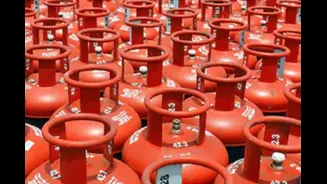
The tensions have already triggered gas supply disruptions in parts of the country, with shortages reported in several states. Some hotels and restaurants have temporarily shut operations due to limited LPG supplies.
Economists caution that if energy disruptions persist, they could weigh on economic activity and add to inflationary pressures.
Global investors turning cautious
Amid these uncertainties, Morgan Stanley recently downgraded India to “equalweight”, effectively a neutral stance, citing macroeconomic risks and relatively elevated valuations.
The brokerage said the downgrade reflects heightened geopolitical risks and India’s historical vulnerability to oil supply disruptions.
Morgan Stanley also noted that global investors may delay increasing exposure to Indian equities until the technology and AI investment cycle in markets such as South Korea and Taiwan peaks, as those markets currently offer stronger exposure to the global AI theme.