






Delhi Traffic Alert: The Delhi Transport Department issued 4,572 challans to vehicles without valid Pollution Under Control (PUC) certificates and impounded 145 buses between October 11 and 25, as the
government stepped up enforcement against vehicular pollution ahead of winter. Government data released on Tuesday also showed that action was taken against 48 vehicles emitting visible smoke, while 15 vehicles transporting building materials and 558 overloaded vehicles were penalised or impounded as part of the drive.
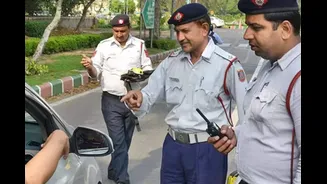
The enforcement measures were undertaken in line with directions from the Commission for Air Quality Management (CAQM), with teams deployed across key entry points and identified pollution hotspots to check violations.
Transport Minister Pankaj Kumar Singh said the government was continuing its efforts to curb emissions and promote cleaner public transport, including through the expansion of Delhi’s electric bus fleet. “Strict enforcement is being carried out against vehicles that do not meet the prescribed pollution-control norms, including vehicles with invalid PUC certificates and those found emitting visible smoke,” Singh said.
He added that enforcement personnel were working round the clock at major entry points, toll plazas and pollution hotspots.
Delhi Deploys 39 Teams At Border Points And Toll Plazas
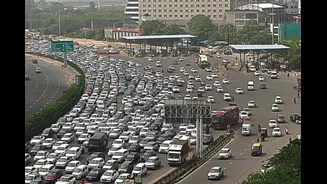
According to a report in Hindustan Times, 39 enforcement teams have been deployed around the clock at 13 major border points and toll plazas to identify vehicles violating pollution-control requirements. Additional teams are operating at designated pollution hotspots and nearby areas.
Four teams have been tasked with identifying end-of-life vehicles (ELVs), removing them from roads and transferring them to authorised scrappers. Another 14 teams are working alongside district transport offices and district magistrates under the Delhi government’s Parivartan scheme.
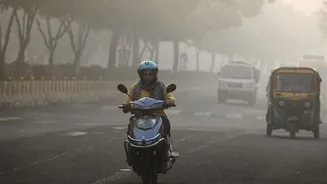
The intensified checks come amid concerns that vehicular emissions could add to the Capital’s pollution burden as winter approaches.
How To Check Your Vehicle’s PUC Certificate Online
Vehicle owners can check their Pollution Under Control certificate details through the government’s official Parivahan PUC portal. The online service allows motorists to verify whether their certificate is recorded as valid and check its expiry date.
Follow these steps:
- Open the official Parivahan PUC portal.
- Select the option to view PUC certificate details.
- Enter your vehicle’s registration number.
- Enter the last five characters of the chassis number.
- Complete the captcha verification.
- Click on PUC Details to view the available certificate information.
If a valid certificate is recorded, the portal should display the available details, including its validity dates and emission readings. Vehicle owners can save, print or download the details where the service permits.
If no active certificate appears, check the registration and chassis details for typing errors. If you have recently undergone an emission test, contact the authorised testing centre if the updated record is not yet available.
Important: Checking or downloading a certificate online does not replace the physical emission test required for its issuance or renewal. The vehicle must be tested at an authorised PUC centre.
How To Find An Authorised PUC Testing Centre In Delhi
Delhi has more than 900 authorised pollution-checking centres, according to previously published transport department information. These centres operate at locations including petrol pumps and workshops, although the services offered depend on the vehicle categories for which each centre is authorised.
Motorists can use the official Parivahan PUC portal to find a centre.
- Open the portal and select PUC Center List.
- Choose Delhi from the state selection menu.
- Select the relevant office or regional transport jurisdiction, where the option is available.
- Check the displayed centre names, addresses and authorised vehicle categories before visiting.
Drivers can also search Google Maps for ‘PUC Centre near me’ or ‘pollution checking centre’. However, they should confirm that the selected facility is authorised and can test their particular vehicle rather than relying solely on its map listing.
What Is The Fine For Driving Without A Valid PUC Certificate?
Driving without a valid PUC certificate can attract a penalty of up to Rs 10,000 under Section 190(2) of the Motor Vehicles Act, 1988. The provision also allows for imprisonment in applicable cases, and a court may impose the penalties prescribed by law.
The precise action depends on the applicable legal provisions and circumstances of the violation. Motorists should not assume that every case will result in an identical challan amount.
A valid PUC certificate confirms that a vehicle’s emissions meet the prescribed standards at the time of testing. If a vehicle emits visible smoke despite holding a certificate, its owner may still face enforcement action.
PUC Certificate Validity: How Often Must You Renew It?
The first PUC certificate is generally required after one year from the date of a vehicle’s first registration. After that, the renewal period depends on the vehicle’s emission standard under the applicable rules.
In Delhi, the transport department’s published guidance specifies the following validity periods:
- BS-IV and BS-VI vehicles: 12 months.
- Other vehicles covered by the shorter validity period: Three months under the cited Delhi guidance.
Owners should check the expiry date printed on their current certificate and follow the applicable rules rather than relying solely on a general renewal schedule.
Delhi PUC Test Fees For Cars And Two-Wheelers
The Delhi Transport Department’s published fee schedule lists the following pollution-checking charges, with GST extra if applicable:
- Petrol, CNG or LPG two-wheelers and three-wheelers: Rs 60.
- Petrol, CNG or LPG four-wheelers and larger vehicles: Rs 80.
- Diesel vehicles: Rs 100.
The applicable fee depends on the vehicle’s fuel type and category. Motorists should confirm the charges with an authorised centre before getting the test done.
With thousands of PUC-related challans issued in a fortnight, checking the certificate’s expiry date and renewing it in time can help motorists avoid enforcement action while ensuring their vehicles meet the prescribed emission standards.