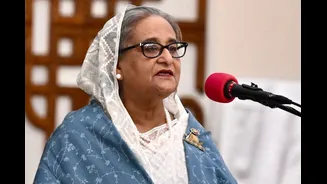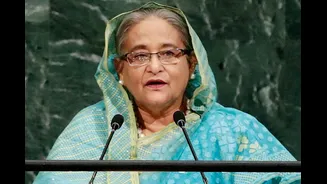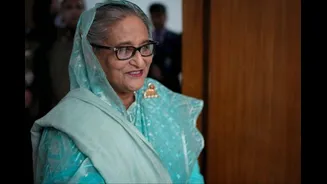








Ousted Bangladesh prime minister Sheikh Hasina has sought a fresh passport and national identity card from Bangladesh’s diplomatic mission in New Delhi, taking a significant step towards her proposed return
to the country in December, even as Dhaka insists that she must be extradited from India under the bilateral treaty.
Hasina’s lawyers at London-based Matrix Chambers have written to Preeti Rahman, the acting high commissioner at Bangladesh’s embassy in Delhi, requesting that new travel and identity documents be issued to their client. The letter, seen by Reuters, marks Hasina’s first such communication with the embassy since she fled Bangladesh in August 2024 following a student-led uprising that ended her 15-year stint in power.
In the letter, her lawyers said Hasina’s existing Bangladeshi passport and National Identity Card (NID) had reportedly been revoked by the previous interim government and other authorities. They asked the embassy to process the applications expeditiously, citing her Bangladeshi nationality and obligations under international human rights instruments.
“In view of the reported revocation of her existing Bangladeshi passport and National Identity Card (NID) by the Interim Government and other authorities, I respectfully request that you take the necessary steps to issue a new Bangladeshi passport and National Identity Card for our client,” the letter said, according to Reuters.
Hasina has previously said she intends to return to Bangladesh in December and surrender before a court. Her aides have indicated that the date of her return will be announced once the necessary formalities are completed.
Dhaka Wants Hasina Handed Over
The request for fresh documents comes amid a continuing standoff between Dhaka and New Delhi over Hasina’s return.
Bangladesh has repeatedly sought her extradition from India under the bilateral treaty. State Minister for Foreign Affairs Humaiun Kobir has insisted that Hasina should be handed over through the existing extradition mechanism, questioning why she would need a new passport to return.
“We want Hasina to be handed over. She will be handed over. There is an active extradition treaty between Bangladesh and India,” Kobir said, according to The Daily Star. He also argued that the extradition process did not require Hasina to obtain fresh travel documents, describing the matter as one of legal handover rather than a routine return.
Bangladesh’s Law Minister Md Asaduzzaman had also said on November 8 that Dhaka was pursuing her return under the extradition treaty and that the matter would be handled through legal and diplomatic channels. India has acknowledged receiving Bangladesh’s extradition requests and said they are being examined through established processes.
Death Sentence Awaits Hasina If She Returns
Hasina’s proposed return comes against the backdrop of serious criminal charges in Bangladesh.
The country’s International Crimes Tribunal sentenced her to death in absentia in November 2025 for crimes against humanity linked to the deadly crackdown on student-led protests that ultimately toppled her government in August 2024.
Hasina has denied the charges and rejected the legitimacy of the proceedings. She has said she is prepared to return and face the legal process, despite the possibility of arrest and imprisonment.
She fled to India on August 5, 2024, as the uprising gathered pace and brought an end to her rule. She has remained in India since then.
Her Awami League party, which dominated Bangladeshi politics during her tenure, was subsequently banned from political activity and barred from contesting the February 2026 elections. Several senior party leaders have been arrested, while others have gone into exile.
What Does This Mean For India-Bangladesh Ties?
Hasina’s presence in India has remained a major point of friction between the two neighbours since her government was overthrown. Dhaka’s repeated demands for her extradition have added to tensions, while New Delhi has maintained that the request is being examined through the appropriate legal processes.
Her possible return could have significant political and diplomatic implications. It could intensify divisions within Bangladesh, where Hasina retains support among sections of the population even as her opponents continue to demand accountability for the 2024 crackdown.
At the same time, resolving the issue could help address one of the most contentious aspects of India-Bangladesh relations.