

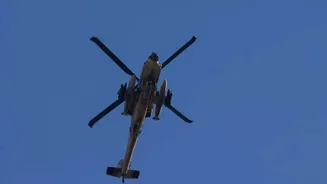
US President Donald Trump defended ongoing military strikes against Iran, saying the attacks are a direct response to what he described as Tehran’s role in bringing down an American Apache helicopter over
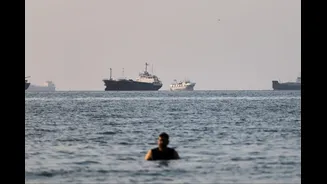
the Strait of Hormuz. Speaking to ABC News as US military operations continued, Trump said Washington was justified in responding to the incident and indicated that the strikes were intended to send a strong message to Iran.
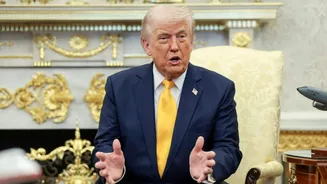
“I think it’s very important to respond. They shot down a helicopter, and we are responding as we speak,” Trump said. The US President added that the military action was designed as retaliation for the helicopter incident, which occurred a day earlier.
“This is a response to what they did with our helicopter last night, and I believe the response should be very strong, very powerful, and that’s what this one is,” he said.
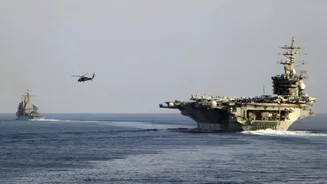
The remarks came after US Central Command (CENTCOM) announced that American forces had begun what it described as “self-defense strikes” against Iran at Trump’s direction. According to CENTCOM, the operation was launched in response to the downing of a US Army AH-64 Apache helicopter and was intended as a “proportional response” to what it called Iranian aggression.
Earlier, Trump said he had been informed by US military officials that Iranian forces were responsible for shooting down the Apache during a patrol mission over the Strait of Hormuz. The helicopter later crashed into waters off the coast of Oman, though both crew members survived and were rescued.
The strikes come at a time when the White House had been publicly discussing the possibility of a broader diplomatic breakthrough in West Asia. Trump had earlier said that negotiations involving Iran and Israel were in their “final throes” and suggested a deal could be reached within days.
Iran condemned the US military action and warned that it would deliver what it called a “definitive response” to American aggression. Iranian state media has also reported multiple explosions and projectile strikes at locations including Qeshm, Jask, Sirik and Kuh-e Mobarakeh in southern Iran.