







Shares of HDFC Bank rose sharply in morning trade on Monday, August 31, even as the broader market remained under pressure. The stock climbed as much as 2.45% to Rs 738 on the NSE before paring some gains.
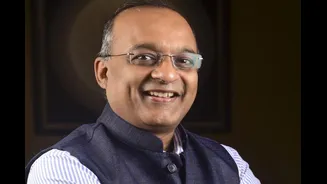
The move comes after managing director and CEO Sashidhar Jagdishan decided not to seek reappointment for a third term.
Jagdishan will retire from HDFC Bank at the end of his current term on October 26, 2026. The bank’s board has said it will fast-track the process of finding his successor.
The market reaction may appear surprising because the exit of the chief executive of India’s largest private sector bank could normally be seen as a negative. However, investors appear to be looking at the development as a way to bring clarity to a period of uncertainty around the bank’s leadership and governance.
Why is HDFC Bank stock rising today?
One of the key reasons behind Monday’s rise is that the announcement has removed uncertainty around Jagdishan’s future at the bank. His third term had been a subject of discussion, and the board now has a clear requirement to identify a successor.
Jagdishan’s decision came despite the board trying to persuade him to reconsider. HDFC Bank said he “reiterated his decision to not seek reappointment” and will retire on October 26.
Also, several brokerages have maintained positive views on the stock despite the leadership change. Motilal Oswal Financial Services, Jefferies, ICICI Securities and Axis Capital retained their Buy ratings, although some analysts reduced their price targets to account for the uncertainty around the transition.
Jefferies has trimmed its price target to Rs 880 from Rs 1,050, while maintaining a ‘Buy’ call on the stock. “Transition is likely to impact revenue momentum on deposit mobilisation and fees. So, we trim earnings for FY27-29 by 3 per cent each. We don’t see risk to asset quality as the bank has sustained high quality; even the book value of exposure to Essel group was NIL at merger; the claim includes principal/interest. Uncertainty can lift the cost of equity, leading to lower valuation,” Jefferies said.
‘Best time to resign’: What Jagdishan said
Jagdishan himself has indicated that he believes the timing is appropriate for his departure. Speaking to NDTV Profit, he said, “With issues addressed, this is the best time to resign.”
The statement is important because the exit comes after a difficult year for HDFC Bank, which has faced questions around governance, senior management changes and the performance of the bank following its merger with HDFC Ltd.
A difficult year for HDFC Bank
Ishank Gupta, analyst (banking and financial services) at Choice Institutional Equities, in his note said HDFC Bank has had an “unsettled twelve months”. He also highlighted the resignation of former part-time chairman Atanu Chakraborty in March. Chakraborty had resigned with immediate effect, saying certain practices at the bank were not in line with his personal values and ethics.
“It has been an unsettled twelve months at India’s largest private sector lender, and Saturday’s announcement that CEO Sashidhar Jagdishan will not seek a third term closes it on an uncomfortable note,” Gupta said.
The resignation was followed by concerns around governance and internal controls. However, Gupta said the matters that followed have since been closed and that two external law firms found no evidence to substantiate the concerns raised by the former chairman.
The bank also faced scrutiny over an alleged payment linked to the Maharashtra State Road Development Corporation and the alleged misselling of Credit Suisse Additional Tier-1 bonds through its Dubai and Bahrain operations.
Jagdishan’s exit is the third major leadership change
Gupta said the CEO’s exit is particularly important because it comes after changes at the other two top positions.
Rajiv Kumar, former finance secretary and chief election commissioner, was named part-time chairman in June. Puneet Sharma, who spent more than six years as CFO of Axis Bank, is set to join HDFC Bank as CFO-designate on September 1 and take charge on December 1, succeeding Srinivasan Vaidyanathan.
That means the chairman, CFO and CEO positions are all undergoing changes within roughly a year.
“The chief executive’s chair is now the third to change hands inside a single year, and the only one without a named successor,” Gupta said.
Why the successor will be crucial
The biggest question for investors now is who will replace Jagdishan. The board has started the process of selecting his successor and is expected to move quickly. The new CEO will inherit a bank that needs to complete the post-merger integration, improve its growth trajectory and address the pressure around its credit-deposit ratio.
According to a CNBC-TV18 report citing sources familiar with the matter, State Bank of India (SBI) former chairman Dinesh Kumar Khara is among the names being considered for the top job at HDFC Bank, as the private sector lender begins the process of finding a successor to managing director and CEO Sashidhar Jagdishan.
“The board must now put names before the RBI and secure approval within eight weeks, against a norm of six months. Leadership uncertainty of this nature has historically attracted a valuation discount at Indian banks until a successor is confirmed, and the counterparty on the other side of that adjustment is usually the incumbent shareholder,” Gupta said.
What does Jagdishan’s exit mean for HDFC Bank?
Jagdishan has been with HDFC Bank for nearly three decades and became MD and CEO in October 2020, succeeding Aditya Puri. His tenure also included the landmark merger between HDFC Ltd and HDFC Bank, completed in 2023.
Therefore, replacing him will not simply be about filling a vacant position. The next CEO will have to manage the bank’s post-merger strategy while restoring investor confidence.
Gupta said the incoming management must complete the post-merger transition, restore the growth trajectory the bank has deferred while repairing its credit-deposit ratio, and above all return a settled sense of stability to a franchise that has traded on precisely that quality for three decades.
For now, investors appear to be welcoming the clarity provided by Jagdishan’s decision. But the longer-term direction of HDFC Bank’s stock will depend heavily on who takes over and how quickly the bank can complete the transition.
“Until a successor is named and approved, this is not resolution. It is one uncertainty exchanged for another,” Gupta dded.