




Iran has dismissed proposals put forward by the United States to end the ongoing conflict, calling them “unrealistic, unreasonable and excessive”.
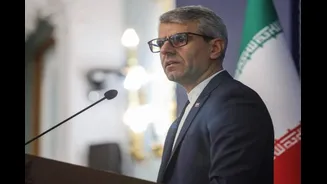
Esmaeil Baghaei, spokesperson for Iran’s foreign ministry,
said there had been no direct negotiations between Tehran and Washington. He clarified that communication between the two sides had taken place only through intermediaries.
The response from Iran came after Donald Trump said that Iran had accepted “most” of a 15-point proposal presented by the United States.
Speaking to the Financial Times, Trump suggested that Tehran had broadly agreed to Washington’s conditions aimed at ending the conflict.
According to Trump, the framework of the proposal was conveyed to Iran through Pakistan as part of indirect negotiations between the two countries.
“They gave us most of the points. Why wouldn’t they?” Trump said, while adding that the United States could still seek “a couple of other things” as discussions continue.
What’s inside the US 15-point plan?
Details of the US 15-point proposal have not been officially released, but reports outline its main demands and incentives. At the centre is a push to completely dismantle Iran’s nuclear programme. This includes ending uranium enrichment, handing over enriched material, shutting key sites such as Natanz, Fordow and Isfahan, and allowing full international inspections.
The plan also asks Iran to stop funding and arming regional groups and to abandon its “proxy model” in the Middle East, affecting organisations like Hezbollah and the Houthis.
It further calls for keeping the Strait of Hormuz open and moving towards a temporary ceasefire of about a month to allow talks.
In return, the US is offering full sanctions relief, support for a supervised civilian nuclear programme, and removal of the “snapback” sanctions mechanism.