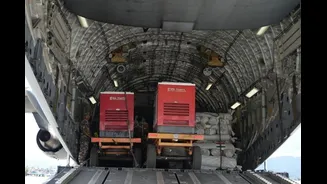






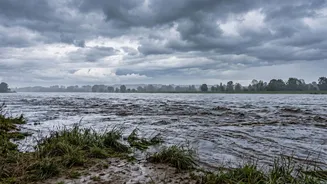

India is sending specialised teams to help rescue people who may still be trapped inside a hydropower tunnel in flood-hit Nepal, the government said on Friday.
External Affairs Minister S Jaishankar said
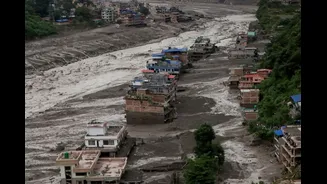
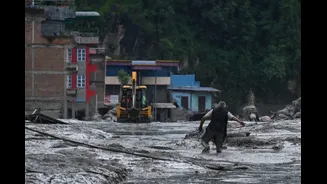
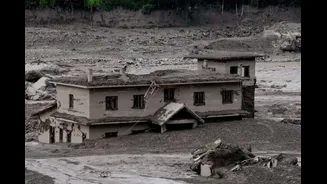
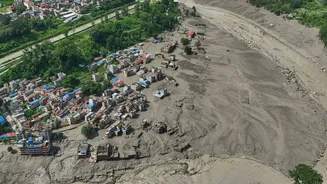
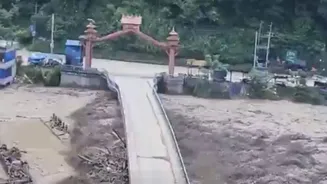
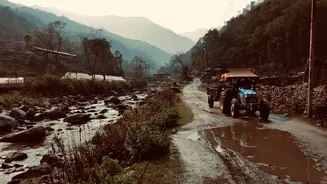
India has also offered Bailey bridges — portable, prefabricated truss bridges that can be assembled quickly without heavy machinery — to help restore connectivity in Nepal, where more than 500 people have died and several bridges, towns and villages have been washed away in the flash floods.
“The main thing is that in one place where there is a hydroelectric project, there could be a possibility of people who may be in a tunnel. So, we are sending a team to help with the experts. Also, they need some Bailey bridges, so we are sending bridges. There may be some medical teams also going out there. If they require NDRF, we will send them. Two planes of relief supplies have also gone out there, a third plane will be taking off today,” Jaishankar said.
Also Read | ‘We Have To Learn The Lesson’: Nepal Seeks Early Warning System From China After Flood Kills 500
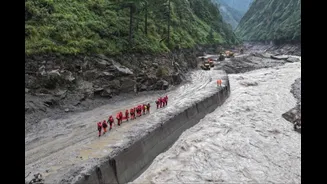
Earlier on Friday, a Nepal Army team successfully rescued 350 labourers and locals who had been trapped inside a hydropower tunnel. Some Indian nationals were among the workers at the Trishuli 1 site.
According to the Nepal Prime Minister’s Office, a Nepalese rescue team is continuing efforts to locate around 100 people who remain trapped inside the hydropower tunnel after 350 labourers and locals were rescued.
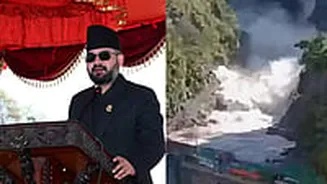
Jaishankar said he had spoken to his Nepalese counterpart Shisir Khanal and stressed that India’s focus remained on supporting Nepal.
“I just received a group of Indians who had gone on pilgrimage to Kailash Mansarovar. They had been rescued after the floods. So, they were brought back to Kathmandu. They were rescued by the Nepali Army. Then our Embassy arranged for them to come back. So, I just came to meet them, share our great relief that they are safe and sound, and learn from them about their experiences,” Jaishankar said.
He said India was continuing efforts to establish contact with Indians in Nepal.
“We are still very much focused on contacting all the Indians who are there. We believe a little more than 315 Indians have still not been contacted. Roughly about 85 Indians have been rescued from various places, including this group of 21 people who have just arrived,” he said.
Jaishankar said the rescued Indians were particularly thankful to the Nepal Army for its efforts to evacuate them from difficult locations.
“They were very thankful, particularly to the Nepal Army which made this great effort to get them out of that very difficult place,” he said.
“Right now, our effort is on supporting Nepal in the relief and rescue of people. Even today I spoke in the morning to the Nepal Foreign Minister. We have given them a range of support offers, they are evaluating it. Whatever they feel is appropriate, they will pick up for their needs,” he added.
Jaishankar also held a meeting with officials of the Ministry of External Affairs (MEA) and the Indian embassies in Kathmandu and Beijing to discuss relief and rescue efforts for Nepal following the deadly floods.
During the meeting, MEA officials briefed him on the relief supplies that are being sent to Nepal.
The meeting came as catastrophic flash floods in Nepal’s Bhote Koshi River left more than 500 people dead, while 977 people remain out of contact.