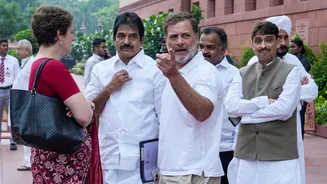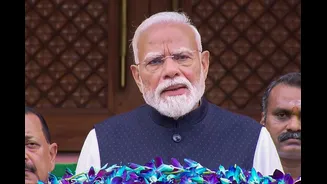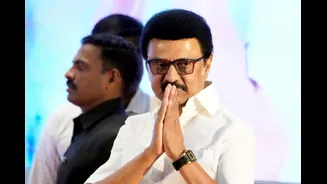









At the all-party meet on Sunday, did the MK Stalin-led Dravid Munnetra Kazhagam (DMK) agree to support the National Democratic Alliance’s (NDA) Delimitation Bill? Lok Sabha MP from the Revolutionary Socialist
Party NK Premachandran says it did, but, according to DMK MP Tiruchi Siva, the government has not yet given any clear proposal.
LEADERSPEAK
Premachandran told News18, “Unfortunately, the DMK has just supported the Delimitation Bill…”
DMK MP Tiruchi Siva, however, told CNN-News18, “The government has not come out with any clear proposal for delimitation…. Interests of southern states should not be affected. Women reservation bill….do it immediately with existing numbers. On delimitation, we want more clarity on government’s position.”
According to sources, the DMK wants the bill to mention 50% seat increase, what Home Minister Amit Shah had said verbally in the Lok Sabha. “If the bill mentions this, they are willing to consider positively,” said sources.
The governmenthas, so far, not listed the bill for passage in the monsoon session, but government functionaries expressed confidence that they will eventually have the numbers.
#BreakingNews | DMK has said that they could support the delimitation bill proposal at the All-Party Meeting @Arunima24 shares more details @AmanKayamHai_ | #DMK #Delimitation #Politics pic.twitter.com/ky0G4fJlun
— News18 (@CNNnews18) July 19, 2026
DMK SOFTENS STANCE
Over the months, the DMK significantly softened its stance on the proposed Delimitation Bill. The DMK’s shift has altered the arithmetic in Parliament as the Bharatiya Janata Party-led NDA seeks to secure the two-thirds majority required to pass the constitutional amendment.
TheDMK’s pivot comes amid a notable breakdown in its relationship with the Congress. After losing power in the Tamil Nadu Assembly elections and leaving the INDIA bloc, the DMK has signaled it will evaluate the bill solely on how it impacts Tamil Nadu’s interests, rather than acting as a united front with the Congress.
The softening of the DMK’s stance is also attributed to reports that the NDA’s new proposal may include a uniform 50% increase in Lok Sabha seats across all states. This approach aims to alleviate the concern that southern states will lose their relative representation.
THE NUMBER GAME
The DMK’s 22 Lok Sabha MPs are crucial because the BJP-led NDA is currently short of the two-thirds majority (360 votes) required to pass the Delimitation Bill as a constitutional amendment.With recent rebel additions from other parties, the NDA’s effective strength stands at 319 MPs, leaving them exactly 41 votes short of the target. If the DMK decides to support the bill or strategically abstains to lower the voting threshold, their 22 votes will bring the NDA within striking distance of passing the legislation.
THE DELIMITATION BILL
The Constitution (131st Amendment) Bill, 2026 (commonly called the Delimitation Bill) is a legislative package aimed at reshaping India’s electoral map before the 2029 general election. It focuses on three core areas:
- It proposes increasing the total number of Lok Sabha seats from 543 to 850 to accommodate India’s growing population.
- It removes the long-standing freeze on seat allocation, allowing a fresh Delimitation Commission to redraw constituency boundaries based on the latest census data.
- It fast-tracks the implementation of the one-third (33%) quota for women in Parliament.
Stormy Monsoon Session on the cards?
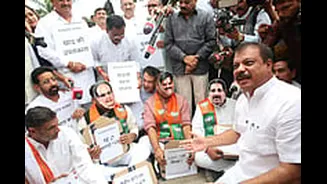
The Opposition walked out of the Centre’s all-party meeting, signalling a confrontational start to Parliament’s Monsoon Session. @AmanKayamHai_ @_pallavighosh share details #MonsoonSession #LokSabha #RajyaSabha pic.twitter.com/alMfezla9z
— News18 (@CNNnews18) July 19, 2026
Previously, this was legally tied to waiting for a fresh census and subsequent delimitation; the 2026 bill removes that specific bottleneck to guarantee it takes effect by 2029.
The bill previously failedin April 2026 due to fierce resistance from southern states. States like Tamil Nadu fear that because they successfully managed population growth, a purely population-based redistribution of seats will unfairly favor more populous northern states, diluting the South’s political voice. The NDA is currently trying to address this by proposing a uniform percentage seat increase for all states.
With agency inputs