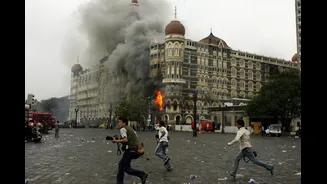









Mumbai is often remembered for the horrific November 26, 2008 terror attacks, when 10 heavily armed terrorists entered the city by sea and launched coordinated assaults on some of its busiest locations.
The siege continued for nearly 60 hours, killing 166 people and injuring 238, according to the Supreme Court judgment in the case.
But 26/11 was not the first time Mumbai had been targeted by terrorists. The country’s financial capital had witnessed several deadly bomb attacks over the preceding years, including the 1993 serial blasts, explosions at railway stations and markets, and the 2006 attacks on suburban trains.
As the city remembers the victims of 26/11, here is a look at five other major terror attacks that shook Mumbai between 1993 and 2011.
1993 Mumbai Serial Blasts
The 1993 serial bombings remain among the deadliest terror attacks in India’s history. A series of coordinated explosions struck 13 locations across Mumbai, then known as Bombay, on March 12, killing 257 people and injuring 713, according to figures recorded in a Supreme Court judgment.
The explosions targeted prominent commercial and public locations, including the Bombay Stock Exchange, Air India Building, hotels, markets and other crowded places. The attacks caused extensive damage to buildings and property, bringing large parts of the city to a standstill.
The bombings came months after communal violence in Mumbai following the demolition of the Babri Masjid in December 1992. Investigators linked the conspiracy to underworld figures, including Dawood Ibrahim and Tiger Memon. The case led to a long investigation and trial under the Terrorist and Disruptive Activities (Prevention) Act (TADA).
Mulund Train Blast
Mumbai’s suburban railway network, which carries millions of commuters, was targeted again on March 13, 2003. A powerful explosion ripped through a local train near Mulund railway station as passengers were travelling home during the evening rush.
The blast killed 11 people and injured more than 65, according to the Brihanmumbai Municipal Corporation’s disaster management plan. The explosion severely damaged a coach, with rescue teams rushing to pull injured passengers from the train.
The attack came a day after the 10th anniversary of the 1993 serial blasts, bringing back painful memories of the earlier tragedy.
Gateway Of India And Zaveri Bazaar Blasts
Just months after the Mulund train blast, two powerful explosions struck crowded parts of south Mumbai on August 25, 2003.
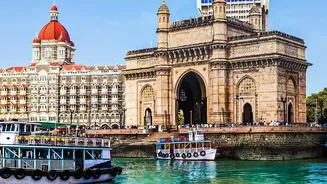
One bomb exploded near the Gateway of India, a major tourist attraction, while another went off in Zaveri Bazaar, a busy jewellery market. The bombs were planted in taxis, and the explosions killed 52 people and injured 244, according to an Indian Express chronology of the case.
The attacks struck two locations with very different crowds – one frequented by tourists and visitors, and the other packed with traders, workers and shoppers. The explosions caused panic across the city.
A special court later convicted three accused in the case, including a husband and wife, and awarded them death sentences in 2009. The Bombay High Court subsequently upheld the sentences.
7/11 Mumbai Train Blasts
One of the deadliest attacks on Mumbai’s public transport system took place on July 11, 2006, when seven bombs exploded in suburban local trains during the evening rush hour.
The bombs went off in first-class compartments of trains on the Western Railway network, within a short span of time as commuters were returning home. The explosions ripped through crowded coaches, killing 189 people and injuring 824, according to figures cited in Bombay High Court proceedings and news reports.
The attacks caused widespread disruption to the city’s lifeline. Hospitals received large numbers of injured passengers, while families searched for relatives who had not returned home.
The case went through a lengthy investigation and trial. In September 2015, a special court sentenced five men to death and seven others to life imprisonment. However, in July 2025, the Bombay High Court acquitted all 12 men who had been convicted by the trial court, setting aside the sentences and holding that the prosecution had failed to prove its case beyond reasonable doubt. The Maharashtra government subsequently challenged the acquittal.
2011 Mumbai Triple Blasts
Five years after the 7/11 train bombings, Mumbai was struck by another series of coordinated explosions. Three bombs went off within minutes of one another on July 13, 2011, at Zaveri Bazaar, Opera House and Dadar’s Kabutarkhana area.
The blasts took place during the evening rush hour, when the markets and surrounding areas were crowded. The attacks killed at least 26 people and injured more than 130, according to later reports on the incident.
The Union Home Ministry confirmed the three blast locations in its initial updates the following day. The explosions triggered a major security response, with forensic teams and investigators examining the sites.
The attack, commonly referred to as the 13/7 Mumbai blasts, once again brought the city’s crowded markets and public spaces into focus as potential targets.
26/11 Mumbai Attacks
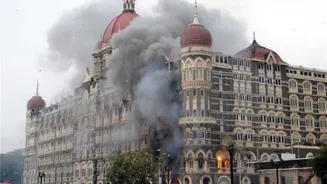
The 26/11 attacks remain one of the most devastating terror strikes in India’s history. Ten Lashkar-e-Taiba terrorists entered Mumbai by sea on the night of November 26, 2008, and launched coordinated attacks at several locations.
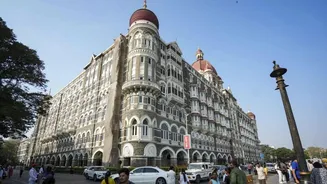
Their targets included the Taj Mahal Palace Hotel, the Oberoi-Trident hotel complex, Chhatrapati Shivaji Maharaj Terminus (CSMT), Nariman House, Leopold Cafe and Cama Hospital. The attacks also involved other locations, including Metro Cinema.
The choice of targets ensured that the violence reached crowded public spaces, major hotels and places frequented by foreign visitors. The attackers opened fire and took hostages, while security forces launched operations to rescue people and neutralise the gunmen.
The siege continued until November 29, when the last of the attackers at the Taj hotel was killed. A total of 166 people died and 238 were injured, according to the Supreme Court judgment. The victims included civilians, police personnel, security force members and foreign nationals.
Nine of the 10 attackers were killed during the operations. Mohammed Ajmal Amir Kasab was captured alive. He was sentenced to death in May 2010, a verdict later upheld by the Bombay High Court and the Supreme Court. Kasab was hanged at Yerawada Central Jail in Pune on November 21, 2012.
Mumbai’s Long History Of Terror Attacks
The attacks between 1993 and 2011 show how Mumbai was repeatedly targeted at places central to everyday life – railway trains, markets, business districts and popular public landmarks.
The scale and nature of the attacks differed, but the impact extended far beyond the immediate loss of life. Families lost loved ones, survivors were left with physical and emotional trauma, and the city had to confront the challenge of protecting its crowded public spaces.
Remembering these incidents is not only about recalling dates and casualty figures. It is also about recognising the people whose lives were changed and the resilience of a city that continued to move forward after each tragedy.