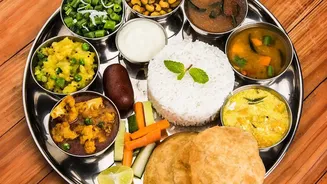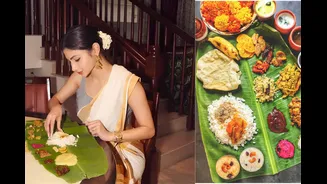





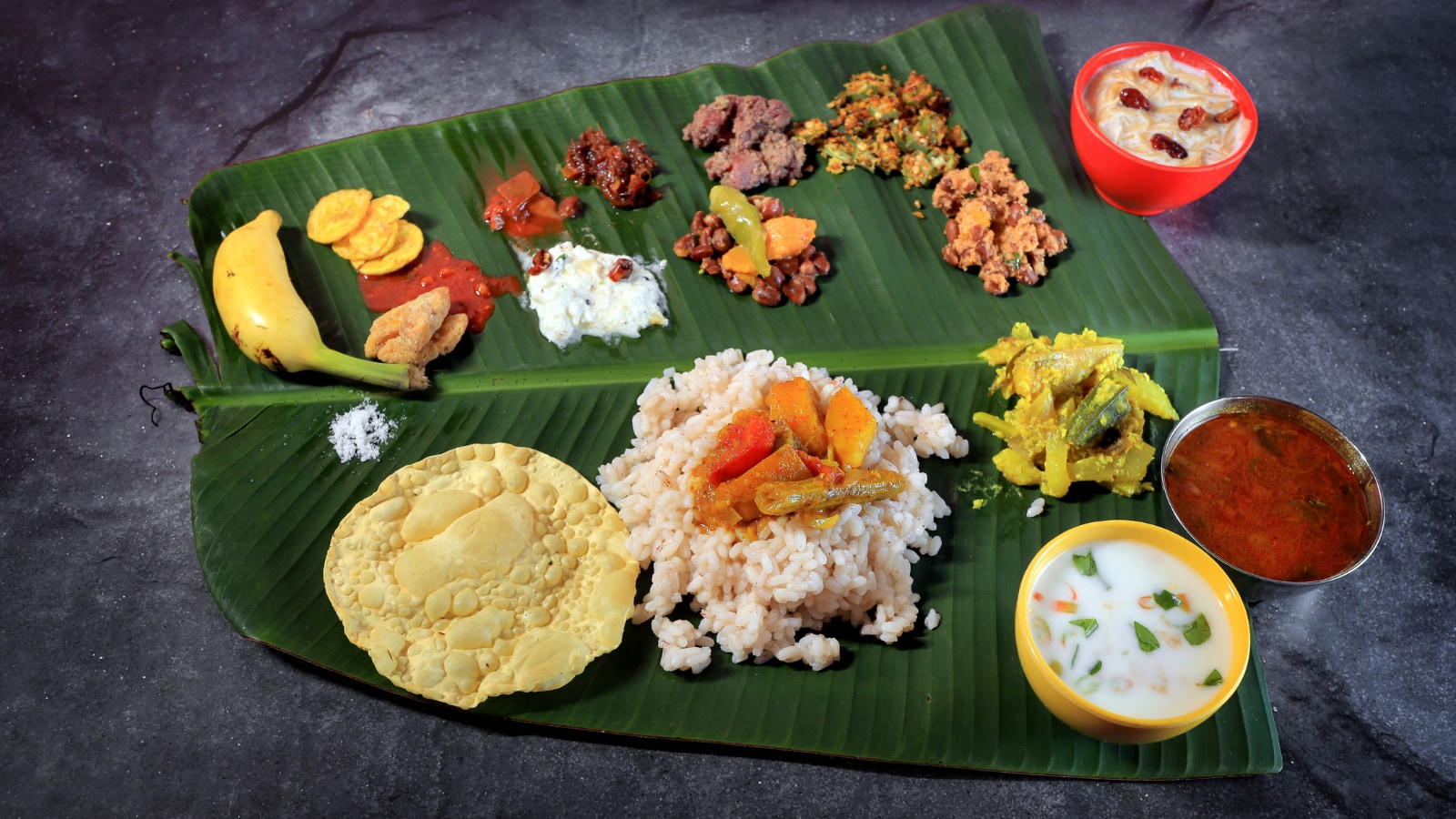
Onashamsakal! Onam, Kerala’s vibrant harvest festival, is incomplete without the grand Onam Sadhya, a lavish vegetarian feast traditionally served on fresh banana leaves. Rooted in the legend of King Mahabali’s
annual return, the meal celebrates abundance, equality and togetherness.
The number of dishes can vary from home to home and region to region, but a grand Sadhya is often described as featuring 26 dishes, each adding a different taste, texture and aroma to the meal. More than a feast, it represents Kerala’s agricultural traditions, hospitality and the spirit of sharing.
What remains constant is the careful balance of tastes — sweet, sour, salty, bitter, pungent and astringent that makes the meal a complete sensory experience.
What Are The 26 Traditional Dishes In An Onam Sadhya?
Here is a look at the dishes commonly associated with a traditional 26-item Sadhya:
1. Pappadam
No Sadhya feels complete without the satisfying crunch of pappadam. Crisp and golden, it adds the first burst of texture to the elaborate feast.
2. Upperi
Kerala’s beloved banana chips are a Sadhya staple. Thin banana slices are fried in coconut oil until golden and crisp, making them almost impossible to resist.
3. Sharkara Varatti
Think of Sharkara Varatti as Upperi’s sweeter counterpart. Banana pieces are coated in jaggery and spices, creating a sticky, chewy and richly sweet bite.
4. Inji Curry
Made with ginger, tamarind and jaggery, Inji Curry brings together heat, tanginess and sweetness in one punchy accompaniment. It is a distinctive part of the Onam spread.
5. Mango Curry
Tangy mango pickle brings an instant flavour boost to the otherwise subtle flavours of the Sadhya. Even a small serving can add plenty of punch to rice and curries.
6. Naranga Curry
Sharp, sour and refreshing, Naranga Curry is essentially a lemon-based pickle that cuts through the richer flavours and adds a bright zing to the banana leaf.
7. Pachadi
A creamy yoghurt-based preparation, Pachadi can take different forms depending on the ingredient. Pineapple gives it a sweeter note, while bitter gourd creates a more distinctive bitter-sour flavour.
8. Olan
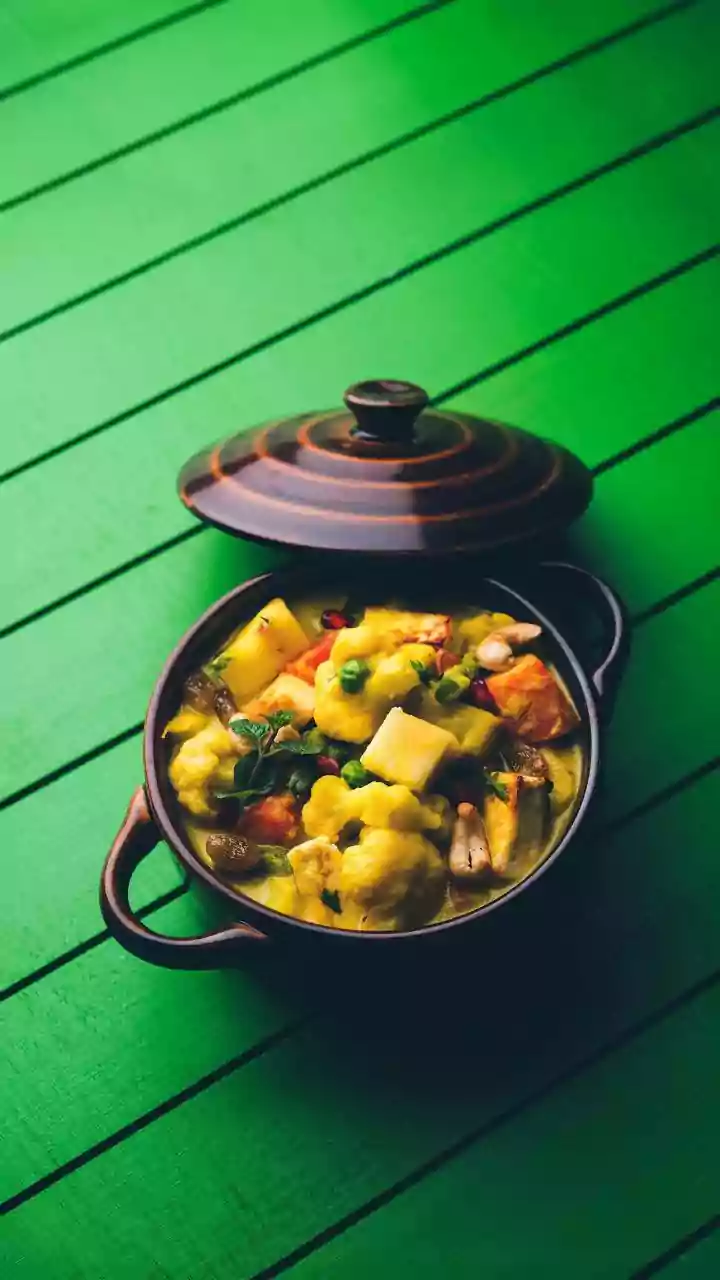
Mild and delicate, Olan combines ash gourd and red beans with coconut milk. Its gentle flavours offer a soothing contrast to the spicier dishes on the leaf.
9. Ellisheri
Pumpkin and red beans come together with grated coconut in this comforting preparation. Mildly spiced and earthy, Ellisheri adds a warm, homely touch to the feast.
10. Avial
A celebrated Kerala classic, Avial brings together assorted vegetables, grated coconut, curry leaves and coconut oil. It is hearty, aromatic and one of the most recognisable dishes on a Sadhya leaf.
11. Thoran
This dry vegetable preparation combines finely chopped vegetables such as cabbage, beans or carrots with grated coconut. It is a simple, everyday Kerala favourite that fits naturally into the festive spread.
12. Chor
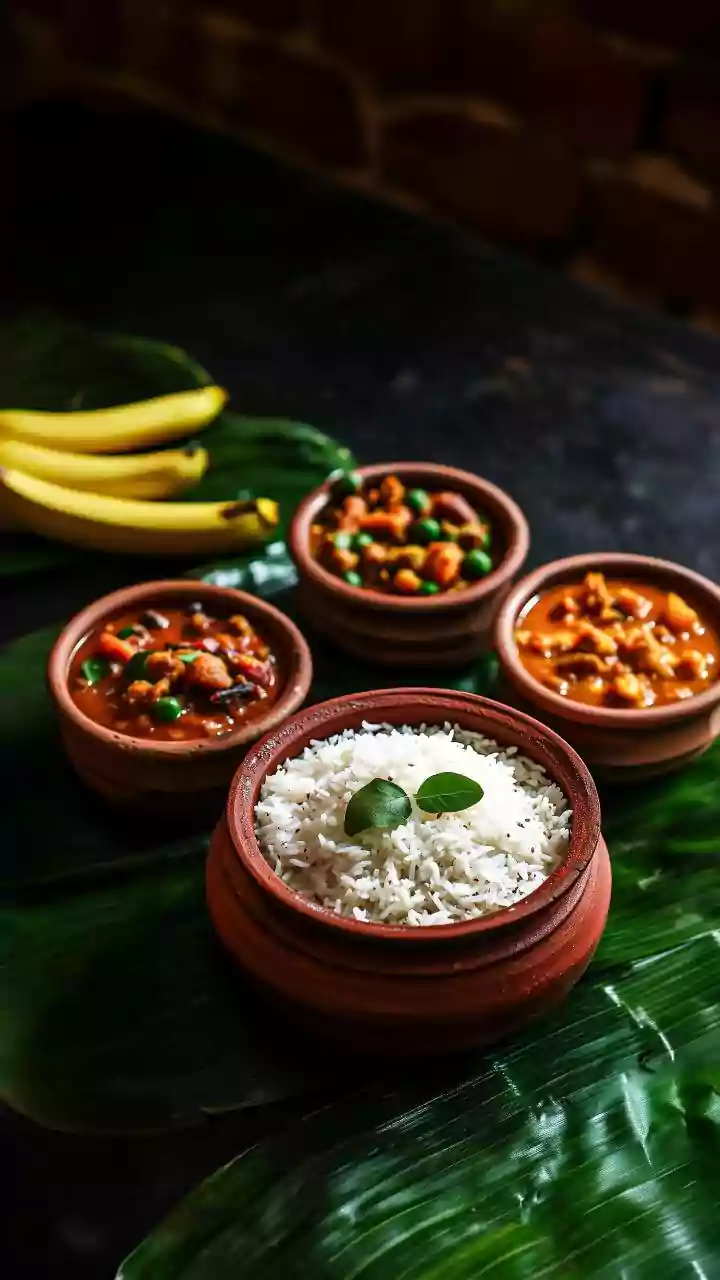
Rice is the foundation of the Sadhya. Traditionally served as a generous portion, it becomes the base for dal, curries, sambar, rasam and the other flavours served across the meal.
13. Parripu Curry
A simple lentil preparation, Parripu Curry is typically served with rice and topped with ghee. Its mild, comforting flavour balances the sharper accompaniments.
14. Chenna Mezhkkupuratti
Yam is cooked, sliced and seasoned before being sautéed in coconut oil. The result is a preparation with a pleasantly crisp exterior and soft, tender centre.
15. Sambhar
A Sadhya staple, Sambhar combines lentils, tamarind, spices and assorted vegetables. Recipes vary across households, with each family often adding its own distinctive touch.
16. Pulissery
Pulissery brings together yoghurt, vegetables such as pumpkin or cucumber, coconut and a tempering of mustard seeds and curry leaves. Its mildly sour flavour adds freshness to the meal.
17. Kaalan
Thicker and tangier than many other yoghurt-based preparations, Kaalan is traditionally made with ingredients such as yam or raw banana, along with coconut and yoghurt.
18. Morru Kachiyatha
This comforting buttermilk-based preparation is gently cooked and flavoured with ingredients such as ginger, garlic, sesame and shallots, creating a warm, aromatic finish to the savoury dishes.
19. Kichadi
Often compared with Pachadi, Kichadi has a more savoury and spiced profile. It can be prepared using ingredients such as okra, cucumber or bitter gourd, giving each version its own character.
20. Rasam
Thin, tangy and peppery, Rasam is prepared with ingredients such as tamarind, tomatoes, curry leaves and spices. It is usually enjoyed with rice towards the later part of the meal.

21. Kootu Curry
A hearty preparation of raw banana, black chickpeas and coconut, Kootu Curry has a dense texture and bold flavour, making it one of the more substantial vegetable dishes on the leaf.
22. Neyy
Golden ghee is traditionally drizzled over rice and dal, adding richness and a fragrant finish to the simple lentil preparation.
23. Inji Thayir
This yoghurt-based accompaniment combines ginger with sesame and spices. It offers a distinctive balance of cooling yoghurt and the gentle heat of ginger.
24. Poovan Pazham
These small, sweet bananas are often enjoyed alongside the desserts. They can also be mashed into Payasam for a creamy, fruity combination.
25. Palada Pradhaman
One of Kerala’s best-known festive desserts, Palada Pradhaman is made with rice ada, milk, sugar and dry fruits. Creamy and indulgent, it is a fitting sweet course for the Sadhya.
26. Pazham Pradhaman
Made with ripe bananas, jaggery and coconut, Pazham Pradhaman has a deep sweetness and rich texture. Coconut pieces and cashews add extra bite to this festive dessert.
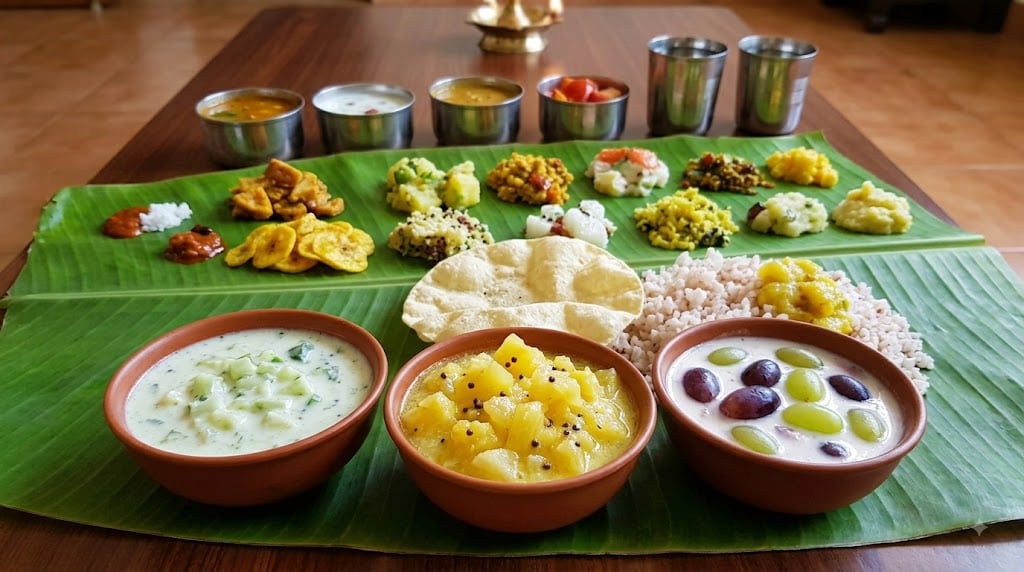
Sadhya is traditionally eaten with the right hand, progressing through the flavours in sequence. More than a meal, it is a communal ritual that reflects Kerala’s agricultural bounty and the spirit of sharing. Whether enjoyed in a full 26-dish spread or a simpler home version, the Onam Sadhya remains the delicious heart of the festival.
What Does The Onam Sadhya Symbolise?
At its heart, Sadhya is about abundance and togetherness. Onam celebrates the annual harvest and is traditionally associated with the legendary King Mahabali, whose return is believed to bring prosperity and happiness to Kerala.
The shared meal reflects that spirit. Everyone sits together, food is served generously and the banana leaf gradually transforms into a colourful map of Kerala’s culinary traditions.