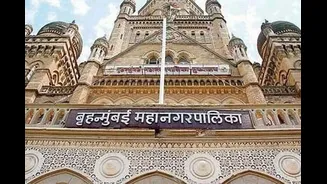

Mumbai will pick its representatives in the civic body, the Brihanmumbai Municipal Corporation (BMC),on January 15, 2026. The results will be announced on January 16. The civic body’s term ended in March
2022, then why were the elections stalled for four years? News18 explains
The BMC
Mumbai is the financial capital of the country, and as its key governing body, the BMC manages to oversee infrastructure to health, roads to water supply, transport to power supply, education to sanitation.
The estimated budget of the Brihanmumbai Municipal Corporation for the year 2025-26 is Rs. 74,427 crore, and the expenditure stands at Rs 43,162 crore, representing 58% of the total budget allocated to development projects. This gigantic budget is unmatched by any other state or municipal corporation in the country, cementing the BMC’s status as Asia’s wealthiest civic body.
ALSO READ | 3 Reasons Why BMC Polls Go Beyond Mumbai & Were Compared To Mamdani’s NYC Mayoral Election
Reasons why BMC elections were delayed
1. Ward delimitation
The previous Maharashtra government led by Uddhav Thackeray’s Maha Vikas Aghadi (MVA) alliance proposed increasing the number of wards of BMC from 227 to 236 to reflect population changes.
After the government changed, the new administration revoked that decision, leading to court challenges and legal uncertainty over ward boundaries. As the boundaries weren’t finalised, the election process couldn’t properly start.
2. OBC reservation
A major legal question arose around 27% reservation for Other Backward Classes (OBCs) in local body elections.
The Supreme Court said strict criteria must be met before applying such reservations, requiring proper data and a “triple test”. This stalled the process.
The Banthia Commission was appointed to gather data, and even after its report, lingering court matters continued to hold up formal election notifications.
3. Voter list
Officials found over a million duplicate entries in the draft electoral rolls which had to be meticulously corrected before polls. Finalising a clean and accurate voter list took additional time and added to the delay.
ALSO READ | Mumbai Votes On January 15: How Many Of BMC’s 227 Corporators Are With Uddhav? How Many With Shinde?
No BMC poll, so here’s what happened next…
The term of the elected Brihanmumbai Municipal Corporation (BMC) ended in March 2022.
Since elections were not held, the state government appointed the Municipal Commissioner of Mumbai as the Administrator of the BMC.
The Municipal Commissioner is an Indian Administrative Service (IAS) officer and became the sole executive authority, taking decisions that would normally involve the Mayor, Standing Committee, and elected corporators.
During this period, there was no Mayor, Deputy Mayor, or elected councillors.
Major civic decisions, budgets, contracts, and policy matters were handled by the Municipal Commissioner under powers granted by the Maharashtra government.
How is a mayor different from administrator?
The Mayor of Mumbai is the ceremonial head of the BMC. The Mayor presides over BMC meetings, represents the city officially, and helps build political consensus.
Real executive power lies with the Municipal Commissioner (an IAS officer), who runs day-to-day administration. Key decisions involve elected corporators, the Standing Committee, and various BMC committees.
When Mumbai had no Mayor, the Municipal Commissioner became the Administrator of the BMC. All powers of the Mayor & Deputy Mayor, the Standing Committee, elected corporators were vested in the Municipal Commissioner. Budgets, infrastructure projects, contracts, and civic policies were approved administratively, without debate in the elected council.
ALSO READ | Last Crucial Election For Marathi Manoos Or MNS? Decoding Raj Thackeray’s BMC Poll Position
This meant…
No local democratic representation for Mumbai residents at the civic level. There was also reduced public debate on issues like roads, drains, redevelopment, and large contracts.
About BMC elections
The process of filing nominations for the BMC elections will be carried out from December 23 to 30. The scrutiny will be carried out on December 31, while withdrawal of nominations will be held by January 2. The final list of candidates and distribution of symbols will be out on January 3.