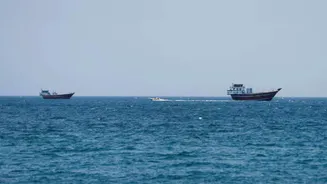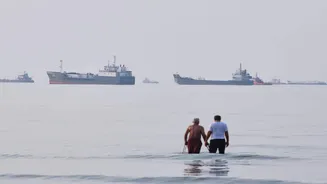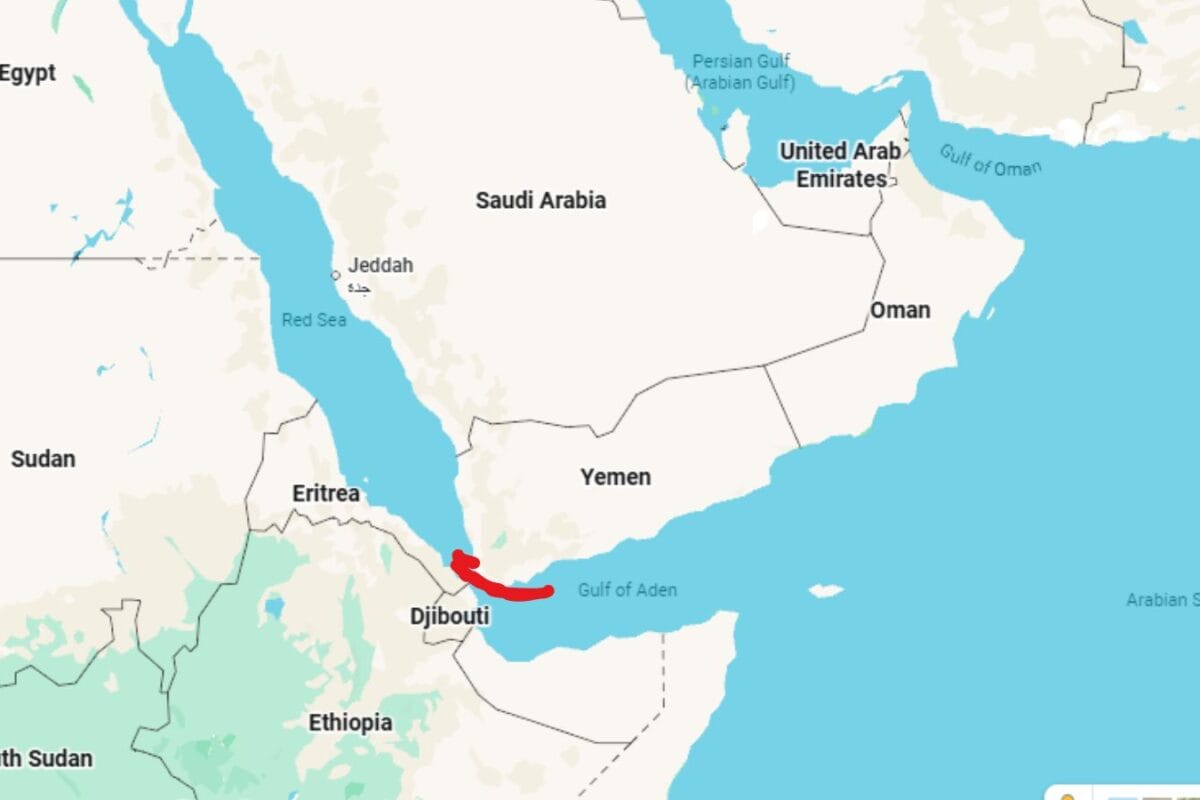









Iran-backed Houthi rebels in Yemen are reportedly considering imposing transit fees on commercial vessels passing through the Bab el-Mandeb Strait, a critical maritime gateway linking the southern Red
Sea to the Gulf of Aden.
The proposal comes as regional tensions escalate following the Houthis’ declaration last week of a maritime embargo against Saudi Arabia, opening a new front in their confrontation with the United States and its allies amid the ongoing conflict involving Iran.
According to a Reuters report citing regional and diplomatic sources, Houthi officials are exploring plans to levy charges on most commercial shipping transiting the narrow waterway. No timeline has been set for the potential implementation of the fees.
Sources told Reuters that the idea was discussed with Iranian officials during a recent visit by Houthi representatives to Iran for the funeral ceremonies of late Supreme Leader Ayatollah Ali Khamenei. Iranian officials also reportedly advised the Houthis on establishing a regulatory body that could oversee and administer transit charges through the Bab el-Mandeb.
Under the proposal being discussed, Chinese vessels could be exempt from the fees. Sources said the Houthis are supportive of such an arrangement. China has reportedly held direct talks with the group in recent months to ensure its commercial and energy shipments can transit the southern Red Sea without being targeted. China is the world’s largest importer of Saudi crude oil.
“The Houthis will try to gain control over the Red Sea, and they will try to charge ships if they do,” Afrah al-Zouba, the foreign minister-designate of Yemen’s internationally recognised government, told Reuters.
Why Bab el-Mandeb Matters
The Bab el-Mandeb Strait, situated between Yemen and the Horn of Africa at the southern entrance to the Red Sea, is one of the world’s most strategically important maritime chokepoints.
In normal conditions, an estimated 12-15% of global maritime trade passes through the southern Red Sea via the Bab el-Mandeb. The route handles roughly 30% of global container shipping traffic and facilitates the movement of nearly $1 trillion worth of goods each year, including electronics, manufactured products and automotive components travelling between Asia and Europe.
The strait is also a key artery for global energy markets. Between 4 million and 8 million barrels of oil per day—equivalent to around 8-10% of global seaborne oil trade—transit through the passage, alongside approximately 8% of worldwide liquefied natural gas (LNG) shipments.
More than 20,000 commercial vessels use the route annually, averaging between 50 and 60 major cargo ships every day, underscoring its importance to global trade and energy security.