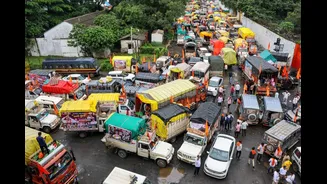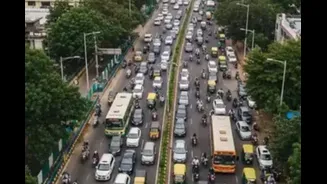






Bengaluru is rapidly becoming a case study in urban congestion. Every day, around 1,500 new vehicles hit the city’s roads, but the road network has remained stagnant since 2015. As a result, residents
are increasingly facing long traffic jams, slow commutes, and mounting frustration.
According to the transport department, Bengaluru’s vehicle numbers have risen sharply over the past decade. Registered vehicles have increased from 64.4 lakh in March 2015 to 1.23 crore in December 2025, a jump of nearly 90 percent.
The surge has been fuelled by a rise in vehicle purchases, supported by GST concessions and easy financing. In October 2025, an average of 2,700 vehicles were registered every day. December saw 53,398 new vehicles, pushing the daily average to 1,722.
Why is Bengaluru Choking on Traffic?
Bengaluru’s expansion has been largely horizontal, spreading across new areas, while its road network has not kept pace. The city’s road length has been capped at 13,000 km since 2015, even as the population and vehicle numbers surged.
The result is a growing imbalance between road capacity and traffic volume. With more vehicles on the road and limited infrastructure upgrades, Bengaluru’s streets are increasingly congested.
The transport department’s data shows the vehicle growth year-wise:
2015 (March 31): 64.4 lakh
2016: 70.1 lakh
2017: 76.3 lakh
2018: 82.7 lakh
2019: 88.7 lakh
2020: 94.7 lakh
2021: 98.4 lakh
2022: 1.02 crore
2023: 1.1 crore
2024: 1.17 crore
2025 (December): 1.23 crore
The majority of these vehicles are privately owned. Over the last decade, two-wheelers have increased from 41.8 lakh to 84.6 lakh, while cars have risen from 14.2 lakh to 24.4 lakh.
How Bad Is Bengaluru’s Traffic?
According to the TomTom Traffic Index 2025, Bengaluru is the second most congested city in the world. Only Mexico City ranked higher, followed by Dublin in Ireland.
Experts say the main reason is that public transport has not expanded to match the city’s growth. Bengaluru currently has 96 km of operational metro lines and 83 stations, while the number of BMTC buses has remained at around 7,000 for over a decade.
An official from the transport department said, “Roads are not being widened and public transport is also running at a sluggish pace. As a result, a tsunami of vehicles is turning Bengaluru’s roads into traffic congestion on a daily basis.”
Bengaluru Police Commissioner Seemanth Kumar Singh responded to the congestion reports by acknowledging the city’s pressure from rapid growth and rising vehicle numbers. He said the traffic police are working efficiently to manage traffic and ensure smooth movement.
The Commissioner added that traffic personnel have been instructed to prioritise free flow of vehicles and avoid unnecessary disruptions. “Only violation cases that directly obstruct traffic are being booked,” he said. “The focus is on keeping vehicles in continuous motion.”
He also pointed out that large infrastructure projects such as metro construction and other development works are occupying road space and adding to congestion.
Is There A Long-Term Solution To Bengaluru Traffic Chaos?
The Police Commissioner said the public must rely more on public transport to reduce pressure on roads. He also noted that Bengaluru’s Traffic Management Centre is advanced and plays a crucial role in monitoring traffic conditions across the city.
Singh said the findings of the congestion survey will be carefully studied and used in future planning. He acknowledged that travel time in Bengaluru has increased and emphasised the need for continued traffic management efforts.