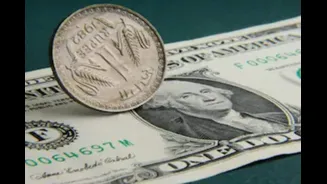









The Indian rupee has come under sharp pressure in recent months due to rising crude oil prices and geopolitical tensions in West Asia. Amid the fall in the currency, Reserve Bank of India (RBI) Governor
Sanjay Malhotra said the rupee now appears “undervalued” in both nominal and REER terms.
But what exactly does an “undervalued rupee” mean? And how do economists or the RBI decide whether a currency is undervalued or overvalued?
Here’s everything you need to know:
What is an undervalued currency?
A currency is considered undervalued when its market exchange rate is weaker than what economic fundamentals suggest it should be. In simple terms, if the rupee is trading at a lower value than its “fair” or “equilibrium” value, economists may say it is undervalued.
For example, suppose economic indicators suggest the rupee should ideally trade at Rs 83 against the US dollar, but it is trading at Rs 88 due to panic selling, high oil prices or geopolitical uncertainty. In that situation, the rupee may be considered undervalued.
The opposite is called overvaluation – when a currency becomes stronger than justified by economic conditions.
Why has the rupee weakened recently?
The rupee has depreciated sharply after FPI sold Indian equities, tensions escalated in West Asia, and crude oil prices surged globally. India imports more than 85% of its crude oil needs. When oil prices rise:
- India has to spend more dollars on imports
- Demand for dollars increases
- Pressure builds on the rupee
- Foreign investors may also pull money from emerging markets
All these factors weaken the domestic currency.
How is currency valuation measured?
One of the most important indicators used globally is the Real Effective Exchange Rate (REER).
What is REER?
REER measures the value of a country’s currency against a basket of currencies of its major trading partners after adjusting for inflation differences. It is considered a broader and more accurate measure than simply looking at the rupee-dollar exchange rate.
A simplified representation of REER can be shown as:
REER = NEER × (domestic price index/ foreign price index)
Where:
NEER stands for Nominal Effective Exchange Rate
Inflation adjustment is included to reflect real purchasing power
In the formula, the ‘domestic price index’ reflects inflation in India, while the ‘foreign price index’ represents inflation levels across India’s major trading partner countries.
How to interpret REER?
A REER higher than 100 generally indicates the currency is relatively stronger, while a REER lower than 100 may suggest the currency has become weaker or undervalued
If REER falls significantly below long-term averages, policymakers may believe the currency has depreciated more than necessary.
That is what RBI Governor Sanjay Malhotra was referring to when he said the rupee appears undervalued in REER terms.
How does undervaluation impact?
A weaker currency has both advantages and disadvantages.
Benefits of a weaker rupee: Indian exports become more competitive globally, IT companies and exporters earn more in rupee terms, foreign tourists find India cheaper, and risks of excessive depreciation.
Also, undervaluation makes foreign direct investment (FDI) more attractive to outside investors.
However, imports become expensive, fuel prices rise, inflation may increase, and current account deficit can widen.
This is why the RBI closely watches currency volatility.
Does RBI target a specific rupee level?
No. The RBI repeatedly says it does not target any fixed exchange rate. Instead, it intervenes mainly to prevent excessive volatility or speculative attacks.
The central bank buys or sells dollars in the forex market to ensure “orderly movement” in the currency. India currently has forex reserves of nearly $700 billion, which gives the RBI substantial firepower to manage volatility.
Can the rupee recover?
According to the RBI governor, the rupee could appreciate if geopolitical tensions ease and crude oil prices cool down. A recovery in capital inflows, lower oil prices and improved global risk sentiment could help stabilise the currency in the coming months.
The rupee appreciated 40 paise to 95.20 against US dollar in early trade on Monday on optimism that the US and Iran were moving close to a peace deal even though they remained at odds over key issues, including blockades on the Strait of Hormuz.