







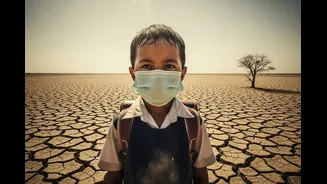

Beauty has always reflected the values of its time. Once defined by aspiration and indulgence, it is now increasingly being shaped by accountability. As climate anxiety becomes a lived reality rather than
a distant concern, consumers are scrutinising not only what they put on their skin, but also the environmental footprint behind every purchase. In this new era, conscious beauty is no longer a niche category reserved for eco-enthusiasts. It is rapidly becoming the industry’s most important evolution.
The shift is visible across every layer of the beauty ecosystem. Consumers are asking deeper questions about ingredients, sourcing, packaging, manufacturing, and disposal. Performance still matters, but increasingly, so does purpose.
“Consumers today are no longer evaluating beauty products solely on performance; they are increasingly considering the impact those products have beyond the shelf,” says Shaily Mehrotra, CEO and co-founder, Fixderma & FCL. “Beauty choices have become an extension of broader values, with greater emphasis on transparency, responsible practices and long-term environmental impact.”
That growing awareness is reshaping expectations for brands across categories. According to Vasundhara Patni, Founder, Kiro, consumers are looking far beyond product efficacy. “They want to understand ingredient sourcing, formulation integrity, packaging choices, production practices, and whether brands are genuinely committed to responsible innovation rather than simply participating in the sustainability narrative,” she says.
The numbers support the shift. A NielsenIQ report found that nearly 78% of global consumers consider sustainable living important, and beauty is increasingly becoming one of the most visible expressions of that commitment.
For many brands, sustainability is no longer confined to product development. It is becoming a philosophy that informs every touchpoint of the consumer journey.
At Nykaa, that thinking extends beyond the products consumers purchase to what happens after they are used. As environmental consciousness continues to influence buying behaviour, the beauty retailer believes building a more responsible ecosystem requires participation from brands, retailers, and consumers alike. Through initiatives such as Recycle and Rewards, which encourages shoppers to return empty beauty packaging at participating stores, Nykaa is working to make responsible disposal a more accessible part of everyday beauty routines while incentivising positive behaviour.
The growing focus on circularity reflects a broader industry recognition that sustainability cannot be achieved through isolated actions. It must be embedded throughout the value chain.
For Mini Sood Banerjee, Deputy Director and Head of Marketing, Amorepacific India (Innisfree), conscious beauty represents a fundamental shift in how consumers approach skincare and personal care. “People are increasingly making mindful choices, seeking brands that prioritise sustainability, ethical sourcing, clean formulations, and environmentally responsible practices,” she says. “Beauty today goes beyond product performance; consumers also want to understand the impact a brand creates on the planet and communities.”
That sentiment is particularly relevant at a time when ingredient transparency and environmental stewardship have become closely intertwined. At Innisfree, the brand’s longstanding commitment to responsibly sourced ingredients from Jeju Island and continued efforts towards mindful packaging reflect an approach where innovation and sustainability are viewed as complementary rather than competing priorities.
Increasingly, beauty’s sustainability conversation is also moving beyond ingredients and into product design itself.
“Conscious beauty has moved beyond just clean ingredients,” says Ritu Vijayvergiya, co-founder, 2.Oh!. “It has become more about products that reflect a nexus between sustainability, functionality and practicality.” She points to the growing packaging waste crisis and argues that the future lies in thoughtful innovation, recyclable materials, durable packaging, and products designed for longevity rather than disposability.
Similarly, Kiro’s Patni believes meaningful sustainability often begins with rethinking how products are created and consumed. The brand’s stackable makeup formats, for instance, are designed not only for convenience but also to reduce excess packaging, optimise transportation efficiency, and encourage more mindful consumption habits.
The industry’s next frontier may ultimately be reducing excess altogether. As consumers become increasingly conscious of waste, multifunctional products are emerging as one of the most practical ways to balance performance with responsibility.
“Beauty is evolving from aspiration-driven to values-driven,” says Raveena Mehta, founder, GoodSide. “Conscious beauty today is about transparency, ingredient integrity, responsible sourcing, and creating multifunctional products that reduce excess consumption.”
That shift is also influencing formulation philosophies. For many founders, the conversation is no longer about choosing between efficacy and sustainability, but ensuring the two coexist.
“As climate awareness grows, consumers are becoming more intentional about what they put on their skin and the impact it has beyond beauty,” says Divya Malpani, Founder and CEO, Skinvest. “The future of beauty will belong to brands that prioritise both performance and sustainability.”
Few sectors illustrate this convergence more clearly than organic beauty. According to Megha Asher, Co-Founder and COO, Juicy Chemistry, climate consciousness and skincare consciousness are increasingly inseparable.
“Consumers are finally connecting the dots,” she says. “What goes on your skin eventually goes into the environment. Certified organic formulations, responsible sourcing, and minimal synthetic load are not just better for skin; they reduce ecological footprint at every stage.”
The same philosophy is echoed by Radhika Mukhija, founder, The Bare Bar, who believes beauty can no longer be viewed independently of its wider social and environmental consequences. “Consumers today are seeking transparency, purpose, and products that reflect their values as much as their beauty needs,” she says.
As World Environment Day prompts renewed conversations around sustainability, one reality is becoming increasingly clear: conscious beauty is no longer an optional add-on or marketing differentiator. It is becoming a baseline expectation.
The brands leading this transformation are not merely responding to consumer demand; they are helping shape a new definition of beauty itself. One where innovation is measured not only by performance, but by responsibility. One where transparency matters as much as efficacy. And one where caring for the planet is no longer separate from caring for ourselves.
In a climate-conscious world, beauty’s future will belong to brands that understand a simple truth: sustainability is not the opposite of aspiration. It is its next evolution.