


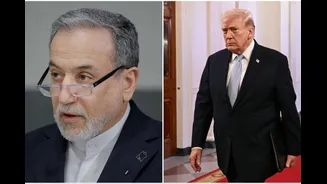
Iran has told mediators it has been misled twice by US President Donald Trump during previous diplomatic efforts and does not want to be “fooled again,” according to Axios, as Washington pushes for in-person
talks as soon as Thursday in Islamabad, even while continuing military pressure.
The report highlights Tehran’s deep distrust of US intentions, citing past instances where negotiations coincided with surprise attacks.
Live Updates On The US-Iran-Israel War
According to the report, Iranian officials have conveyed their concerns to mediators Pakistan, Egypt and Turkey, arguing that recent US military deployments and Trump’s decision to send reinforcements to the Middle East raise suspicions that the current push for diplomacy may not signal genuine de-escalation.
The United States, however, maintains that its force posture reflects an effort to negotiate from a position of strength rather than bad faith, the report mentioned.
IRAN CITES PREVIOUS TALKS FOLLOWED BY ATTACKS
The report mentioned that Tehran’s scepticism stems from recent diplomatic episodes that were followed by military action.
Israel attacked Iran last June with Trump’s backing just days before a planned round of nuclear talks, according to the report.
In another instance, three weeks ago, the United States and Israel reached a tentative understanding in Geneva to continue discussions the following week, only for joint strikes to take place two days later.
Iranian officials told mediators that these developments have shaped their view of Washington’s intentions and contributed to a belief that diplomacy may be used as cover for military escalation, the report mentioned.
A Trump adviser was quoted as describing the administration’s approach as combining diplomacy with coercion, saying Trump has “a hand open for a deal and the other is a fist.”
The White House has conveyed to Tehran that the President is serious about negotiations and has floated the potential involvement of Vice President JD Vance as a signal of commitment, according to the report.
Two sources told the publication that envoy Steve Witkoff suggested Vance because Iranian officials do not perceive him as a hawkish figure.
15-POINT PROPOSAL FOR ENDING WAR
The United States has transmitted a 15-point proposal to Iran through mediators, hours before Trump publicly confirmed talks were underway.
Washington is seeking to discuss the plan as a package that includes ending hostilities, reopening the Strait of Hormuz, lifting sanctions and securing assurances related to Iran’s nuclear programme, missile development and support for regional proxies.
AFP cited Israeli media as saying the framework could include a one-month ceasefire during negotiations and measures involving Iran’s enriched uranium and future enrichment activities.
According to AFP, the proposal could also involve support for civilian nuclear energy development at the Bushehr facility and relief from sanctions imposed over several years.
Iran has publicly denied direct negotiations, with parliament speaker Mohammad Baqer Qalibaf dismissing claims of talks as “fake news.”
TRUMP POINTS TO STRAIT OF HORMUZ MOVE AS SIGNAL
Trump on Tuesday cited what he described as a significant confidence-building step by Iran related to oil and gas flows through the Strait of Hormuz.
The US President said Tehran had delivered a “very big present worth a tremendous amount of money,” although he did not provide details.
Iran subsequently informed the International Maritime Organisation that “non-hostile vessels” could transit the strategic waterway, which carries around one-fifth of global oil supply.
Iran had effectively restricted passage through the strait following US and Israeli strikes, contributing to volatility in global energy markets.
Trump said the development indicated Washington was “dealing with the right people”.
MILITARY BUILDUP CONTINUES DESPITE DIPLOMATIC PUSH
Despite the push for talks, the United States is continuing to deploy additional military assets to the region.
Axios reported that Trump instructed Defence Secretary Pete Hegseth to maintain military pressure, with additional fighter jet squadrons, Marine expeditionary units and thousands of troops expected to arrive in the coming weeks.
Thousands of troops from the US Army’s 82nd Airborne Division are expected to be sent to the Middle East, adding to roughly 50,000 personnel already in the region.
AFP also cited the Wall Street Journal as reporting planned troop deployments, underscoring continued military preparations even as diplomatic contacts are explored.
A White House official told Axios that a ground operation remains an option but that Trump has not yet made a final decision.
REGIONAL VIOLENCE CONTINUES
Violence has continued across multiple fronts, including Iranian missile strikes that caused injuries in Israel and Israeli airstrikes targeting sites in Iran and Lebanon.
Israel has also signalled plans to expand operations against Hezbollah in southern Lebanon.
Iran has also indicated vessels considered non-hostile may pass through the Strait of Hormuz if they coordinate with Iranian authorities, a development seen as a potential opening for negotiations even as tensions remain high.
UNCERTAINTY OVER TALKS IN PAKISTAN
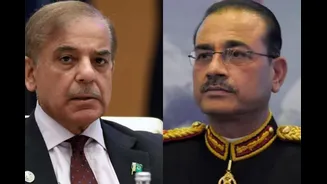
Pakistan’s Prime Minister has offered to host discussions aimed at ending the conflict, saying Islamabad is prepared to facilitate “meaningful and conclusive talks for a comprehensive settlement,” Reuters reported.
According to Axios, the United States hopes Iran will engage with the 15-point proposal during a potential meeting in Pakistan this week, although officials caution that no final agreement on the talks has been reached.
ALSO READ | Iran Seeks Closure Of US Bases In Gulf As Price For Trump’s Ceasefire Plan. Here Are Other Demands