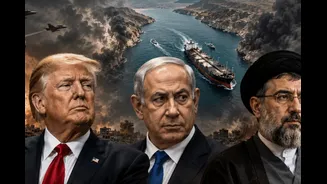






US President Donald Trump announced on Wednesday that the ceasefire agreement with Iran has effectively concluded for him, declaring that he no longer wishes to engage in diplomatic dealings with Tehran.
The collapse of the tentative US-Iran ceasefire, following fresh military exchanges in the Persian Gulf, has immediately reignited intense macroeconomic and security uncertainties worldwide.
SCENARIOS FOR INDIA
India is highly vulnerable toWest Asian volatility due to its overwhelming reliance on energy imports and extensive trade ties with the Gulf Cooperation Council (GCC).
Worst-Case Scenario: Prolonged Conflict & Hormuz Blockade
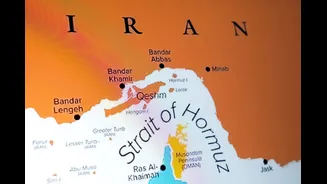
A total blockade of the Strait of Hormuz would repeat or worsen the March 2026 crisis, pushing global oil prices toward $120–$130 per barrel.
Higher crude prices will drastically expand India’s import bill, widen the current account deficit, and force the Indian Rupee to new record lows.
Skyrocketing energy prices will drive up fuel, food, and fertilizer costs. This domestic inflation would be severely exacerbated if combined with an erratic El Niño monsoon.
Indian exports to West Asia(especially electronics to the UAE and Basmati rice to Iran) will collapse. Total exports could fall by over 50%, similar to the contraction observed early in the war.
India’s significant investments in the Chabahar Port—the gateway to Central Asia—will face indefinite delays or collateral damage.
US President Donald Trump has declared that he no longer wants to negotiate with Iran after accusing Tehran of attacking commercial ships in the Strait of Hormuz
The remarks came after the US launched a fresh wave of strikes on more than 80 Iranian military targets, including… pic.twitter.com/8FMabJAleL
— News18 (@CNNnews18) July 8, 2026
Best-Case Scenario: Backchannel Truce & Sourcing Flexibility
The current hostilities remain confined to tit-for-tat strikes without a full maritime blockade. Oil prices stabilise around $75–$80 per barrel.
India successfully utilizes its rebalanced strategy, sourcing crude from over 40 countries—including newly resumed, albeit risky, discounted Iranian oil and gas.
Steady high-frequency indicators (like strong quarterly GST collections) keep India’s GDP growth momentum hovering near 7%.
SCENARIOS FOR OTHER COUNTRIES
Worst-case scenarios
United States: Resuming a full naval blockade triggersa sharp energy spike, driving US CPI inflation back to ~5%. This would force the Federal Reserve to maintain high interest rates, severely dampening domestic economic growth.
GCC / Gulf States (Saudi Arabia, UAE, Qatar, Kuwait, Bahrain): Iran-aligned regional proxy forces target critical infrastructure. Attacks on desalination plants and logistics hubs could trigger a catastrophic grocery and drinking water supply emergency, as seen during the March disruptions.
East Asian Importers (China, Japan, South Korea): These economies rely on the Strait of Hormuz for 80% of their imported energy. A shutdown will halt factories, compromise manufacturing output, and spike production costs globally.
Western Europe: Disrupted LNG shipments through the Gulf will force a sudden reliance on expensive US LNG exports, compounding winter energy security fears.
#WestAsia | With Donald Trump declaring the US-Iran ceasefire being ‘over’, is the region headed for a deeper confrontation? What comes next for the Middle East, global oil markets, and the security of the Strait of Hormuz?@asajjanhar, Ex Diplomat shares his insights |… pic.twitter.com/hQrYkuE6Dp
— News18 (@CNNnews18) July 8, 2026
Best-case scenarios
United States: The Trump administration leverages the threat of targeted infrastructure strikes (e.g., Kharg Island) to force Iran back to the negotiating table for a revised 14-point Memorandum of Understanding.
Iran: Facing the structural economic weight of reinstated sanctions, Tehran maintains defensive restraint, keeping the Strait of Hormuz partially functional to protect its remaining illicit energy revenues.
Global Markets: International maritime traffic adapts by routing heavily through alternative channels (such as the UAE’s Fujairah emirate route), mitigating a systemic collapseof the global supply chain.
With agency inputs