




US President Donald Trump’s administration is opening high-level diplomatic backchannels to Russia to negotiate an end to the war in Ukraine, secure Moscow’s leverage in the expanding Middle East conflict,
and drive a strategic wedge between the Kremlin and Iran. Recent high-profile developments, including a rare, unannounced Moscow visit by CIA Director John Ratcliffe and the surprise inclusion of Russian Finance Minister Anton Siluanov at a U.S.-hosted G20 meeting, signal a major shift toward direct engagement, say reports.
US-RUSSIA RECENT DEVELOPMENTS
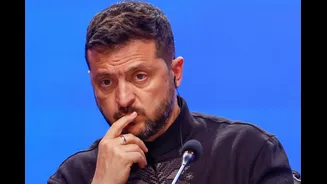
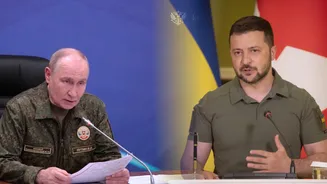
Secret CIA Mission to Moscow: On August 25, 2026, CIA Director John Ratcliffe flew to Moscow on an unannounced mission to float a proposal for a trilateral summit between Donald Trump, Vladimir Putin, and Volodymyr Zelenskyy. Ratcliffe met with Russia’s top intelligence heads—Sergey Naryshkin (SVR) and Alexander Bortnikov (FSB)—to urge them to convince Putin to return to U.S.-mediated negotiations. During the hours-long visit, Ratcliffe also issued a firm warning, reminding Moscow that Washington stands strictly behind NATO’s Article 5 protection, countering European fears of Russian expansionism. Putin’s press secretary, Dmitry Peskov, dismissed the summit proposal as unfeasible without a pre-prepared final document.
Russia Reintegrated into G20 Talks: Breaking with years of Western isolation, the Trump administration invited Russian Finance Minister Anton Siluanov to the G20 finance talks in Asheville, North Carolina. Siluanov held a closed-door, bilateral meeting with U.S. Treasury Secretary Scott Bessent to specifically discuss Trump’s peace plan for Ukraine. The invite triggered fierce resistance from European allies. German Finance Minister Lars Klingbeil and Polish Finance Minister Andrzej Domański publicly condemned Russia’s presence, leading European delegates to successfully boycott the official G20 group photo so they wouldn’t be pictured with the Russian delegation.
Shift in Trump-Zelenskyy Dynamics: Following a public clash between Trump and Zelenskyy at the White House—where Trump claimed Ukraine was not ready to end the war—the U.S. temporarily paused military aid and intelligence sharing. Zelenskyy sent an official letter to Trump offering an “apology” and expressing gratitude to repair ties. On August 31, Zelenskyy held constructive talks with U.S. envoys Steve Witkoff and Jared Kushner.
Because previous U.S.-mediated ceasefires quickly collapsed due to Moscow’s territorial demands, Trump is shifting away from a temporary freeze toward negotiating a permanent peace deal that includes firm security assurances for Ukraine’s sovereignty.
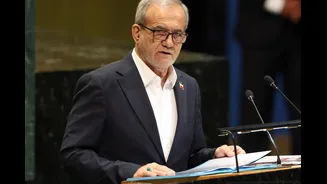
Russia-Iran Coordination Tightens: While Trump reaches out to Moscow, the geopolitical map remains volatile. Putin recently met with Iranian President Masoud Pezeshkian, pledging full support to Iran. As the U.S. and Israel trade military strikes with Iran, Russia has actively backed Tehran by supplying vital drone components via the Caspian Sea and intelligence on U.S. assets in the Persian Gulf.
REASONS BEHIND TRUMP’S SUDDEN DIPLOMATIC OUTREACH TO RUSSIA
- Brokered peace efforts have frozen while infrastructure strikes intensify on both sides. The CIA chief’s unannounced visit targeted an opening for direct diplomacy to establish a ceasefire. Washington is growing increasingly concerned that a desperate Kremlin could resort to tactical nuclear weapons as Ukraine continuously targets Russian domestic energy structures. Trump seeks to resolve the conflict rapidly to prevent a wider European security crisis from disrupting the upcoming U.S. midterm elections, according to Al Jazeera, NYT and other reports.
- Russia remains a vital economic and defense partner to Tehran. The U.S. is utilizing high-level talks to threaten or negotiate strict secondary sanctions on entities dealing with Iran. With the U.S. military heavily tied down enforcing a naval blockade against Iran and experiencing rationed ammunition supplies, the administration is courting Moscow to reduce its direct support for Tehran, effectively aiming to “divide and conquer” the axis.
- By bypassing European objections to invite Minister Siluanov to the G20 talks in North Carolina, Trump is actively moving to normalize economic dialogue with Russia. The approach aligns with Trump’s public stance that isolating Moscow from international groups was a mistake, preferring a framework that accommodates shifting economic growth centers over strict western isolationism, say experts.
While European allies express profound unease over the presence of Russian officials during an active war, Trump is doubling down on a pragmatist policy that relies heavily on strategic ambiguity and direct personal diplomacy with the Kremlin.