








India is in the midst of one of the world’s most extensive infrastructure expansion programmes, with billions being invested in transport networks, urban development, logistics and industrial connectivity.
From high-speed rail corridors and expressways to smart cities and maritime infrastructure, these projects are reshaping how people, goods and services move across the country.
In 2026, the emphasis is on continuing to build faster, greener, more technologically advanced infrastructure to support long-term economic growth, attract investment, and create jobs. Several landmark projects are already transforming India’s development landscape.
1. Mumbai-Ahmedabad High-Speed Rail Corridor
Often referred to as the Bullet Train Project, the Mumbai-Ahmedabad High-Speed Rail Corridor is India’s first venture into high-speed rail travel. Developed with Japanese Shinkansen technology, the project seeks to dramatically shorten travel times between two of the country’s most important economic centres.
The corridor includes dedicated high-speed tracks, advanced signalling systems, modern stations and sophisticated safety mechanisms. Once operational, it is expected to set new standards for railway efficiency and passenger mobility in India.
Among its key advantages are faster connectivity between Mumbai and Ahmedabad, the adoption of world-class rail technology, enhanced economic activity along the route and a substantial reduction in travel duration.
2. Delhi-Mumbai Expressway
The Delhi-Mumbai Expressway ranks among India’s most ambitious highway developments. Designed to strengthen road connectivity between the national capital and the country’s financial hub, the project is expected to significantly reduce both travel time and logistics costs.
Built as a greenfield expressway, the corridor incorporates smart traffic management systems and environmentally conscious construction practices. It is expected to strengthen freight movement, support industrial growth and improve regional connectivity.
The project will facilitate quicker journeys between Delhi and Mumbai, improve logistics efficiency, integrate with industrial and economic corridors and promote sustainable infrastructure development.
3. Dedicated Freight Corridor (DFC)
The Dedicated Freight Corridor represents a major overhaul of India’s freight transportation network. Comprising the Eastern and Western freight corridors, the initiative is designed to connect key industrial centres, manufacturing hubs and ports.
By separating freight trains from passenger services, the project is expected to increase railway capacity, reduce congestion and improve operational efficiency. It is also anticipated to lower transportation costs and support industrial expansion.
The corridor’s benefits include faster freight movement, reduced pressure on existing railway routes, lower logistics expenses and stronger support for manufacturing and export-driven industries, as reported by Construction World.
4. Sagarmala Programme
The Sagarmala Programme is focused on strengthening India’s maritime infrastructure through port-led development. The initiative includes the modernisation of ports, development of coastal economic zones and enhanced connectivity between ports and inland regions. The programme aims to improve India’s competitiveness in global trade while encouraging coastal economic development and employment generation.
Its major components include upgraded port facilities, new coastal industrial zones, better rail and road links to ports, and greater use of coastal shipping and inland waterways.
5. Bharatmala Pariyojana
Bharatmala Pariyojana is one of the country’s largest road infrastructure programmes, aimed at creating an extensive network of highways, economic corridors and strategic roads. The initiative focuses on improving national connectivity, particularly in border regions, rural areas and economically significant corridors. It is expected to enhance logistics efficiency and reduce transportation costs across the country.
The programme supports the construction of economic corridors, improves access to remote regions, reduces travel times and contributes to broader economic development.
6. Smart Cities Mission
India’s Smart Cities Mission continues to drive the transformation of urban infrastructure through the integration of technology-driven solutions and sustainable planning. Projects under the mission include smart roads, intelligent traffic systems, digital governance platforms and upgraded urban utilities. The objective is to create more efficient, liveable and environmentally sustainable cities.
The initiative emphasises technology-enabled city management, improved public services, sustainable development practices and enhanced quality of life for residents.
7. Navi Mumbai International Airport
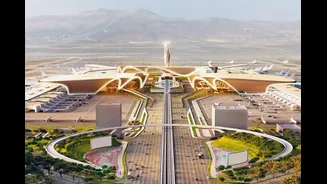
The Navi Mumbai International Airport is being developed to ease pressure on Mumbai’s existing airport infrastructure while meeting future aviation demand.
Envisioned as a modern aviation hub, the airport will feature advanced technology, efficient passenger handling systems and world-class facilities. The project is also expected to stimulate economic activity across the Mumbai Metropolitan Region. Its benefits include expanded air traffic capacity, improved regional connectivity, support for tourism and business travel, and accelerated development of surrounding infrastructure.
8. PM Gati Shakti National Master Plan
The PM Gati Shakti National Master Plan seeks to improve coordination among multiple infrastructure sectors, including roads, railways, ports, airports and logistics. Built around a digital planning platform, the initiative enables better project integration, reduces duplication and streamlines infrastructure development across government departments.
The programme is expected to accelerate project implementation, minimise delays, reduce cost overruns and improve connectivity across the country.
9. Chennai-Bengaluru Industrial Corridor
The Chennai-Bengaluru Industrial Corridor is a major economic development initiative aimed at strengthening manufacturing and industrial activity across southern India. The project includes the creation of industrial clusters, logistics facilities and supporting infrastructure designed to attract domestic and international investment.
It is expected to generate employment opportunities, encourage industrial expansion, improve connectivity between major urban centres and strengthen India’s manufacturing ecosystem.
10. Dwarka Expressway
The Dwarka Expressway is a significant urban infrastructure project designed to improve connectivity between Delhi and Gurugram. The corridor aims to ease traffic congestion, enhance urban mobility and support economic development in one of the country’s fastest-growing metropolitan regions. It is also expected to positively influence real estate growth and infrastructure investment.
Key outcomes include improved travel between Delhi and Gurugram, reduced traffic bottlenecks, modern road infrastructure and increased development potential along the route.
Infrastructure At The Centre Of India’s Growth Strategy
Together, these projects reflect the scale of India’s infrastructure ambitions and their role in driving economic transformation. By strengthening transport networks, improving logistics efficiency and supporting urban and industrial development, they are laying the foundation for future growth.
As construction activity continues across sectors, the emphasis remains on delivering infrastructure that is efficient, sustainable and technologically advanced. These investments are expected to strengthen India’s global competitiveness while creating long-term opportunities for businesses, industries and communities nationwide.