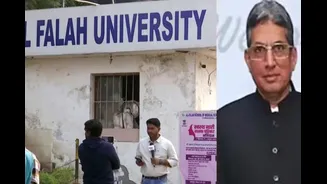

The Enforcement Directorate (ED) has unveiled a series of startling allegations against Al-Falah University and its chairman, Jawad Ahmed Siddiqui, painting a picture of systemic institutional fraud. Central
to the agency’s 260-page chargesheet is the claim that the university systematically “hired” fake patients to populate its medical college hospital. This elaborate charade was allegedly designed to deceive inspectors from medical regulatory bodies into believing that the hospital met the mandatory clinical requirements and patient-load standards necessary for maintaining its medical degree certifications.
Beyond the “ghost patients”, the ED has detailed a massive financial scam quantified at nearly Rs 493 crore. The agency alleges that Siddiqui and the Al-Falah Charitable Trust “dishonestly induced” thousands of students and their parents into paying substantial tuition and examination fees under false pretences. Specifically, the university is accused of misrepresenting its accreditation status from the National Assessment and Accreditation Council (NAAC) and falsely claiming recognition under Section 12(B) of the University Grants Commission (UGC) Act, which would have entitled it to central grants. While the university later claimed these were “website design errors”, investigators found evidence that these false claims were used as primary marketing tools to recruit students.
The probe has also exposed a “white-collar” terror module operating within the university’s Faridabad campus. The National Investigation Agency (NIA) has established that the suicide bomber behind the November 10, 2025, Red Fort blast, Dr Umar Un Nabi, was an assistant professor at Al-Falah. The ED alleges that the university failed to conduct basic police verification for its staff, allowing the campus to serve as a logistics hub for a terror cell. Digital evidence and chats recovered by the agency suggest that the university’s infrastructure—including medical labs and secure rooms—was exploited to plan serial bombings across the National Capital Region.
The financial trail reveals that the “proceeds of crime” generated from student fees were not reinvested into education but were allegedly diverted into a web of family-controlled shell companies, such as Amla Enterprises. Siddiqui is accused of layering these funds to make personal foreign remittances worth crores to his wife and son. With the attachment of the university’s 54-acre campus and the filing of the prosecution complaint on Friday, the government is now considering the appointment of a receiver to manage the institution. This move aims to protect the academic future of current students while the criminal prosecution of the Al-Falah leadership for money laundering and terror financing proceeds in court.