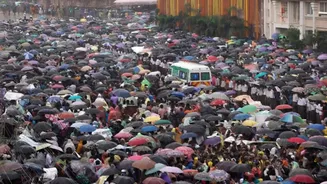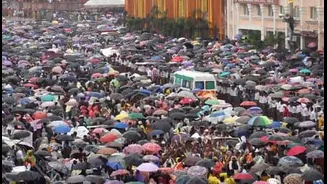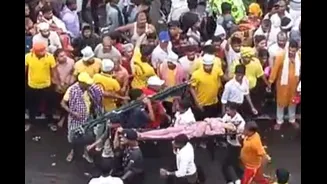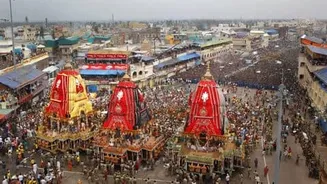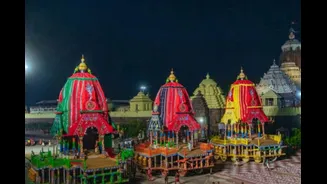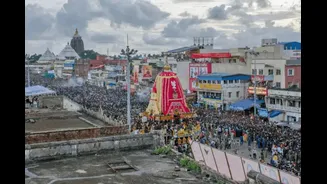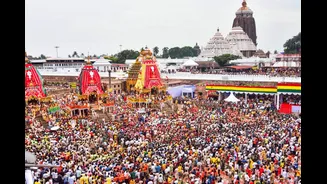





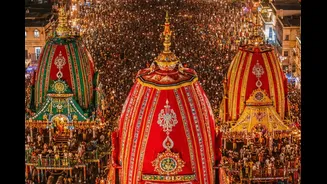
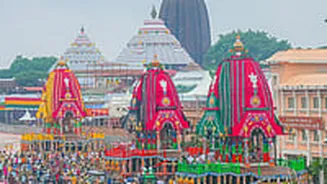
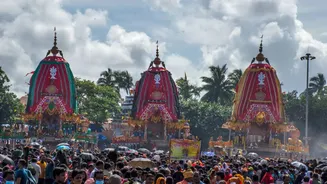


A stampede-like situation was reported at the 12th-century Puri Lord Jagannath temple in Odisha on Thursday during a large gathering of devotees for the historic Rath Yatra, prompting an immediate rescue
operation by emergency teams. The annual chariot festival, which draws hundreds of thousands of pilgrims to the coastal city of Odisha, witnessed intense overcrowding as the three massive wooden structures began their journey.
According to emergency health officials, more than 120 devotees suffered severe breathing difficulties and suffocation due to the sudden press of the crowd. One devotee tragically died due to asphyxiation. While emergency services responded rapidly to establish medical corridors and evacuate the affected individuals to nearby hospitals, the incident has renewed urgent questions about crowd dynamics and security limitations at one of the world’s largest religious gatherings.
Fatal Pull of Devotion?
The core challenge of managing the Rath Yatra lies in the deep spiritual motivations of the attendees. Unlike standard temple darshans where crowds move in structured lines, the procession on the Grand Road is highly dynamic and unpredictable.
- The Sacred Rope: Traditional belief holds that touching or assisting in pulling the heavy ropes of the chariots—Nandighosha, Taladhwaja, and Darpadalana—cleanses all sins. This drives thousands of people to surge forward simultaneously toward a single focal point.
- Massive Surge Points: The risk of a stampede increases exponentially during the Pahandi ritual (when the deities are carried out of the temple) and when the chariots first begin moving down the 3-kilometre stretch.
- Extreme Weather Dynamics: The hot and humid July weather in coastal Odisha frequently exacerbates crowd friction, leading to dehydration, heat exhaustion, and sudden panic if the movement of the crowd comes to a halt.
Security Framework Vs Absolute Volume
Managing the sheer volume of pilgrims remains a monumental logistical hurdle for the state administration. For the Thursday procession, the government deployed approximately 12,000 police personnel, including specialised central forces, alongside 19 senior IPS officers to oversee security operations.
Despite the integration of AI-powered CCTV cameras to monitor density, the absolute physical mass of hundreds of thousands of people moving tightly together means that local blockages can escalate into dangerous crushes within minutes.
Rethinking Crowd Control on the Bada Danda
In anticipation of high-density risks, the administration had designated nearly 30 specific evacuation corridors along the route to ensure emergency vehicles could navigate the sea of people. These pre-planned safety paths proved critical on Thursday, allowing medical teams to swiftly reach distressed devotees and administer first aid at temporary medical camps.
However, experts point out that relying solely on reactive evacuation is insufficient. As individual devotion consistently overrides public safety announcements, future management frameworks may require stricter physical barricades separating the general public from the immediate path of the moving chariots, alongside strict zone-based entry systems to regulate the density of the Grand Road in real time.