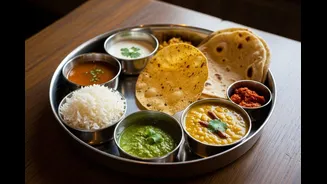

Nearly half of all protein consumed in Indian diets now originates from grains such as rice, wheat, semolina, and refined flour. This finding comes from a new independent study by the Council on Energy,
Environment and Water (CEEW), based on the 2023-24 NSSO Household Consumption Expenditure Survey (HCES).
Although Indians consume an average of 55.6 grams of protein per day, just enough, the quality is poor, as almost 50 per cent of this protein comes from grains that contain lower-grade amino acids and are harder to digest. This share is far above the National Institute of Nutrition’s (NIN) recommendation of 32 per cent.
Meanwhile, nutrient-rich sources such as pulses, dairy, eggs, fish, and meat are gradually disappearing from meals.
Low Intake Of Fruits, Vegetables, And Pulses
The CEEW study highlights insufficient consumption of essential food groups such as vegetables, fruits, and pulses, while oil, salt, and sugar are eaten in excess. Significant gaps persist in fruit and milk intake across income groups.
Apurva Khandelwal, Fellow at CEEW, notes that India faces a hidden crisis, dependence on low-quality protein, extra calories from grains and oils, and a lack of dietary diversity.
The poorest 10 percent of households consume only 2 to 3 glasses of milk and about two bananas per week. In contrast, the richest 10 percent have 8 to 9 glasses of milk and 8-10 bananas weekly. This reflects deep disparities in access to a balanced diet.
Over-reliance on a few crops also reduces climate resilience, making dietary and agricultural diversification a national priority.
Protein Intake Has Increased, But Inequality Persists
Over the past decade, India’s protein intake has risen marginally.
- Rural areas: from 60.7 g/day (2011-12) to 61.8 g/day (2023-24)
- Urban areas: from 60.3 g/day to 63.4 g/day
However, averages mask stark inequality. The richest 10 per cent consume 1.5 times more protein at home than the poorest and have far greater access to animal-based protein.
Milk, Eggs, Fish, Meat And Pulses: Huge Access Gaps
The poorest 10% in rural regions consume only one-third of the recommended milk intake, while the richest surpass 110 percent. The same divide appears in egg, fish, and meat consumption. The poorest meet only 38 per cent of their recommended daily allowance, whereas the richest exceed 123 per cent.
Despite being vital sources of protein, pulses like arhar, moong, and masoor now contribute only 11 per cent of India’s protein intake, far below the recommended 19 per cent. Millet consumption has dropped sharply, by nearly 40 per cent per person over the past decade. Indians meet barely 15 per cent of the recommended millet intake.
Excess Consumption Of Oil, Salt, And Sugar
- Indian diets are increasingly dominated by grains and oils.
- Three-quarters of carbohydrates come from grains.
- Low-income households consume 1.5 times the recommended amount of grains due to PDS access to subsidised rice and wheat.
- Families consuming 1.5 times the recommended fat and oil intake have more than doubled in the last decade.
- High-income households consume almost twice the fat of low-income households.
- Salt intake stands at 11 grams per day, over twice the WHO limit of 5 grams.
- More than 7 grams come from home-cooked meals, with the rest from processed foods, reflecting a shift towards convenience eating.
Daily fibre consumption has improved slightly from 28.4 grams to 31.5 grams, close to the recommended 32.7 grams. However, most fibre still comes from grains rather than high-fibre foods such as pulses, fruits, vegetables, and nuts.
Both vegetarians and non-vegetarians consume very few leafy greens, affecting digestion, gut health, and long-term disease prevention.
Dependence On PDS Grains Is Worsening Imbalance
According to Suhani Gupta, Research Analyst at CEEW, millets and pulses, both nutritious and climate-resilient, remain underused in major food schemes like the Public Distribution System (PDS), which continues to prioritise rice and wheat.
The result is a growing double burden of malnutrition: under-nutrition among the poor and over-consumption of harmful foods among the wealthy.
What India Must Do: System-Level Reforms
To correct these dietary imbalances, the study recommends:
- Improving access to diverse, nutritious foods for low-income households.
- Reducing excessive consumption among higher-income groups.
- Reforming the packaged and processed food ecosystem.
- CEEW urges major programmes like PDS, PM Poshan, and Anganwadi Nutrition 2.0, to shift their focus from grains towards millets, pulses, milk, eggs, fruits, and vegetables.
Achieving this requires coordinated action between governments, markets, and civil society. Steps include:
- Linking procurement to local nutritious foods.
- Promoting behaviour change through schools and community programmes.
- Encouraging private sector production of healthier foods.
- Using media and digital influencers to reshape food preferences.
With better coordination and visibility, India can move beyond merely meeting calorie needs and adopt a more balanced, diverse, and sustainable diet strengthening long-term public health.