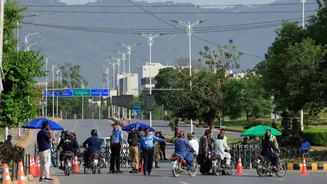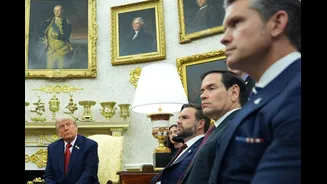








As the latest round of US-Iran nuclear diplomacy unfolds in Pakistan, a striking question has emerged in Washington: why are key officials like Secretary of State Marco Rubio and Vice-President JD Vance
largely absent from the negotiating table, while figures like Defence Secretary Pete Hegseth and presidential adviser Jared Kushner are taking leading roles?
The answer lies in a significant reshaping of how US President Donald Trump is conducting foreign policy, which is shifting traditional diplomacy away from the State Department and toward the White House and trusted political allies.
Rubio’s Unusual Absence
According to The New York Times, Rubio, who is simultaneously serving as Secretary of State and National Security Adviser, has been largely absent from high-level overseas negotiations, including the Iran talks, earlier Geneva and Doha meetings, and even Ukraine and Gaza-related diplomacy.
The NYT notes that Rubio has instead remained close to Trump in Washington, reflecting his “dual-hatted” position that splits responsibility between running the State Department and coordinating national security policy from the White House.
In contrast to other former secretaries of state, like John Kerry, who actively participated in nuclear talks with Iran during the Obama administration, Rubio has chosen not to take an active diplomatic role. According to the NYT, he has been focusing on coordination from the White House instead, spending time in Washington while others negotiate elsewhere.
Experts quoted by the newspaper say this reflects a broader shift in US diplomacy where the secretary of state is no longer the primary negotiator on major international crises, but rather part of a centralised White House decision-making structure.
JD Vance: Political Role, Not Diplomatic Engine
JD Vance’s absence from the Iran talks is also consistent with how the Trump administration is structuring negotiations. As Axios reports, Vance is not part of the core negotiating team travelling to Pakistan for Iran discussions, despite earlier speculation about broader involvement.
The report suggests that Vance’s role remains primarily domestic and political, focused on internal administration priorities and strategic messaging, rather than direct diplomacy. This mirrors a broader pattern in the Trump administration, where high-stakes negotiations are increasingly handled by a smaller circle of presidential confidants rather than constitutional officeholders.
Yet another reason for Vance’s absence is that his expected Iranian counterpart, Parliament Speaker Mohammad Bagher Ghalibaf, is not travelling with foreign minister Abbas Araghchi for the talks.
The Rise Of Hegseth And Kushner
In contrast, Hegseth and Kushner have emerged as central figures in backchannel and frontline diplomacy with Iran.
According to The New York Times, Kushner, along with Trump ally Steve Witkoff, has been deeply involved in ongoing talks involving Iran, Israel, Russia and Ukraine. The NYT notes that Kushner and Witkoff have already met Iranian officials in Islamabad and are expected to continue engagement in follow-up rounds.
The participation of Hegseth is indicative of yet another crucial change in US foreign policy, which has seen the growing importance of the Pentagon in diplomacy, a role hitherto reserved for the State Department.
Taken together, the absences of Rubio and Vance and the prominence of Hegseth and Kushner point to a broader restructuring of US foreign policy under Trump.
The New York Times highlights that this is not unprecedented in modern US history. Past presidents have sometimes delegated major diplomatic tasks to non-traditional envoys. For example, President Joe Biden relied on CIA Director William Burns for key negotiations with Russia and Hamas.
However, analysts quoted by the NYT argue that the current model goes further, effectively sidelining the State Department from its traditional leadership role in major negotiations. Emma Ashford of the Stimson Center noted that Rubio appears to prioritise proximity to Trump over foreign travel, reflecting how centralised decision-making has become within the White House.