






Could the new “7-minute cancer shot” mark a major shift in modern cancer care, making treatment faster, less exhausting and more patient-friendly in the future?
The treatment, known as Tecentriq SC, is
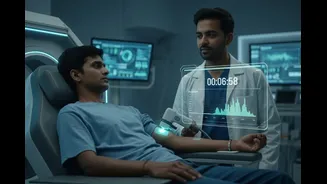
a subcutaneous injectable version of Roche — a leading provider of cancer treatments and in-vitro diagnostics — widely used immunotherapy drug Tecentriq. Unlike conventional intravenous infusions that can take anywhere between 30 minutes and an hour, the injectable version can reportedly be administered in around seven minutes. It has been approved by the Central Drugs Standard Control Organisation (CDSCO) — India’s National Regulatory Authority (NRA) under the Ministry of Health and Family Welfare.
Though the development has created a lot of buzz, oncologists say it is not just about speed. It reflects how cancer treatment itself is gradually evolving from long, physically draining hospital-based procedures towards more targeted, efficient and potentially patient-friendly therapies.
In India, where nearly 1.46 million cancer cases are reported every year, third only to China and the US, patients often struggle with overcrowded hospitals, delayed diagnosis and expensive treatment cycles. Thus, the implications of the new injectable could eventually be significant.
How Does The ‘7-Minute Cancer Shot’ Work?
To understand the significance of the new injectable treatment, it is important to understand how immunotherapy differs from traditional chemotherapy.
Chemotherapy works by attacking rapidly dividing cells, including cancer cells. But because it can also affect healthy cells, patients often experience severe side effects such as hair loss, nausea, fatigue and lowered immunity.
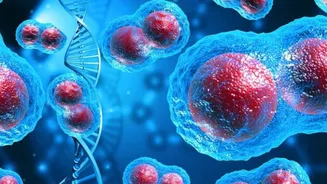
Immunotherapy works differently. Instead of directly attacking cancer, it helps the body’s immune system recognise and fight cancer cells more effectively.
Tecentriq belongs to a category of drugs known as PD-L1 inhibitors. These medicines block certain proteins that help cancer cells hide from the immune system. Once these proteins are blocked, immune cells can identify and attack tumours more efficiently.
Traditionally, Tecentriq has been administered through intravenous infusion inside hospitals or cancer centres. The new subcutaneous version changes the delivery system rather than the medicine itself. Instead of slowly entering the bloodstream through IV infusion, the drug is injected under the skin using a formulation designed for faster absorption.
This significantly reduces administration time to roughly seven minutes while potentially easing pressure on hospital infrastructure.
Could Faster Treatment Improve Patient Experience?
For patients, the biggest impact may not simply be medical, it could also be psychological and logistical.
Cancer treatment often dominates a patient’s entire routine. The day starts with taking prescribed medicines. Breakfast is usually wholesome and home-cooked meals, drinking water and staying hydrated. Depending on the stage of treatment, patients may spend significant time travelling to major cancer centres for chemotherapy, radiation or scans.
Thus, a shorter injectable treatment could reduce time spent in oncology wards, lower waiting times and make treatment cycles less disruptive to daily life.
This matters especially for lung cancer patients because many cases in India are diagnosed at advanced stages, when patients are already physically weak or emotionally exhausted. Estimates suggest India reports 80,000-100,000 lung cancer cases every year, with Northeastern region having the highest incidence rates.
Faster administration may also help hospitals manage larger patient volumes more efficiently. In overcrowded healthcare systems, reducing infusion-chair occupancy by even 30 to 40 minutes per patient can significantly improve operational capacity.
Caregivers could benefit too. Family members often spend entire days accompanying patients to treatment centres. Shorter procedures may reduce travel stress, accommodation expenses and lost working hours.
For many patients, the promise of “less hospital time” itself can become emotionally meaningful.
What Are The Risks Of Cancer Shots?
Oncologists stress that the treatment has limitations. First, the injectable version is not suitable for every cancer patient or every type of lung cancer. Immunotherapy effectiveness depends on several biological factors, including tumour characteristics and biomarker expression.
Second, side effects still remain possible. Immunotherapy may sometimes trigger immune-related complications affecting organs such as the lungs, liver or intestines.
The treatment also does not eliminate the need for broader cancer care infrastructure. Patients still require diagnosis, imaging, monitoring and specialist consultation.
Cost remains another major concern. The Tecentriq SC costs around Rs 3.7 lakh per dose in India. Most patients would require at least six doses of the same, which sums to roughly Rs 22 lakh, making it highly unaffordable to patients.
Other injectable immunotherapy drugs available in India include Keytruda (pembrolizumab), Opdivo (nivolumab) and Yervoy (ipilimumab), which are also used for advanced cancers and often cost several lakhs per dose. While these therapies are transforming cancer treatment globally, affordability continues to remain one of the biggest barriers for Indian patients.
Advanced immunotherapy drugs remain expensive in India, often placing them beyond the reach of many patients without insurance or financial assistance. Even if injectable delivery reduces hospital time, affordability challenges may continue.
Doctors also warn against oversimplified social-media narratives around “miracle cancer shots.” Oncology treatments remain highly personalised, and outcomes vary widely between patients.
India Faces A Rapidly Growing Cancer Burden
According to estimates, India is likely to witness 1.75 million new cases annually — a 24% increase — by 2030. Lung cancer remains among the leading causes of cancer-related deaths, with nearly 75,000-80,000 annual fatalities.
Tobacco is still the single largest preventable cause of cancer in the country, contributing over one-third of all cancer cases, particularly oral, throat and lung cancers. Poor air quality in urban and industrial centres exposes millions to fine particulate matter, which is increasingly linked to lung cancer even among non-smokers.
Rapid urbanisation has led to an increase in sedentary behaviour, higher obesity rates, and the consumption of processed foods, contributing to spikes in breast, colon, and other lifestyle-related cancers.
At the same time, India’s oncology infrastructure remains unevenly distributed. According to the National Institute of Health, an estimated 70% of the districts lack comprehensive cancer centres. Because rural residents often rely on primary health centres, which often lack specialised doctors or screening equipment, cancer is frequently diagnosed at later stages.
However, government schemes such as Ayushman Bharat have treated more than 68 lakh cancer patients, with over 75% of beneficiaries from rural areas. Programmes such as the Health Minister’s Cancer Patient Fund provide financial aid up to Rs 15 lakh to patients living below the poverty line to access care at designated Regional Cancer Centres (RCCs).
India’s broader healthcare ecosystem is already witnessing increasing adoption of precision oncology, robotic surgery, targeted therapy and advanced immunotherapy platforms.
If such therapies become scalable and more affordable, they may help decentralise aspects of cancer care by reducing the complexity and duration of treatment administration.