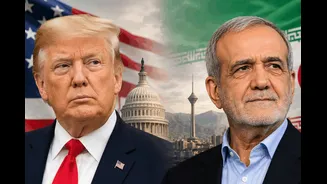



US President Donald Trump and Iranian President Masoud Pezeshkian have officially signed a landmark Memorandum of Understanding (MoU) aimed at ending months of conflict and opening the door to a broader
peace agreement between the two countries.
The agreement, finalised through electronic signatures after negotiators settled the final text, marks the first formal accord between US and Iran in years. The signing came days after officials from both sides agreed on a 14-point framework covering issues ranging from the Strait of Hormuz and sanctions relief to Iran’s nuclear programme.
But despite the historic optics, both governments have stressed that this is not the end of negotiations. Instead, the MoU launches a 60-day implementation period during which both sides must fulfil a series of commitments before a comprehensive peace agreement can be concluded.
Iranian officials were quick to temper expectations after the signing, saying it was now “time to test the implementation” – a signal that success will depend less on signatures and more on whether Washington and Tehran can deliver on their promises.
Here are the five biggest developments to watch over the next two months.
1. Will both sides stick to the ceasefire?
The agreement requires an immediate halt to hostilities while negotiations continue. Although fighting has subsided, the memorandum allows either side to suspend or abandon negotiations if the ceasefire breaks down or either party believes commitments are not being honoured. That makes the coming weeks the first major test of trust after years of confrontation.
Even a limited military incident in the Gulf or elsewhere in the region could derail the diplomatic process before a final agreement is reached.
2. Can the nuclear issue finally be resolved?
Perhaps the most difficult task ahead concerns Iran’s nuclear programme. Instead of demanding the immediate destruction of Iran’s enriched uranium stockpile, the memorandum proposes that highly enriched uranium be down-blended under the supervision of the International Atomic Energy Agency (IAEA), reducing it to levels suitable for civilian use.
Iran has also reiterated that it will not pursue nuclear weapons, while agreeing to cooperate with international inspectors.
However, observers will now have to verify compliance on the ground, making the implementation process just as important as the agreement itself. Any disagreement over inspections, enrichment levels or verification timelines could quickly become the biggest obstacle to a final deal.
3. Will sanctions relief arrive quickly enough?
For Iran, the biggest incentive is economic. Under the framework, the United States has agreed to begin easing pressure through oil sanctions waivers, lifting the naval blockade and eventually allowing Iran access to portions of its frozen overseas assets.
But these benefits are not automatic. Most are tied to Iran meeting its obligations first, meaning both sides will have to move in carefully coordinated steps over the next 60 days.
This sequencing has historically been one of the biggest sticking points in US-Iran diplomacy. Tehran wants visible economic relief, while Washington insists sanctions relief must remain conditional on verified compliance.
4. Will Strait of Hormuz remain open?
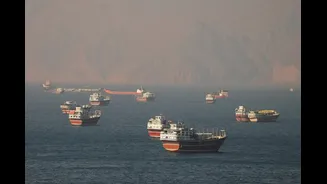
One of the most significant provisions of the memorandum concerns the Strait of Hormuz, the narrow waterway through which roughly one-fifth of the world’s seaborne oil trade passes. Iran has committed to restoring commercial navigation through the strait, while the United States has agreed to gradually lift its naval blockade.
If implemented smoothly, the agreement could ease pressure on global oil markets, reduce shipping costs and improve energy security for major importers, including India.
However, questions remain over future maritime rules and whether fresh tensions could once again disrupt shipping through one of the world’s most strategically important chokepoints.
5. Can a temporary deal become lasting peace?
The biggest question is whether this memorandum evolves into a permanent agreement, or joins the long list of failed US-Iran diplomatic efforts.
The current document is only a framework. Negotiators now have 60 days to settle unresolved issues, including long-term sanctions, the future of Iran’s nuclear programme, regional security arrangements and international guarantees.
If those negotiations succeed, the agreement could eventually receive broader international backing, including consideration by the UN Security Council.
If they fail, either side can walk away, raising the risk of renewed confrontation. That is why Iran’s response after the signing was notably cautious. The deal may have been signed by Trump and Pezeshkian, but both governments acknowledge that the hardest part begins now.