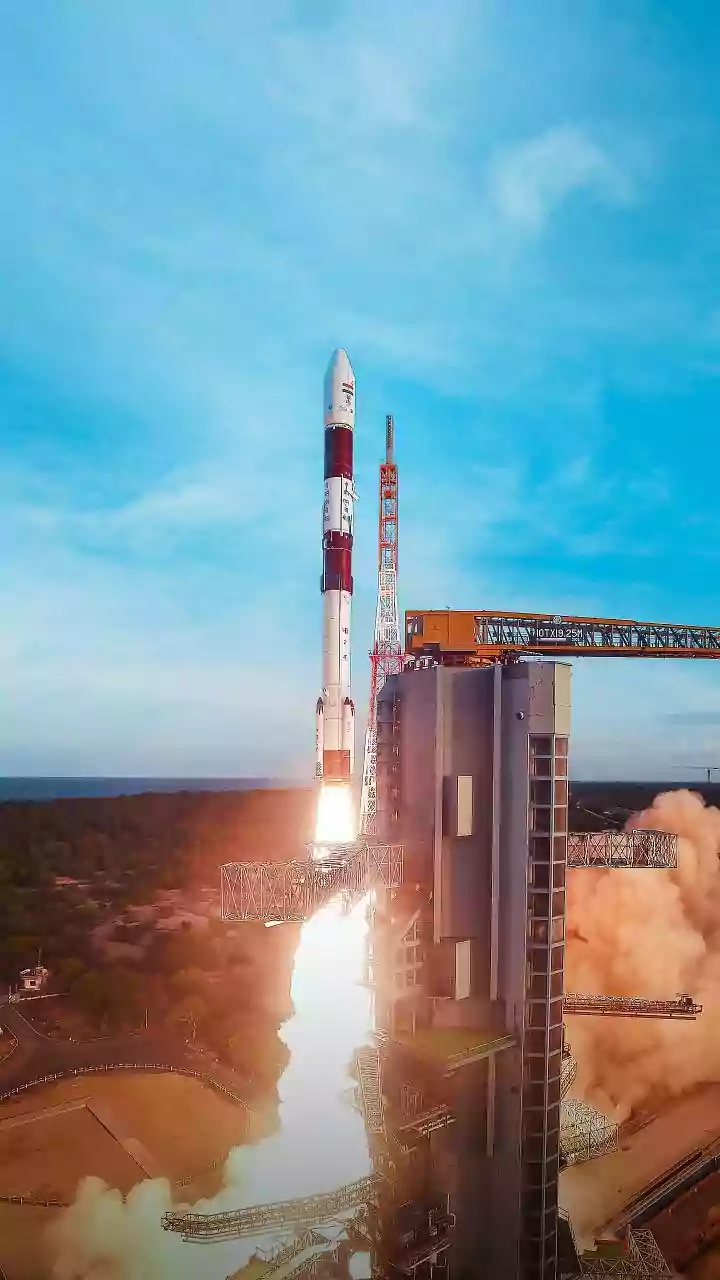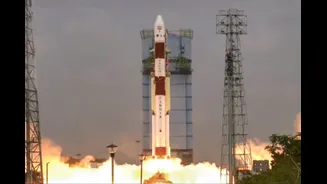







The Indian Space Research Organisation (ISRO) on Monday launched the PSLV-C62 mission, marking the first space mission of India’s 2026 launch calendar. However, it encountered a glitch soon after.
The Polar
Satellite Launch Vehicle lifted off from the First Launch Pad at the Satish Dhawan Space Centre in Sriharikota, carrying the EOS-N1 earth observation satellite along with 14 co-passenger satellites for domestic and international customers.
The mission, undertaken by NewSpace India Limited (NSIL), the commercial arm of ISRO, is the ninth dedicated commercial mission executed by NSIL.
It also marks the 64th flight of the PSLV, which continues to serve as ISRO’s workhorse launch vehicle.
VIDEO | Sriharikota: ISRO launches PSLV-C62/EOS-N1 Mission from Satish Dhawan Space Centre (SDSC-SHAR).
(Full VIDEO available on https://t.co/n147TvrpG7) pic.twitter.com/a8m5q4az06
— Press Trust of India (@PTI_News) January 12, 2026
However, the mission encountered a technical glitch close to the third stage, the ISRO chief said in a statement.
“Today, we have attempted the PSLV C62/EOS-N1 Mission. The PSLV vehicle is a four-stage vehicle with two solid stages and two liquid stages. The performance of the vehicle close to the end of the third stage was as expected. Close to the end of the third stage, we are seeing more disturbance in the vehicle,” ISRO chairman V Narayanan said.
“Subsequently, there is a deviation observed in the vehicle flight path. We are analysing the data,” he added.
#WATCH | ISRO Chief V Narayanan says,” Today we have attempted the PSLV C62 / EOS – N1 Mission. The PSLV vehicle is a four stage vehicle with two solid stages and two liquid stages. The performance of the vehicle close to the end of third stage was as expected. Close to the end… pic.twitter.com/buC7aSDYw4
— ANI (@ANI) January 12, 2026
Later, ISRO, in an X post, mentioned, “The PSLV-C62 mission encountered an anomaly during the end of the PS3 stage. A detailed analysis has been initiated.”
The PSLV-C62 mission encountered an anomaly during end of the PS3 stage. A detailed analysis has been initiated.
— ISRO (@isro) January 12, 2026
According to ISRO, the PSLV-C62 is a four-stage launch vehicle, standing 44.4 metres tall with a lift-off mass of 260 tonnes.
The mission uses the PSLV-DL configuration, equipped with two solid strap-on motors.
The countdown for the launch began 25 hours ahead of lift-off.
“The integration of the vehicle and the satellites has been completed, and pre-launch checks are in progress. The PSLV-C62 mission is proposed to lift off on January 12 at 10.17 hrs, from the First Launch Pad at Satish Dhawan Space Centre, Sriharikota,” ISRO said in a statement ahead of the launch.
The primary payload, EOS-N1, is an Earth observation satellite built jointly by Thailand and the United Kingdom.
The satellite, along with other satellites, was planned to be injected into a Sun Synchronous Orbit.
The deployment of these satellites is expected to take place around 17 minutes after lift-off.
In addition to the earth observation mission, the PSLV-C62 flight will demonstrate the Kestrel Initial Technology Demonstrator (KID), a small-scale prototype re-entry vehicle developed by a Spanish startup.
The KID capsule is the last co-passenger on board the mission.
ISRO said the KID demonstration will occur more than two hours after the launch.
Scientists will restart the fourth stage of the rocket (PS4) to de-boost the stage and place it on a re-entry trajectory.
Following this manoeuvre, the KID capsule will separate and re-enter the Earth’s atmosphere.
Both the PS4 stage and the KID capsule are expected to make a controlled re-entry and splash down in the South Pacific Ocean, ISRO said.
The mission is expected to last for more than two hours from lift-off to the completion of all planned orbital manoeuvres and demonstrations.
PSLV-C62 further strengthens ISRO’s commercial launch portfolio, with NSIL providing end-to-end launch services to multiple domestic and overseas customers through a single mission.
PSLV has completed 63 successful flights prior to this mission, including landmark launches such as Chandrayaan-1, the Mars Orbiter Mission, Aditya-L1 and Astrosat.
In 2017, the launch vehicle created a world record by placing 104 satellites into orbit in a single mission.