





At least eight Indian vessels have so far transited the strategic Strait of Hormuz, even as the crucial maritime corridor remains largely shut amid the ongoing US-Israeli war on Iran, which has unsettled
global oil markets and disrupted energy flows worldwide.
The Strait of Hormuz — a vital maritime chokepoint that accounts for nearly one-fifth of the global oil and gas trade — was effectively blocked by Tehran in the wake of the coordinated US-Israeli strikes. However, Iran has maintained that the waterway remains open to “friendly nations”, including India, Russia, China, and Pakistan.
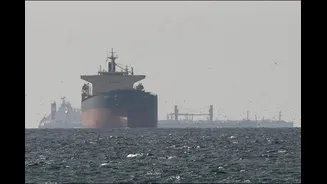
Earlier today, the LPG tanker ‘Green Sanvi’ successfully crossed the Strait of Hormuz and is now moving towards India, becoming the eighth vessel to pass through the critical lane. Two more vessels, Green Asha and Jag Vikram, are expected to arrive in India in the coming days.
READ MORE: ‘Indian Friends Are In Safe Hands’: Iran’s Assurance As West Asia Conflict Grows
How Many Ships Have Crossed Hormuz?
India is now one of the countries with the highest number of ships that have passed through the war-hit Strait of Hormuz, helping energy security in India and maintaining supplies for the common man. So far, these ships have transited the lane:
- Shivalik
- Nanda Devi
- Jag Laadki
- Pine Gas
- Jag Vasant
- BW Tyr
- BW Elm
- Green Sanvi
More than 15 Indian-flagged vessels carrying around 485 Indian seafarers remain in the Gulf as the war continues with no end in sight. The Ministry of External Affairs has confirmed that the Indian Navy has been present in the Gulf of Oman and the Arabian Sea for years to secure sea lanes for Indian and other ships.
The Islamic Revolutionary Guard Corps (IRGC) said the waterway remains under its “full and decisive control,” while dismissing recent proposals by US President Donald Trump to reopen the key shipping route. Iran’s Parliament has approved a new management plan for the Strait of Hormuz that proposes tolls on vessels and restrictions on certain countries, according to Iranian state media.
The plan bars US and Israeli vessels from using the route and extends restrictions to countries that have imposed unilateral sanctions on Iran. It also underscores Tehran’s sovereign control over the Strait and envisages coordination with Oman to create a legal framework governing its regulation.
ALSO READ: ‘India Only Country To Lose Mariners At Hormuz’: Foreign Secretary At UK-Led Iran War Talks