









Amid growing criticism of the Ethanol Blended Petrol (EBP) Programme and concerns circulating on social media about E20 fuel, the Ministry of Petroleum and Natural Gas on Friday released a detailed Frequently
Asked Questions (FAQ) document addressing issues related to ethanol blending, vehicle compatibility, fuel prices and mileage.
Here are the government’s responses to some of the most frequently raised concerns:
Q1: Did India Rush Its Ethanol Blending Targets?
The government said India’s ethanol blending programme has evolved over more than two decades. Pilot projects began in 2001, followed by policy notifications in 2013, institutional reforms after 2018 and large-scale investments from 2021 onwards.
According to the government, E5 (5% ethanol blending) was introduced in several states by 2006. India achieved 10% blending by 2022 and reached 20% blending by 2025.
The ministry said the move to E20 was backed by expanded production capacity. While 10% blending required around 500-600 crore litres of ethanol annually, fresh investments enabled the country to scale up production to nearly 1,200 crore litres.
Rejecting allegations of a rushed rollout, the government said India accelerated implementation through better planning, governance and execution rather than by compromising on science or safety.
Q2: Why Is E20 Is Better Than E10?
According to the ministry, E20 provides a higher octane rating, improved anti-knock characteristics, faster combustion, better pickup, smoother acceleration and cleaner engine operation.
The government also said E20 produces negligible particulate emissions and can reduce lifecycle carbon emissions by around 40%.
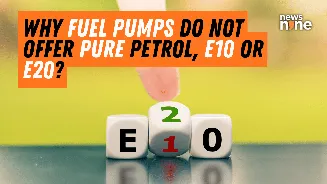
Q3: Why Can’t Consumers Choose Between Pure Petrol, E10 and E20?
The ministry said automobile manufacturers, testing agencies, technical experts and other stakeholders were consulted extensively before the rollout of E20 fuel. It argued that vehicle manufacturers would not have supported the transition or honoured warranties if they had concerns about the fuel’s safety and performance.
The government also said requiring petrol pumps across the country to simultaneously stock pure petrol, E10 and E20 would create significant logistical and distribution challenges.
Q4: Why Isn’t E20 Cheaper?
The ministry said maize-based ethanol is currently procured at around ₹71.86 per litre, excluding GST, transportation, storage and handling costs. At crude oil prices of around $70 per barrel, E20 can actually cost more to produce than pure petrol, the government said. However, if crude prices rise sharply, ethanol becomes more economical.
The ministry stressed that ethanol blending is not aimed at reducing fuel prices on a day-to-day basis but at lowering India’s dependence on imported crude oil and insulating part of the fuel supply from global oil market volatility.
Q5: Does E20 Damage Engines or Older Vehicles?
Addressing concerns about rubber components, fuel lines and engine wear, the ministry said such claims are not supported by scientific evidence.
The government pointed to the experience of older vehicles already operating on E20 fuel. It noted that Maruti Suzuki alone serviced nearly 2.5 crore vehicles, including around 1.5 crore older vehicles that were not originally certified as E20-compatible. According to the ministry, if E20 were causing significant damage, the country would have seen widespread warranty claims and large-scale component failures, which it said has not happened.
The government also clarified that vehicle manuals mentioning “E10 compatible” reflect fuel specifications in place when the vehicle was certified and do not automatically imply that later fuel standards are unsafe.
Q6: Will E20 Reduce Mileage?
The ministry acknowledged that certain vehicles may experience a reduction in fuel efficiency of around 3-5% when using E20 fuel.
However, it maintained that the broader benefits of ethanol blending—including reduced oil imports, greater energy security and lower emissions—continue to support the programme’s long-term objectives.