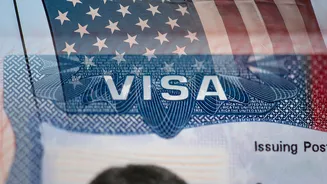








Indians applying for a US visa are facing a double hurdle: longer waits for interview appointments and higher costs for obtaining a visa. A new audit by the US Government Accountability Office (GAO) has
found that Indian applicants waited an average of 346 days for a non-immigrant visa interview in fiscal year 2025, more than eight times the 42-day average recorded before the Covid-19 pandemic. The finding highlights how sharply demand for US visas has outpaced the capacity of American consular posts to process applications.
The GAO report, released on September 28, analysed US State Department data covering fiscal years 2019 through 2025. India had 1.45 million non-immigrant visa applications in FY2025, handled by just 68 consular officers working on such visas. That worked out to about 21,401 applications per consular officer, among the highest workloads examined in the audit.
Why Indians Are Having To Wait So Long
The GAO found that the US consular system itself has struggled to keep staffing in line with demand. Across the US, visitor-visa adjudications rose from 9.2 million in FY2019 to 11.7 million in FY2025, surpassing pre-pandemic levels. At the same time, the number of consular officers working on non-immigrant visas fell from 1,342 in FY2024 to 904 in FY2025, after hiring freezes and attrition. The average wait for a visitor-visa interview across the US consequently rose from 26 days in FY2019 to 201 days in FY2025.
India was particularly affected because of the combination of high application volumes and relatively low staffing. The GAO noted that India and Mexico had longer interview waits than China and Brazil, with staffing levels relative to demand identified as a significant factor.
The situation has continued to be challenging in 2026, particularly for Indians seeking tourist and business visas.
Visitor Visa Queues Remain The Biggest Problem
The latest US State Department data, updated on September 17, shows that applicants seeking B1/B2 visas, used for business visits and tourism, continue to face lengthy appointment queues in India.
The next available B1/B2 appointment was estimated at around 12 months in Hyderabad, 11.5 months in Mumbai, 10 months in New Delhi, 7.5 months in Chennai and 6.5 months in Kolkata, according to the latest appointment data.
These figures are not fixed deadlines. The State Department says new appointment slots are released regularly, and applicants who already have an appointment can check back and move to an earlier date if one becomes available.
Importantly, the long queues do not affect every US visa category equally.
Student and exchange-visitor applicants under the F, M and J categories, for example, have considerably shorter appointment waits at Indian consular posts. Recent data showed waits ranging from less than half a month in Chennai to around 2.5 months in Mumbai. Work-related categories such as H, L, O, P and Q also generally have shorter waits than B1/B2 applicants, although delays have increased in some locations.
US Visa Fees Have Also Become Expensive
For Indians, the cost of applying for a US visa has also been rising.
The standard application processing fee for a B1/B2 visitor visa is currently $185. The same $185 fee applies to several other non-petition-based categories, including F, M and J visas. Petition-based categories such as H, L, O and P visas carry a $205 application fee.
On top of this, the US Congress legislated a new $250 Visa Integrity Fee for non-immigrant visa applicants under the 2025 immigration law. The law says the fee will be charged in addition to other authorised visa fees and provides for annual inflation adjustments from FY2026.
What This Means For Indians Planning A US Trip
For tourists and business travellers, the biggest change is the amount of advance planning required. A person hoping to visit the US for a holiday, family visit or business meeting cannot necessarily assume that applying a few months before the trip will be enough.
The State Department itself advises applicants to apply early because interview waits vary by location, season and visa category. It also recommends regularly checking appointment availability after booking, since earlier slots can be released.