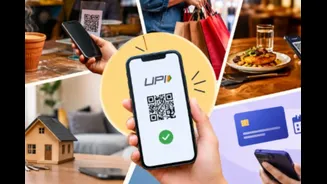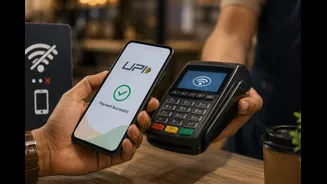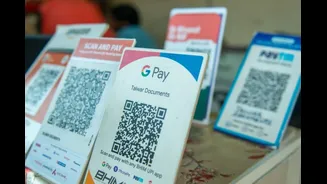







Imagine you buy a Rs 5,000 appliance, scan the shop’s QR code and complete the UPI payment. The shopkeeper then tells you: “UPI charges are now applicable, so you have to pay another Rs 20.”
Can a shop
actually do that? The short answer is no.
The new UPI Merchant Discount Rate (MDR) framework does introduce a 0.4 per cent charge on specified person-to-merchant (P2M) UPI transactions above Rs 2,000 from October 15 this year. However, that charge is payable within the merchant-side payment ecosystem, which means merchants cannot pass the MDR on to customers.
So, what exactly changes for consumers? Here are seven questions answered.
1. Can A Shopkeeper Charge Me Extra?
No, not as a UPI MDR surcharge.
ALSO READ | New UPI Rules From October 15: 8 Things Your Bank, App And Shopkeeper Can’t Charge You For
Under the new framework, the 0.4 per cent MDR on eligible UPI merchant transactions is a charge within the payment ecosystem. It is not a fee that the customer has to pay for using UPI.
The National Payments Corporation of India (NPCI)’s FAQs explicitly state that merchants cannot pass the MDR charge on to customers while accepting UPI payments. The Finance Ministry has also said banks have been advised to ensure that merchants do not pass the MDR on to customers.
So, if your bill is Rs 5,000, the shop cannot simply say: “The bill is Rs 5,000, but because you are paying by UPI, you have to pay Rs 5,020.”
The amount you are required to pay should remain the posted price, rather than the merchant adding the MDR as a separate UPI fee.
2. Then What Is The 0.4% UPI Charge?
From October 15, a 0.4 per cent MDR will apply to specified P2M UPI transactions above Rs 2,000. For transactions of Rs 75,000 and above, the MDR will be capped at Rs 300 per transaction.
ALSO READ | How Proposed UPI Fees Above Rs 2,000 Compare With Credit Card Charges? Scenarios Explained
For example, a Rs 3,000 UPI purchase will attract an MDR of Rs 12; a Rs 5,000 purchase will involve an MDR of Rs 20; a Rs 50,000 purchase will attract an MDR of Rs 200, and for a Rs 1 lakh purchase, 0.4 per cent would be charged. That would make the amount Rs 400, but the applicable cap keeps it at Rs 300.
These amounts are not added to the customer’s bill. They are merchant-side charges.
3. Does This Mean UPI Is No Longer Free?
For ordinary consumers, UPI remains free.
The Finance Ministry has clarified that consumers will not face transaction charges for making UPI payments. Person-to-person payments, such as sending money to a friend or transferring money between your own accounts, remain free regardless of the amount.
There is also no monthly quota after which an individual starts paying a UPI fee. In other words, there is no new “UPI fee” that will suddenly be deducted from your bank account because you use UPI frequently.
4. What Happens If I Pay A Shop Rs 2,000 Or Less?
UPI payments to merchants of up to Rs 2,000 remain free of MDR.
The September 14 government notification specifically protects UPI transactions up to Rs 2,000 from charges by banks or system providers. The new framework also says payments to merchants up to Rs 2,000 will remain free.
So, for a Rs 500 grocery bill, Rs 1,200 restaurant bill or Rs 2,000 purchase, there is no new MDR for the merchant under this framework. And, of course, the customer does not pay a UPI transaction fee.
5. What If I Buy Something For Rs 2,500? Will I Have To Pay Rs 2,510?
No. A Rs 2,500 transaction falls above the Rs 2,000 threshold for the applicable P2M MDR. At 0.4 per cent, the MDR would be Rs 10.
But that Rs 10 is not supposed to be added to your bill. NPCI’s FAQ says merchants cannot pass the MDR on to customers. The merchant bears the applicable MDR within the payment ecosystem.
6. What About Your Local Kirana Shop?
Small merchants classified under the P2PM framework, receiving up to Rs 1 lakh a month through UPI QR codes, will continue to have zero MDR. This is intended to protect small vendors and neighbourhood businesses from additional payment costs.
This means a small street vendor or neighbourhood shop does not automatically start paying MDR simply because one customer makes a payment above Rs 2,000.
The merchant’s classification matters, not just the value of an individual transaction.
7. What Should I Do If A Shopkeeper Demands An Extra UPI Charge?
First, ask the merchant to clarify what the additional amount is for and ask for a bill.
If the shopkeeper says the extra amount is specifically a UPI/MDR charge, that is inconsistent with the new framework, which says merchants cannot pass MDR on to customers.
Keep the bill, payment confirmation and any other relevant details of the transaction.
For consumers, the bigger takeaway is simple: the introduction of MDR does not mean you have to start paying a percentage every time you scan a QR code.
So, What Actually Changes From October 15?
The government says about 96 per cent of merchant UPI transactions will remain unaffected, because they are either below the Rs 2,000 threshold or covered by the zero-MDR framework for small merchants.
So, while the headline around UPI has changed from “zero MDR” to “MDR on some larger merchant transactions”, the change is primarily on the merchant and payment-ecosystem side—not a new fee being imposed on ordinary people every time they use UPI.