




India has renewed its push for sweeping reforms in global governance institutions, arguing that existing multilateral structures no longer reflect current geopolitical realities and are struggling to address
modern challenges.
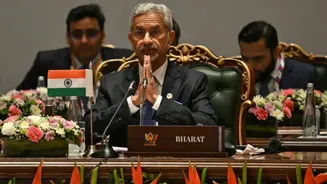
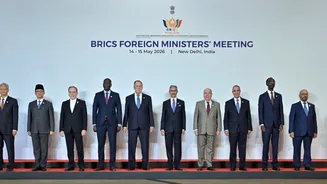
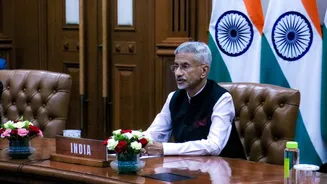
Speaking at a BRICS session focused on reforms to global governance and multilateral systems, India said international institutions created decades ago have failed to keep pace with an increasingly interconnected, complex and multipolar world.
“The effectiveness of global governance and the credibility of multilateralism are under increasing scrutiny,” India said, stressing that reform was “not a matter of choice, but of necessity.”
India Pushes For UN Security Council Reform
A major focus of India’s intervention was the reform of the United Nations, particularly the UN Security Council.
India argued that while UN membership and responsibilities have expanded significantly over time, decision-making structures continue to reflect an earlier era.
Calling for expansion in both permanent and non-permanent categories of the Security Council, India said greater representation for Asia, Africa and Latin America was essential to improve the body’s legitimacy and effectiveness.
“Without meaningful reform, the effectiveness and credibility of the UN will remain constrained,” India said.
India also urged countries to move beyond discussions and begin text-based negotiations on UN reforms.
Call To Reform Global Financial Institutions
India highlighted growing vulnerabilities linked to:
Fragile global supply chainsFood and energy insecurityUnequal access to resourcesFinancing challenges faced by developing nations
The country called for reforms to the international financial architecture, arguing that Multilateral Development Banks must become more responsive and better equipped to mobilise resources.
India also sought easier access to development finance and climate finance aligned with national priorities.
WTO And Global Trade System Need Changes
India said the multilateral trading system must also be updated to address emerging risks.
The statement pointed to:
- Non-market practices
- Supply chain concentration
- Uncertain market access
- Persistent inequalities affecting developing countries
India reiterated support for a rules-based and inclusive trading system with the World Trade Organization (WTO) at its centre but said reforms were needed to make it fairer.
‘Multilateralism Must Be Democratic’
India stressed that reforms should not be limited to institutions alone but should also transform decision-making processes.
The country said multilateralism must become:
More democraticMore representativeMore effectiveMore responsive to emerging economies
India added that global cooperation must remain rooted in sovereignty, territorial integrity, international law and mutual trust.
‘Reform Is Overdue’
Concluding its remarks, India said current global challenges require deeper cooperation and faster institutional reform.
“The message from our times is clear: Cooperation is essential. Dialogue is necessary. Reform is overdue,” India said.
India reaffirmed its commitment to working with international partners toward what it described as a more democratic, representative and equitable global order.