




Skincare today has moved far beyond basic beauty routines and is increasingly seen as an important part of overall health and self-care. With rising awareness about ingredients and their long-term effects,
many are now cautious about using chemical-heavy products that promise instant results. Instead, there is a growing preference for traditional remedies.
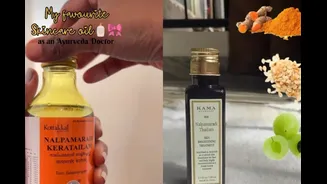
Nalpamaradi Tailam, one such herbal oil known for improving skin health and glow, is making a comeback.
Why Is Nalpamaradi Tailam Going Viral?
Originating from Kerala, Nalpamaradi Tailam is a classical Ayurvedic formulation traditionally used to treat various skin concerns. Typically prepared using a base of coconut or sesame oil, it is widely known for reducing tan, improving skin texture, and enhancing natural glow.
The oil’s rising popularity can be linked to two major skincare trends, the growing preference for natural beauty solutions and the revival of traditional wellness practices.
Social media has further amplified its reach, with users sharing visible before-and-after results and endorsing its effectiveness for tan removal and skin nourishment. The appeal also lies in its legacy. Products rooted in centuries-old traditions are increasingly being perceived as safe, reliable, and holistic, especially among younger consumers exploring clean beauty alternatives.
What Is Nalpamaradi Tailam Made Of?
Nalpamaradi Tailam is made using the bark of four sacred ficus trees: banyan, peepal, cluster fig, and Indian fig. The formulation is prepared using sesame or coconut oil as a base and enriched with ingredients like turmeric, vetiver, and amla, which help rejuvenate and protect the skin.
The Origins Of Nalpamaradi Tailam
Believed to date back over 3,000 years, Nalpamaradi Tailam has its roots in Kerala’s rich Ayurvedic heritage. The name “nalpamaram” refers to the mix of four ficus tree barks traditionally used in the formulation for their healing and skin-enhancing properties.
The oil was used to treat skin inflammations and post-burn wounds. It was also commonly applied in diluted form for neonatal massages to protect and nourish infants’ skin in humid climates.
View this post on Instagram
During the World Wars, the formulation saw a revival in Kerala and parts of Tamil Nadu, where women prepared and preserved the oil in coconut leaf baskets. This period helped cement its place as a household staple. Today, Nalpamaradi Tailam has transitioned from an ancient remedy to modern skincare essentials.