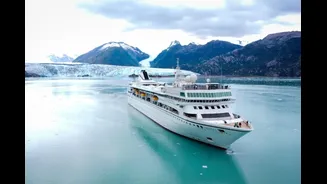







The Villa Vie Odyssey, a US-operated residential cruise ship that has been travelling around the world since departing Belfast, Northern Ireland, on October 3, 2024, has suspended operations in Cambodia
after soaring fuel prices made its voyage financially unsustainable. Hundreds of people who had been living aboard the vessel were told to disembark, leaving many uncertain about their accommodation and future travel plans.
The incident has raised questions about the financial viability of residential cruise ships, a niche travel concept that allows passengers to buy or rent cabins and live at sea for extended periods, sometimes permanently.
Why Has The Villa Vie Odyssey Cruise Ship Stopped In Cambodia?
The ship’s operator, Florida-based Villa Vie Residences, announced on October 27 that it was suspending operations in Cambodia, citing a sharp increase in fuel expenses linked to the conflict involving Iran.
A notice on their website reads, “Extraordinary increases in fuel costs have placed our current operating model under unsustainable financial pressure. We are working with residents to coordinate disembarkation and temporary living arrangements, and are supporting residents, crew, and employees as we evaluate restructuring and recapitalization alternatives over the next 60 days.”
According to the company, monthly fuel costs that had historically averaged around $1,800 per cabin had climbed to an estimated $6,000 to $8,000 in parts of Asia. The increase placed significant pressure on the company’s finances, and it said it could not simply transfer the entire additional expense to residents, reports BBC.
The operator had attempted to control costs by slowing the ship’s itinerary and spending longer periods in port to reduce fuel consumption. However, these measures were insufficient to offset the rising expenses.
Villa Vie Residences said it was exploring restructuring and recapitalisation options over the following 60 days, although the outcome remained uncertain.
How Were Passengers Left Stranded In Cambodia?
The vessel was docked at Sihanoukville, a Cambodian port city, after arriving from Thailand on October 23. It had been scheduled to continue towards Vietnam, report The Associated Press.
According to local officials, 203 passengers and 156 crew members were aboard when the ship’s operations were suspended. Passengers were reportedly given only a few hours to pack their belongings and leave the vessel.
Some residents arranged flights out of Cambodia, while others remained in Sihanoukville as they worked out their next steps. The company said it was coordinating disembarkation and working on temporary accommodation arrangements for affected residents.
The ship was expected to refuel before leaving Cambodia around October 31, according to local officials. Its departure, however, does not necessarily mean the residential voyage will resume.
What Is The Villa Vie Odyssey Residential Cruise Concept?
Unlike conventional cruise ships that primarily sell holidays lasting days or weeks, the Villa Vie Odyssey offers people the opportunity to make a vessel their long-term home while travelling between destinations, report Reuters.
The ship can accommodate up to 650 people, with options to rent cabins or purchase onboard residences. Some buyers invested substantial sums to secure a permanent living arrangement at sea, while others used the ship as an alternative to conventional retirement or remote-working lifestyles.
For residents who sold their homes or made long-term financial commitments to live aboard the vessel, the sudden suspension has created considerable uncertainty.
Will The Villa Vie Odyssey Resume Its World Voyage?
The company’s immediate priority is to manage the disruption and explore ways to secure its financial future. Its restructuring and fundraising efforts could determine whether the ship can return to its planned itinerary.
However, there is no guarantee that operations will resume. For now, residents face questions about accommodation, travel arrangements and the future of the homes they had established aboard the vessel.
The episode highlights how sharply rising operating costs can threaten even unconventional travel businesses, particularly those that depend on maintaining a continuous voyage while keeping prices affordable for long-term residents.