





A freight train leaving Moscow and eventually connecting with India through a vast overland corridor stretching across Eurasia could become reality soon. Russia has suggested exploring a direct rail connection
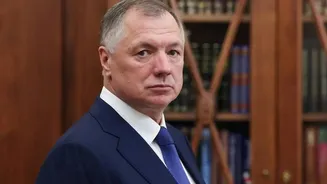
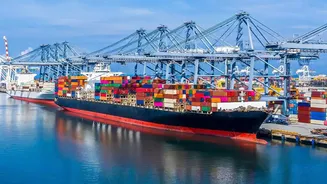
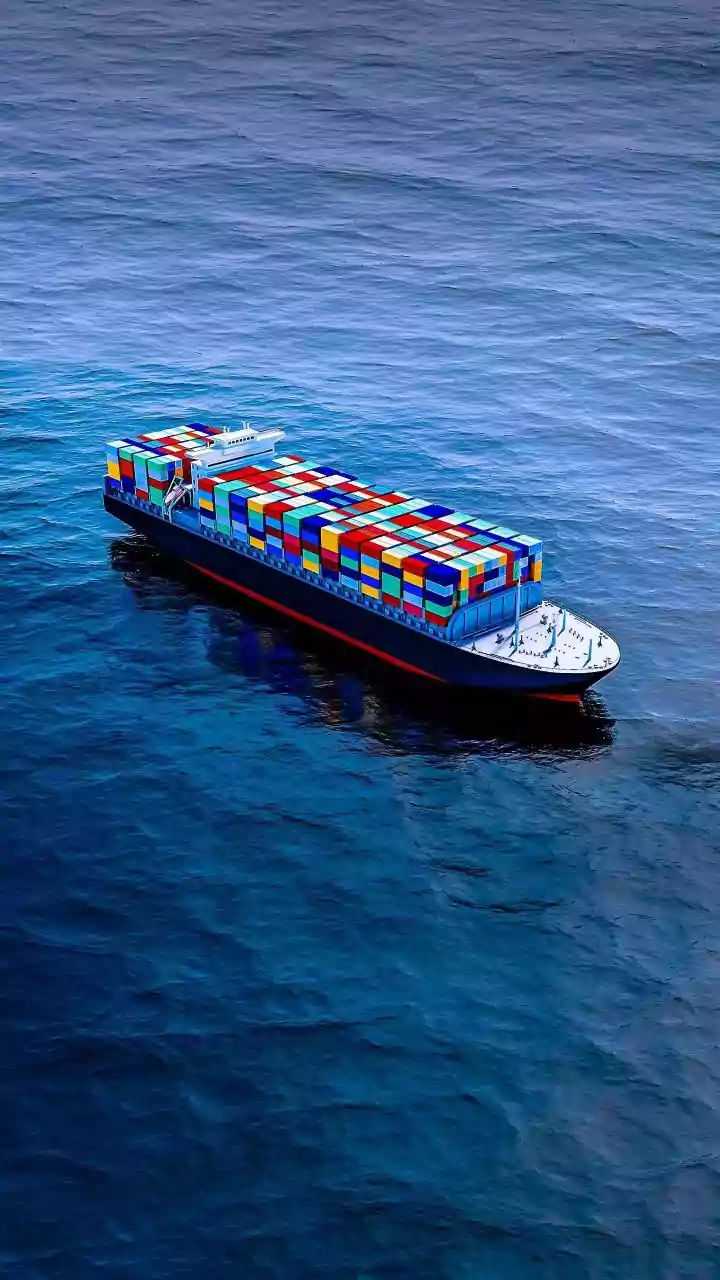
from Moscow to the Indian Ocean, with India as a key destination. The proposal was raised by Russian Deputy Prime Minister Marat Khusnullin, who argued that such a route could reduce dependence on strategically sensitive maritime chokepoints such as the Bosphorus in Turkey and the Strait of Hormuz.
The comments come at a time when geopolitical tensions in both the Black Sea and West Asia have made governments increasingly conscious of the risks attached to traditional shipping routes.
For India, the proposal has revived an old strategic question around whether Eurasia be connected to the Indian Ocean through a reliable land-and-sea network that bypasses some of the world’s most vulnerable bottlenecks.
How Discussion Around India-Russia Rail Link Project Began
The discussion is closely linked to the International North–South Transport Corridor (INSTC), a project involving India, Iran and Russia that was first agreed to in 2000.
The INSTC is a multimodal corridor. It combines ships, railways and roads. Its broad aim is to connect Mumbai, Iranian ports, the Caspian region and Russia, and eventually provide access to Central Asia and Europe. The network is about 7,200 km long and has been under development for more than two decades.
What has changed is the geopolitical context. After the Ukraine war, Western sanctions and disruptions in Black Sea logistics, Russia has become far more interested in routes that do not depend heavily on European-controlled or conflict-prone corridors. At the same time, instability in West Asia has complicated the progress of other connectivity projects such as the India-Middle East-Europe Economic Corridor (IMEC).
What Is The Rail Route Russia Is Talking About?
The most realistic version is not a single uninterrupted train line. Cargo would likely move through a combination of rail and sea links.
- Moscow → southern Russia by rail
- Russia → Azerbaijan by rail
- Azerbaijan → Iran through the North–South rail corridor
- Iran → Chabahar or Bandar Abbas
- Iran → India by sea, or through further integrated logistics links
One of the most important missing pieces is the Rasht-Astara railway in Iran, which is needed to create a continuous rail connection between Azerbaijan and Iran within the INSTC framework. The Qazvin-Rasht section has already been completed, but the Rasht–Astara link remains a critical bottleneck.
The Chabahar Factor
For India, the most significant element is Chabahar. Chabahar Port is Iran’s only major port with direct access to the Indian Ocean, meaning cargo can reach it without entering the Persian Gulf. This gives it strategic value because it reduces dependence on the narrow Strait of Hormuz. India has long viewed Chabahar as a gateway to Afghanistan, Central Asia and, through the INSTC, to Russia and Europe.
Iran is also building the Chabahar-Zahedan railway, designed to connect the port with Iran’s national rail network and eventually strengthen north-south connectivity toward Central Asia. The project has seen significant progress and is intended primarily for freight movement.
The Challenges?
Reports say that the corridor could reduce both transit time and logistics costs compared with the traditional Mumbai-Suez-Europe-Russia route. Earlier corridor studies suggested meaningful savings in time and freight expenses, although actual performance depends on customs procedures, port handling, rail capacity and political stability across the route.
A continuous Russia-India rail corridor, however, would require stable cooperation among multiple countries, including Russia, Iran and Azerbaijan, and potentially other transit states depending on the final alignment. Sanctions on Russia and Iran complicate financing, insurance, banking and technology transfers.
There are also technical issues. Russia and several former Soviet states use a broad-gauge rail system, while Iran uses standard gauge, requiring cargo transfer or gauge-changing arrangements at certain points.
And then there is the Pakistan question. A direct rail route into India through Pakistan is politically unrealistic at present, which is why the Iran-based alignment remains the more plausible option.
Russia wants alternatives to vulnerable maritime passages. Iran wants to become a transport hub. India wants reliable access to Central Asia and Eurasia without depending on a single corridor.
Whether a seamless Moscow-to-Mumbai freight network becomes reality this decade remains uncertain. But the renewed push around the INSTC shows that in a world shaped by sanctions, wars and supply-chain shocks, infrastructure is now becoming strategic insurance.