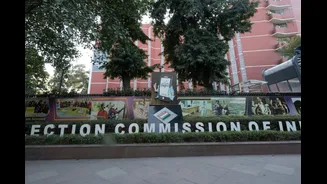








Election Commission Special Observer Subrata Gupta, who is monitoring the Special Intensive Revision (SIR) of electoral rolls in West Bengal, has told CNN-News18 that inconsistencies have been found in the data
of around 1.34 crore voters, which will now be closely examined.
Speaking on the sidelines of the draft roll exercise, Gupta said the figure includes upload and data-conversion errors, along with bona fide and manual errors, all of which are under scrutiny.
“We have found inconsistencies in some data relating to about 1.34 crore voters. This includes upload errors during data conversion. There are also bona fide and manual errors. All of this will be very closely monitored,” Gupta said.
He clarified that this does not automatically mean deletion.
“These 1.34 crore records will be examined thoroughly. Some names may eventually be deleted, but given the size of the number, we will recheck everything on priority,” he added.
Key Features of the Draft Roll
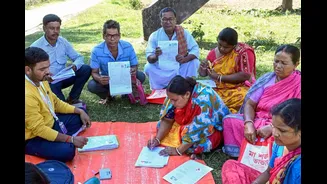
Explaining the nature of the exercise, Gupta said this was an intensive house-to-house revision, unlike earlier summary revisions.
“This time, an intensive revision involving house-to-house visits has taken place. In summary revision, the process is different. The current exercise has been carried out with reference to 2002, and it has been very extensive. The objective is to prepare an accurate electoral roll,” he said.
He added that the Commission observed significant public participation on the ground.
“People have come forward, forms were distributed and collected. So far, more than 58 lakh names have been deleted,” Gupta said.
‘Mysterious Data’ and IT Analysis
Addressing questions on so-called “mysterious data”, the Special Observer said the Election Commission has relied on IT-based analysis, which was not done in earlier exercises.
“Earlier, this kind of backend IT checking was not there. Now, with IT support, we have found inconsistencies in some data. These include conversion errors and discrepancies in names. All such cases will be closely checked,” he said.
Why Higher Deletions in Kolkata North and Urban Areas
On the higher percentage of deletions in Kolkata North, Gupta attributed it primarily to urban migration and gaps in earlier revisions.
“Urban areas see much higher migration. Also, in earlier summary revisions, many death cases were not taken into account. In rural areas, people are more familiar with their surroundings, but in urban areas, BLOs may not always be familiar with the locality,” he explained.
He added that names which should have been deleted earlier during summary revisions are now being removed through the intensive revision.
North and South 24 Parganas, Nadia
On deletions in districts like North and South 24 Parganas and Nadia, Gupta said there could be individuals whose names should not be on the rolls.
“There could be people who ought not to be in the electoral roll. That is precisely why this exercise is being carried out,” he said.
Reiterating the Commission’s objective, Gupta said: “The focus is on an accurate electoral roll. With IT assistance, backend inconsistencies are being identified, and every such case will be examined carefully.”