






The Russia-Ukraine war is spilling far beyond the battlefield. In recent weeks, the Black Sea has emerged as one of the world’s most vulnerable commercial shipping corridors, with ports, grain terminals,
oil infrastructure and merchant vessels increasingly caught in the crossfire.
On August 12, Ukraine launched a major drone attack on Russia’s Novorossiysk port, damaging two major grain terminals and temporarily halting operations at one of the country’s biggest export hubs. The disruption immediately rattled commodity markets, sending wheat prices sharply higher as traders feared fresh disruptions to global food supplies.
What began as a conflict largely confined to land has increasingly spread into commercial shipping, ports and export infrastructure. Will this development affect India?
What Is The Black Sea’s Role In Russia-Ukraine War?
For centuries, the Black Sea has been central to Russia’s geopolitical strategy. During the Russian Empire and later the Soviet Union, it served as the country’s southern gateway to the Mediterranean, the Middle East, North Africa and Southern Europe. Even today, it provides Moscow with access to regions where it maintains a military presence, including Syria, home to Russia’s naval base at Tartus, and Libya.
At the heart of Russia’s military presence is its Black Sea Fleet, headquartered in the Crimean port of Sevastopol since 1793. After Russia annexed Crimea from Ukraine in 2014, the port became even more strategically valuable as one of Moscow’s few deep-water naval bases that remains operational throughout the year.
Over the past two decades, Russia has steadily expanded its influence around the Black Sea. Following its intervention in Georgia in 2008, Moscow backed two breakaway regions, including Abkhazia on the eastern Black Sea coast. It then illegally annexed Crimea in 2014 before launching its full-scale invasion of Ukraine in February 2022. Today, Russia controls roughly one-third of the Black Sea coastline, despite holding only about 10% of it under international law.
The Black Sea is also a vital trade corridor. Russia exports large volumes of grain, fertilisers and other commodities through its ports, while the route has become increasingly important as Moscow deepens trade with countries that have not joined Western sanctions.
For Ukraine, the stakes are even higher. Before the war, more than 50% of the country’s exports passed through Odesa, its largest Black Sea port. Prior to the conflict, Russia and Ukraine together accounted for nearly 24% of global wheat exports, around 19% of barley exports and about 60% of the world’s sunflower oil exports, underscoring why disruptions in the Black Sea can quickly reverberate across global food markets.
Why The Black Sea Matters To The World
The Black Sea sits at the crossroads of Europe, Russia and Central Asia, bordered by Russia, Ukraine, Turkey, Romania, Bulgaria and Georgia. Through the Turkish Straits, it connects to the Mediterranean, making it one of the world’s most important maritime trade corridors.
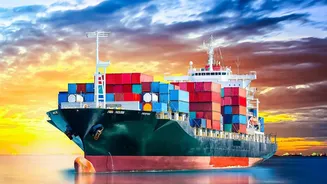
According to a Reuters report, the recent the average daily Black Sea oil tanker costs have jumped to more than $300,000 a day from just over $200,000 a day a week ago. War insurance costs for port calls to Black Sea terminals have risen to as much as 2% of the value of the ship, from around 1% two weeks ago, translating into hundreds of thousands of dollars in additional costs per voyage.
Some of the world’s largest shipments of wheat, corn, barley, sunflower oil, fertilisers, crude oil and petroleum products move through these waters.
Russia is the world’s largest wheat exporter, while Ukraine remains one of the biggest exporters of grains and vegetable oils despite the war. Ports such as Odesa in Ukraine and Novorossiysk in Russia serve as critical gateways for these commodities before they are shipped to markets across Asia, Africa and the Middle East.
When military strikes disrupt these ports, the impact extends far beyond the countries involved. Delayed cargoes, higher freight rates and uncertainty ripple through global supply chains, often pushing up food and energy prices worldwide.
According to Moscow Times, Russian grain exports risk dropping to a decade low in August due to shipping bottlenecks in the Black Sea.
Russia will export between 3 million and 3.4 million metric tonnes of wheat this month — well below the five-year August average of 5 million tonnes and potentially marking the lowest August total since the 2016-17 agricultural season.
Why The Black Sea Is Becoming A Global Chokepoint
A maritime chokepoint is any narrow or strategically important sea route where disruptions can interrupt global trade. Unlike the Strait of Hormuz, which is primarily an energy corridor, or the Red Sea, which is crucial for container shipping between Asia and Europe, the Black Sea occupies a unique position because it is central to global food exports.
The latest escalation is already disrupting commercial shipping across the Black Sea. According to Ukrainian authorities, 35 vessels were attacked while in port, 22 at sea and 67 port facilities were struck in July alone — a sharp rise compared with just 14 vessel attacks recorded during the whole of 2025.
The deteriorating security situation has begun affecting trade. Russian shipping company FESCO has suspended new cargo bookings through the Black Sea after one of its vessels was damaged in a Ukrainian drone strike.
Export operations have also slowed. Cargo movements from Russia’s Sea of Azov have been restricted since early July, reducing activity at the key Taman grain terminal, while shipments through the ports of Novorossiysk and Tuapse continue at a slower pace.
Ukraine’s agricultural exports remain particularly vulnerable. More than 90% of the country’s farm exports traditionally move through the Odesa port region. Although Kyiv is developing alternative export routes, officials say they will not reach full capacity until the end of August and are expected to handle only about half of Ukraine’s normal export volumes, leaving global grain supplies exposed to further disruptions.
How The War Has Changed Black Sea Shipping
The conflict is also driving up shipping costs. War-risk insurance premiums for oil tankers have doubled from around 1% to as much as 2% of a vessel’s value, adding hundreds of thousands of dollars to the cost of every voyage. Those higher logistics expenses are expected to ripple through global grain and energy markets, increasing costs for buyers already grappling with expensive supply chains.
Shipping industry body BIMCO warns that if Black Sea exports remain subdued, global crude tanker activity could slow while agricultural commodity flows become increasingly volatile. For producers, exporters and traders, the renewed instability reinforces how geopolitical tensions are once again shaping freight rates, commodity prices and global food security at a crucial stage of the 2026 marketing season.
Despite some overseas buyers retreating because of rising shipping costs, Russia’s Agriculture Ministry has announced an increase in the wheat export tax for the period between August 12 and August 18. The ministry also said the country’s grain harvest has already exceeded 72 million metric tons, including more than 60 million metric tons of wheat, signalling that Russia remains determined to keep exports flowing despite the escalating conflict.
How Does This Affect India?
At first glance, a conflict in the Black Sea may appear remote from India’s daily life. In reality, it could influence everything from cooking oil prices to freight costs and energy supplies.
According to shipping industry body BIMCO, crude oil loadings from Russia’s Black Sea ports bound for India have fallen by 66% over the past two weeks as attacks on port infrastructure disrupt exports.
Although Russia’s Baltic ports remain the main source of India’s Russian crude imports, Black Sea ports account for roughly 30% of the country’s imports from Russia. In June, Russia supplied more than half of India’s total crude oil imports, underscoring the country’s growing dependence on Russian energy.
Much of the disruption has centred on the CPC terminal at Novorossiysk, which exported around 0.7 million barrels of crude per day to India in June. India’s total crude oil requirement stands at about 5 million barrels a day, making any sustained disruption a concern for refiners.
The conflict has also taken a human toll. At least five Indian seafarers were killed in attacks on ships in the Black Sea in July, while two crew members remain missing following an incident on July 25.
BIMCO estimates that India has been the largest destination for exports from Russia’s Black Sea and Sea of Azov ports this year, receiving about 25% of all shipments. Energy market analysts say that while the Strait of Hormuz and the Red Sea remain strategically vital, repeated attacks on Black Sea export terminals such as Novorossiysk have now emerged as a critical risk for India’s crude oil supply chain.
Is This Another Hormuz Or Red Sea?
The Black Sea has now joined a growing list of strategic waterways under pressure. The Strait of Hormuz remains the world’s most important oil chokepoint, handling a substantial share of global crude exports.
The Red Sea, particularly through the Bab el-Mandeb Strait and the Suez Canal, has become vulnerable because of attacks on commercial shipping, forcing many vessels to take the much longer route around southern Africa.
The Black Sea, however, is different. Its importance lies primarily in agricultural commodities, vegetable oils and energy exports from Russia and Ukraine.
Taken together, these three regions illustrate a growing challenge for the global economy: a handful of strategic waterways now carry a disproportionate share of the world’s food, fuel and manufactured goods. When more than one of them comes under pressure simultaneously, the effects spread quickly across international markets.