






Oil Marketing Companies (OMCs) have hiked the Air Turbine Fuel (ATF) prices by 10 per cent under the new price-stabilization regime, though the new prices will remain frozen for the next three years.
Air
travel will become costlier in the coming days as aviation firms will pass down the increasing burden of higher ATF cost, which accounts for 60% of total operational cost, on passengers.
Under the new regime, jet fuel for domestic carriers will now cost Rs 115 per litre, higher than the earlier Rs 105 per litre.
What Is New Price-Stabilisation Regime?
It is a government-backed mechanism introduced in June 2026 to protect airlines from extreme volatility in aviation turbine fuel (ATF) prices triggered by the Iran-US war and rising crude oil prices.
The government has set up a Rs 10,000 crore fund for ATF price stabilization regime. It is offering certainty to airlines over fuel costs by locking the ATF price for the next three years.
The government under the regime will compensate OMCs in case the global fuel prices rise above the fixed benchmark. When prices fall, the benefits will not pass down by lowering the ATF prices, but the government recovers the support through a ‘true-up’ mechanism.
Airlines Reduce Domestic Operations
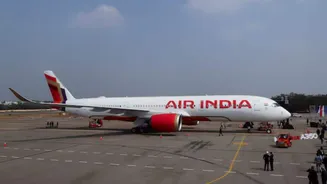
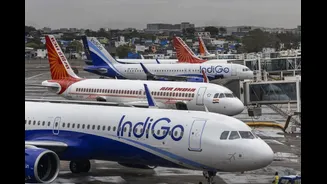
The high fuel prices triggered by the West Asia chaos have forced Indian airlines, including Air India and Indigo to cut domestic flight operations starting June 01, 2026.
The rise in Aviation Turbine Fuel (ATF) is increasing the operational costs of airlines. Having limited leverage to pass down the additional costs to customers in the form of a ticket price hike, airlines are bound to cut their operations.
Air India and IndiGo alone account for 90 per cent of the Indian aviation market. Both carriers’ decision to scale back operations will surely hurt the customers.
According to reports, Air India will reduce up to 22 per cent of its domestic operations, while IndiGo plans to slash 5 per cent and 7 per cent of its services.