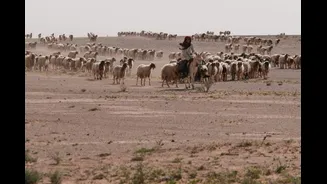








A routine trip through Iraq’s western desert ended in tragedy for 29-year-old shepherd Awad al-Shammari after he reportedly discovered a covert Israeli military outpost hidden in the remote al-Nukhaib
region, according to a report by The New York Times.
Residents of a nearby Bedouin encampment recalled seeing Shammari’s pickup truck pass through the area on March 3 as he headed to town for groceries. Hours later, the same vehicle returned engulfed in flames and riddled with bullets, they said. Witnesses alleged that a helicopter repeatedly fired at the truck before it finally stopped in the desert.
Before losing contact, Shammari had reportedly informed Iraq’s regional military command about unusual activity in the area, including helicopters, tents and armed personnel stationed near a landing strip. Iraqi and regional officials told the publication that the site was being used by Israel as a covert base to support operations against Iran.
The Wall Street Journal previously reported the presence of an Israeli outpost in Iraq. Iraqi officials told The Times there was another undisclosed second base also in Iraq’s western desert.
The base Shammari came across predated the current war between the United States, Israel and Iran, the regional security officials said, and was used during the 12-day war against Tehran in June 2025.
Israeli forces had allegedly begun preparations for the makeshift facilities in late 2024, identifying remote desert locations that could be used in future military confrontations. Israel’s military declined repeated requests for comment on the camps and on Shammari’s death.
The witnesses who described the shepherd’s killing requested anonymity over safety concerns. Several Iraqi and regional officials also spoke anonymously due to the sensitivity of the matter.
Officials cited in the report indicated that at least one of the Israeli outposts had likely been known to Washington since June 2025 or earlier, raising concerns within Iraq that the United States may have withheld information about the presence of hostile foreign forces on Iraqi soil.
“It shows a blatant disregard for Iraqi sovereignty, its government and its forces, as well as for the dignity of the Iraqi people,” said Iraqi lawmaker Waad al-Kadu, who attended a confidential parliamentary briefing regarding the base.
Shammari also contacted local authorities after discovering the site, according to his family and Maj. Gen. Fahim al-Gurayti. Soon afterward, communication with him stopped, NYT reported.
His relatives searched for him for two days before local residents informed them about the attack.
“We were told that a burned-up pickup truck the same as Awad’s was out there, but no one dared to go there,” his cousin Amir al-Shammari said. “When we got there, we found the car and body burned.”
Photographs shared by the family reportedly showed the shepherd’s charred vehicle and badly burned body. He was buried beside the truck beneath a simple gray tombstone.
The following day, Iraqi forces launched a reconnaissance mission toward the area. According to General al-Hamdani and General al-Gurayti, the troops came under attack. Iraq’s Joint Operations Command later stated that one soldier was killed, two others were injured and military vehicles were bombed before the units retreated.
Shammari’s family said they continue to seek accountability over his death.
“They demand the government investigate this incident and why it happened,” his cousin Amir said. “They want his rights respected.”