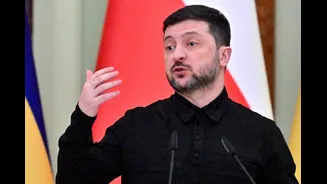









As part of his “updated political strategy”, Ukrainian President Volodymyr Zelenskyy is replacing Prime Minister Yulia Svyrydenko as part of a sweeping cabinet reshuffle intended to implement an for Ukraine.
This is part of the several changes he is looking to bring about. What are they? What does Zelenskyy hope to achieve? News18 explains.
WHAT ZELENSKYY SAID ON REPLACING PM
Zelenskyy stated that Ukraine is shifting its approach so that dedicated, experienced individuals will directly oversee specific priority diplomatic areas, including relations with the United States, EU accession, and regional security cooperation.
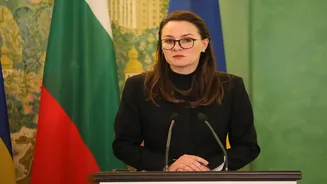
Svyrydenko is stepping down after a year in office to take on a new role leading relations with a “key partner”. Lawmakers expect her to be named Ukraine’s next Ambassador to the United States, capitalizing on her track record of negotiating high-profile agreements with Washington.
The broader government reboot aims to sharpen focus on critical domestic priorities like increasing weapons and drone production, streamlining state-owned enterprises, and planning post-war recovery.
The shift follows a series of recent changes intended to improve administrative efficiency, overhaul law enforcement agencies, and handle the political fallout from domestic corruption scandals.
The formal resignation of the Prime Minister and the formation of a new wartime cabinet require approval from the Ukrainian parliament, which is expected to review the upcoming appointments.
THE NAMES BEING DISCUSSED
Leading candidates rumored to succeed Svyrydenko include Naftogaz CEO Serhiy Koretskyi, Defense Minister Mykhailo Fedorov, or former Prime Minister Denys Shmyhal.
ZELENSKYY’S UPDATED APPROACH
The updated approach impacts the trajectory of the war across several distinct operational and strategic pillars.
Diplomatic Shift: Leveraging Asymmetric Pressure for Peace
Ukraine has bypassed its previous multi-point peace frameworks. The focus is now on convincing Western allies—specifically U.S. President Donald Trump—that Kyiv holds structural leverage rather than pushing for premature concessions. In a major July 2026 political reshuffle replacing Prime Minister Yulia Svyrydenko, Zelenskyy restructured the cabinet. Experienced officials are now assigned to highly targeted foreign policy portfolios. These positions focus exclusively on critical domains: defense cooperation with the U.S., European anti-ballistic projects, EU integration, and relationships with China and the Middle East.
Kyiv is actively repositioning itself as a global security provider rather than just a recipient of aid. By helping Middle Eastern nations intercept Iranian-manufactured threats, Ukraine is exchanging its battlefield intelligence for financial and defense resilience contributions.
Military Strategy: Advanced Technology and Strategic Attrition
Zelenskyy authorized the creation of a dedicated Long-Range Strike Command and the Joint Rapid Reaction Forces. Led by battle-tested commanders, these structures integrate artillery, assault troops, and unmanned components to accelerate frontline response times.
Rather than prioritising immediate, resource-heavy territorial counteroffensives, the military has pivoted to a war of attrition. Intensive long-range drone campaigns target deep within Russia, striking oil refineries (such as the Omsk Refinery) and maritime supply vessels in the Sea of Azov. This has successfully triggered internal gasoline shortages and skyrocketed consumer fuel prices inside Russia to directly fracture the Kremlin’s logistics umbrella.
To counter heavy Russian electronic warfare, Ukraine is rolling out next-generation fiber-optic First Person View (FPV) drones. These physical connections allow pilots to bypass jammers completely, maintaining high-definition visual feeds to impact targets undetected.
Domestic Hardening: Localisation and Domestic Production
Facing critical shortages of US-made Patriot interceptors under massive Russian ballistic barrages, Zelenskyy’s updated strategy prioritizes security agreements to license and manufacture air defense systems natively within Ukraine.
The political restructuring places a heavier emphasis on integrating localized, battle-tested models from frontline cities into national policy. This shift addresses internal challenges, such as the mounting troop manpower crisis, through systematic mobilization reforms, fixed service contracts, and structured troop rotations.
The internal shake-up is tied to a domestic law enforcement overhaul. The Security Service of Ukraine (SBU) has intensified crackdowns on state-defense corruption, targeting internal mismanagement of weapons depots and enforcing discipline to project stability to Western donors.
With agency inputs