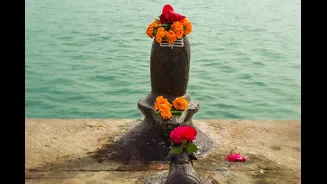








The holy month of Shravan (Sawan) is one of the most auspicious periods in the Hindu calendar and is dedicated to the worship of Lord Shiva. Every year, however, devotees notice that Shravan begins on different
dates in different parts of the country.
While devotees in states such as Uttar Pradesh, Delhi and Rajasthan begin observing Sawan Somwar fasts earlier, people in Maharashtra, Karnataka and Gujarat start the holy month nearly two weeks later.
The difference is not because of separate traditions or festivals. It is due to the use of two different Hindu lunar calendar systems that determine when a lunar month begins and ends.
Purnimanta Calendar: Followed in North India
Most states in North and parts of Central India follow the Purnimanta calendar, where a lunar month ends on Purnima (Full Moon). The next lunar month begins the day after the full moon.
States that generally follow the Purnimanta system include:
• Delhi
• Uttar Pradesh
• Uttarakhand
• Haryana
• Punjab
• Himachal Pradesh
• Rajasthan
• Madhya Pradesh
• Bihar
• Jharkhand
• Chhattisgarh
Under this system, Shravan starts immediately after the full moon of the previous lunar month.
Amanta Calendar: Followed in Western and Southern India
Several western and southern states follow the Amanta calendar, in which a lunar month ends on Amavasya (New Moon). The next month begins the day after Amavasya.
This system is followed in:
• Maharashtra
• Gujarat
• Goa
• Karnataka
• Andhra Pradesh
• Telangana
• Tamil Nadu
Because the month begins after the new moon instead of the full moon, Shravan starts about 15 days later than it does in regions following the Purnimanta calendar.
Why Is There a Difference?
The gap between Purnima (Full Moon) and Amavasya (New Moon) is roughly 15 days. Since one calendar counts the beginning of a month after the full moon and the other after the new moon, the start of Shravan naturally falls on different dates.
For example, when devotees in Delhi or Uttar Pradesh begin observing the first Sawan Somwar, devotees in Maharashtra or Karnataka may still be in the previous lunar month and begin their Shravan observances only after the next Amavasya.
Does It Affect Festivals?
Most major Hindu festivals are determined by the tithi (lunar day) rather than the month’s name alone. However, observances linked specifically to Shravan such as Sawan Somwar fasts, Mangala Gauri Vrat, and other month-long rituals are celebrated according to the calendar followed in each region.
As a result, the dates of these observances may differ between North India and parts of western and southern India.
Which Calendar Is Correct?
Both the Purnimanta and Amanta systems have been in use for centuries and are considered equally valid within Hindu tradition. Temples, priests and local panchangs (Hindu almanacs) follow the calendar traditionally observed in their region.
Although the dates differ, the religious significance of Shravan remains the same across India, with millions of devotees observing fasts, offering prayers to Lord Shiva and participating in temple rituals throughout the sacred month.